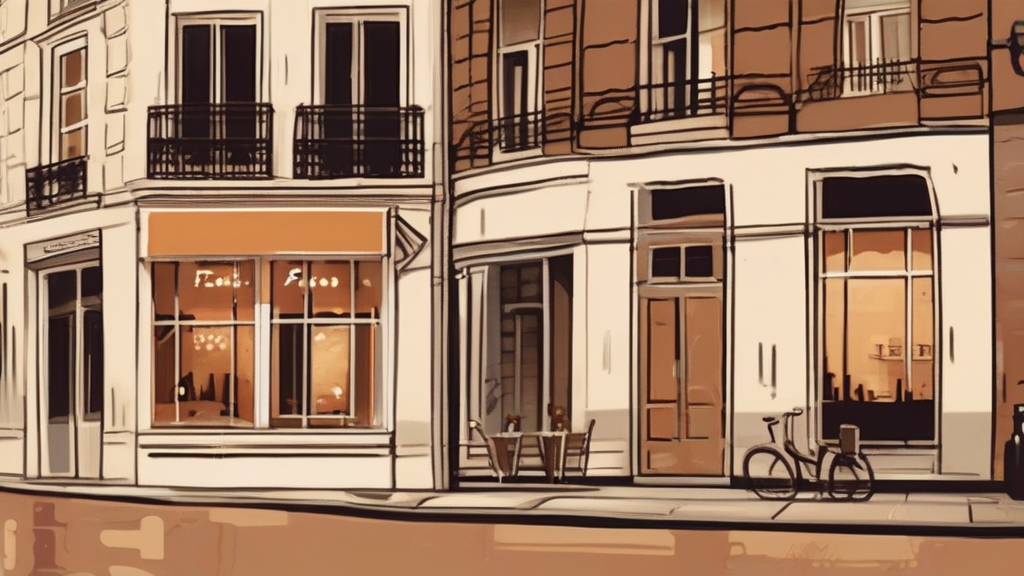
What does faubourg mean?
A faubourg is a district lying just outside the walls or formal boundaries of a town or city, the term being used chiefly with reference to French urban history. As medieval cities expanded beyond their fortifications, new quarters sprang up along the roads leading out of town; these settlements were known as faubourgs. The word is best known today through famous Parisian districts such as the Faubourg Saint-Germain and the Faubourg Saint-Honoré, long associated with aristocratic residences, embassies, and high fashion. In English, 'faubourg' is a borrowed and somewhat literary term, lending an air of historical or continental flavour to writing about cities. Its connotations depend on context: it can evoke refined elegance when applied to the grand old quarters of Paris, or the crowded, working-class outskirts of older European towns. Though still used in French place-names, the everyday modern French term for a suburb is now 'banlieue'.
nounA district lying outside a city's walls or boundaries; especially in France, a suburb of a city.
- A suburb or district situated just outside a city's walls or limits, particularly one of Paris.
- By extension, any outlying quarter or neighbourhood of a city, especially in French contexts.
"The artist kept a small studio in the faubourg just beyond the old city gates."
"In the seventeenth century, noble families built grand hôtels particuliers in the Faubourg Saint-Germain."
"The factory workers settled in the crowded faubourgs beyond the ramparts, far from the fashionable centre."
Standard plural; occasionally the plural may refer collectively to several such districts of one city.
"The poor crowded into the faubourgs while the wealthy remained within the walls."
Paris's most aristocratic address, the Faubourg Saint-Germain, owes its very name to the fact that it was once considered 'outside' the city — the word literally means the wrong side of the wall.
Reviewed by Deb Chak, Editor. AI-assisted content curated by RJS Tech Solutions LLP.
Etymology of faubourg
The word 'faubourg' comes from French, where it developed in the medieval period from 'faulxbourg', itself derived from Latin 'foris burgus', meaning 'outside the borough or town'. A popular folk etymology holds that it arose from 'fauxbourg', meaning 'false town', but this is generally regarded as a later rationalisation rather than the true origin. English adopted the word in the early seventeenth century, retaining its association with French city districts. It shares its Germanic root for 'town' or 'stronghold' with words such as 'borough', 'bourgeois', and 'burgher'.
Related word forms
How faubourg is actually used
The word is literary and somewhat formal in English, almost always used with reference to French cities, most famously Paris. It carries connotations of old-world elegance when paired with names like Faubourg Saint-Honoré or Faubourg Saint-Germain, but historically it could also denote poorer districts outside fortifications. In modern French, 'faubourg' has largely been replaced by 'banlieue' for contemporary suburbs.
Easily confused with faubourg
A suburb is any residential area on the edge of a city, while faubourg specifically denotes a district that grew up outside a historic town's walls, carrying a French and often aristocratic connotation.