What does felsite mean?
Felsite is a fine-grained, generally light-coloured volcanic rock composed mainly of feldspar and quartz — the same minerals that make up granite — formed when silica-rich lava cools so quickly that individual crystals remain too small to be seen without magnification. Geologists use the term broadly, applying it to any very finely crystalline igneous rock of this kind when its exact mineral composition cannot be resolved in hand specimens; chemically it corresponds closely to rhyolite. The word derives from German Felsit, coined in the nineteenth century from Fels, meaning rock, combined with the mineral suffix -ite, and shares its origin with the related term feldspar. Beyond geology, felsite appears in archaeological literature because its hardness and uniform texture made it a valued material for prehistoric tools such as axes and arrowheads. It remains chiefly a technical term, familiar to petrologists and archaeologists rather than general readers.
nounA fine-grained, light-coloured volcanic rock composed chiefly of feldspar and quartz, typically regarded as the extrusive equivalent of granite.
- A very fine-grained, light-coloured igneous rock consisting essentially of quartz and feldspar, formed from rapidly cooled volcanic lava; used especially in petrology for such rocks too fine-grained for individual minerals to be distinguished by eye.
"The archaeologist identified the arrowhead as being knapped from felsite rather than flint."
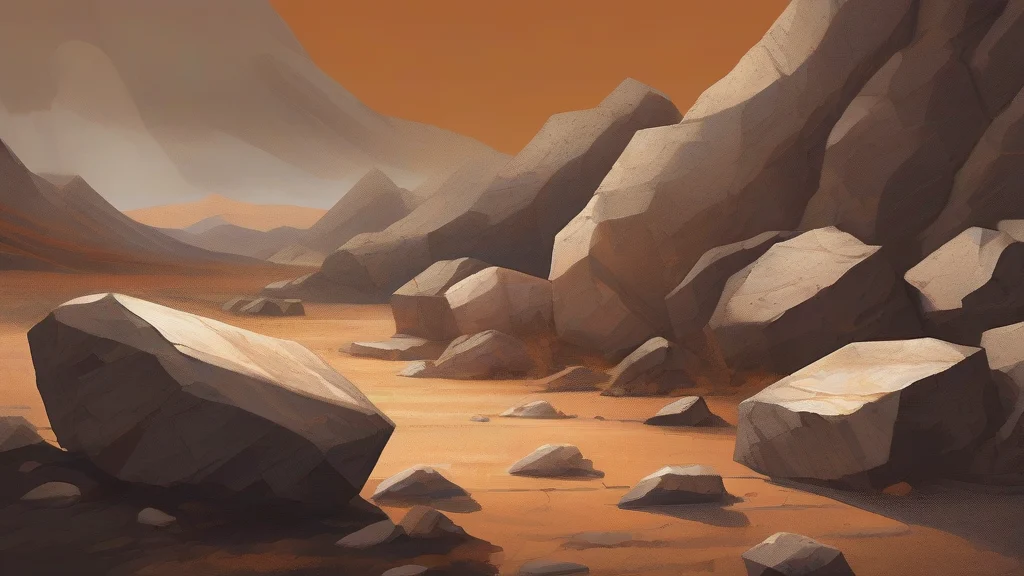
"The cliff face was composed of pale felsite that had cooled rapidly from ancient lava flows."
"Neolithic axe heads made of polished felsite have been recovered from sites across northern Scotland."
Rarely pluralised except in technical contexts comparing different occurrences or varieties of the rock.
"The region contains several distinct felsites, each recording a different episode of volcanism."
Some Stone Age toolmakers in Britain preferred felsite over flint — and geologists still argue about exactly what to call it.
Reviewed by Deb Chak, Editor. AI-assisted content curated by RJS Tech Solutions LLP.
Etymology of felsite
The word felsite was coined in the early nineteenth century from German Felsit, itself derived from Fels, the German word for rock or crag, plus the mineral-forming suffix -it. It thus belongs to the same family of geological coinages as feldspar (German Feldspat), which combines Feld, meaning field, with Spat, a term for crystalline stone. The English spelling and usage followed the German original, and the term became established in petrological vocabulary as scientists sought names for fine-grained volcanic rocks.
Related word forms
How felsite is actually used
"Felsite" is primarily a technical term in geology and petrology, rarely encountered outside scientific, archaeological, or amateur-mineralogical contexts. It is often used somewhat loosely for fine-grained, light-toned volcanic rocks whose precise composition cannot be determined without microscopic analysis, so its meaning overlaps with terms like rhyolite and felsophyre.
Easily confused with felsite
Flint is a dark, glassy sedimentary form of silica, whereas felsite is a light-coloured volcanic rock of feldspar and quartz; both were used for stone tools, but they differ in origin and appearance.
Rhyolite is a specific volcanic rock with the same chemical composition as felsite, but 'felsite' is a broader field term for any light-coloured, extremely fine-grained igneous rock whose exact mineral makeup may not be resolvable.