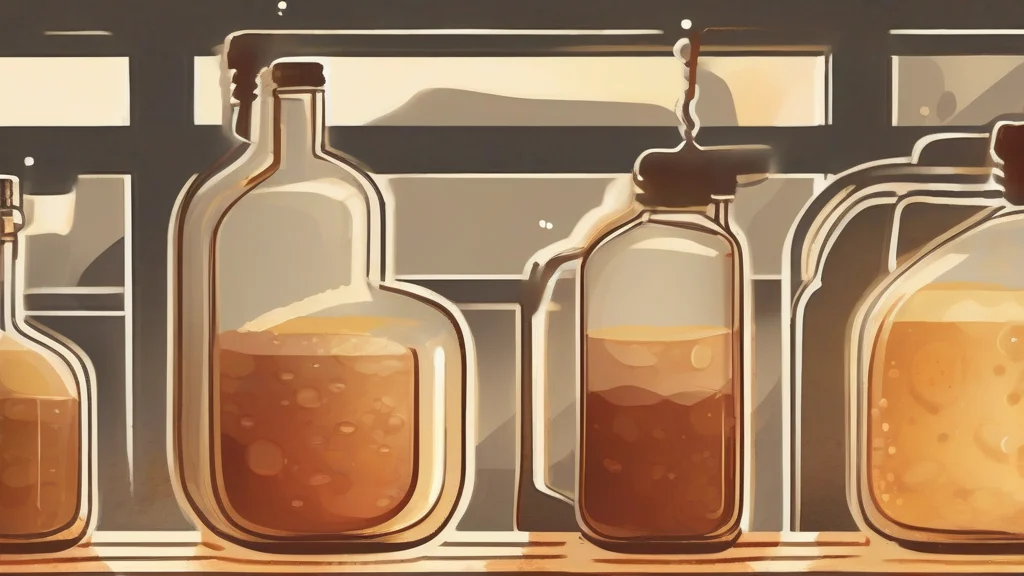
What does fermentation mean?
Fermentation is the metabolic process by which microorganisms such as yeasts and bacteria convert sugars into other compounds — most famously into alcohol and carbon dioxide, but also into the lactic and acetic acids behind yogurt, sauerkraut, vinegar, and countless fermented foods. It has been central to human civilization for millennia, long before Louis Pasteur explained it in the nineteenth century: bread rises because of fermentation, wine exists because of it, and much of the world's preserved cuisine depends on it. Beyond biology, the word carries a figurative sense denoting a state of agitation or restless activity, as when historians describe periods of intellectual fermentation. Both scientific and evocative, the term bridges laboratory precision and cultural history, making it a rich word for anyone interested in food, science, or the forces that quietly transform societies.
nounThe chemical breakdown of a substance by bacteria, yeasts, or other microorganisms, typically producing heat, gas, or alcohol; more broadly, any process of agitation or excited change.
- The enzymatic conversion of carbohydrates by microorganisms such as yeast and bacteria, typically yielding alcohol, acids, or gases (as in brewing, baking, and food preservation).
- A state of agitation, excitement, or social unrest.
"The bread dough rises slowly as the yeast drives fermentation overnight."
"Grapes left in the vat begin fermentation within hours of crushing."
"The country was in a state of political fermentation after the disputed election."
Rare in ordinary usage; mostly confined to scientific writing referring to multiple distinct fermentation processes.
"The lab compared the fermentations of five different yeast strains."
Without fermentation there would be no beer, no bread, no cheese, and no chocolate — humans have been harnessing this microbial magic for over 9,000 years.
Reviewed by Deb Chak, Editor. AI-assisted content curated by RJS Tech Solutions LLP.
Etymology of fermentation
Fermentation derives from the Latin verb "fermentare", meaning to leaven or cause to rise, itself rooted in "fermentum", leaven, which relates to "fervere", to boil or seethe — the underlying image being the bubbling, seemingly boiling activity of a fermenting liquid. The word entered English via Old French in the late Middle Ages, and its modern scientific sense was consolidated after Pasteur's studies of fermentation in the mid-nineteenth century. Cognates appear throughout the Romance languages, including French "fermentation" and Italian "fermentazione".
How fermentation is actually used
Primarily a scientific and technical term, but its figurative sense describing unrest or fermenting excitement appears in journalism and literature. In everyday British English, the related noun "ferment" often carries the figurative sense of turmoil.
Easily confused with fermentation
Fermentation is a beneficial, controlled microbial conversion (as in beer or yogurt), whereas putrefaction is anaerobic decay that produces foul-smelling compounds.