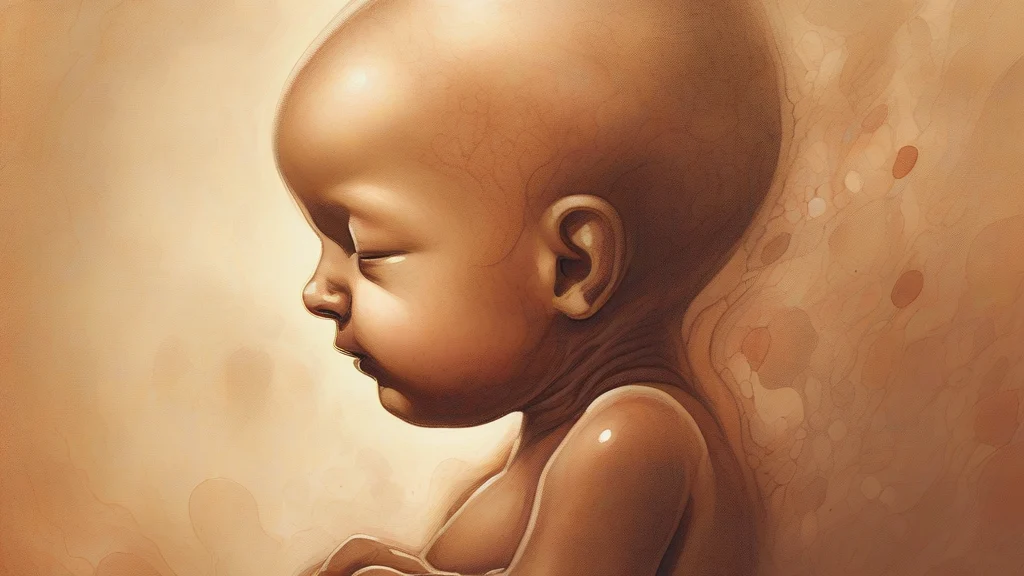
What does fetus mean?
A fetus is an unborn offspring in the later stages of development before birth. In human medicine, the term applies from approximately the end of the eighth week after conception, when the major organs have begun to form, until delivery; before that point the developing organism is called an embryo. The word is also applied to unborn young of other animals, especially mammals. Clinical and precise in tone, "fetus" is the standard term in obstetrics, embryology, and law, and it carries no inherent emotional coloring — though in public debate surrounding pregnancy and abortion, the choice between "fetus" and phrases like "unborn child" can signal a speaker's perspective. The spelling "fetus" is preferred in scientific writing worldwide, including Britain, where the older variant "foetus," born of a medieval scribal error in Latin, survives mainly in popular journalism. Derived forms include the adjective "fetal," as in fetal development or fetal tissue.
nounAn unborn offspring of a vertebrate animal, in humans the developing baby from roughly the end of the eighth week after conception until birth.
- An unborn vertebrate offspring; in human development, the stage from about eight weeks after conception until birth.
"The ultrasound revealed that the fetus was developing normally."
"Doctors monitored the fetus throughout the pregnancy to ensure healthy growth."
"The study examined how environmental factors affect a developing fetus."
The standard English plural is "fetuses" (or "foetuses" in British spelling). The pseudo-Latin plural "feti" is incorrect and should not be used.
"The ultrasound confirmed that she was carrying twins — two fetuses, each with its own placenta."
"Fetus" comes straight from the Latin word meaning "offspring" — and its British spelling "foetus" is actually a medieval mistake, a faulty Latin rendering that stuck for centuries.
Reviewed by Deb Chak, Editor. AI-assisted content curated by RJS Tech Solutions LLP.
Etymology of fetus
"Fetus" derives directly from Latin fētus, meaning "offspring" or "the act of bearing young," a noun formed from the same root that gives us words relating to fecundity and fertility. The term entered English in the late 14th century via medical Latin, replacing older native expressions for the unborn young. The British spelling "foetus" arose from a mistaken medieval Latin form wrongly associated with Greek roots, which is why modern medical style guides on both sides of the Atlantic recommend "fetus." Cognates and derivatives sharing the Latin root include "fetal," "fecund," and "superfetation."
Related word forms
How fetus is actually used
"Fetus" is the standard spelling in medical, scientific, and American usage; "foetus" persists as a chiefly British variant, though most major British medical journals now prefer "fetus." The word is clinical and neutral in register, though in political and ethical debates over pregnancy, speakers may deliberately choose "fetus" or "unborn child" to convey different stances.
Easily confused with fetus
In humans, an embryo is the developing offspring during roughly the first eight weeks after conception, after which it is termed a fetus.