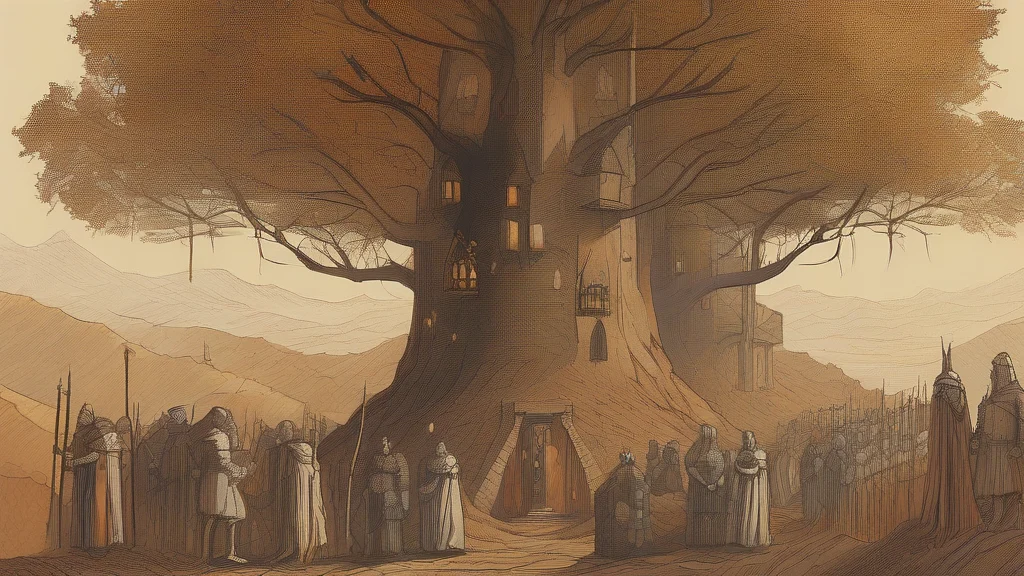
What does feudalistic mean?
"Feudalistic" is an adjective describing anything related to, or characteristic of, feudalism — the medieval European order in which kings granted land to nobles, who in turn governed vassals and peasants bound to them by obligations of service. In its literal historical use, the word appears in discussions of medieval law, land tenure, and social structure. More often today, however, it is used figuratively and critically: a workplace, industry, or political arrangement may be called "feudalistic" when power is concentrated in the hands of a few and subordinates owe deference or loyalty rather than enjoying equal rights. Because of this, the word carries a strongly negative connotation, suggesting something antiquated, rigid, and unfair. It is most at home in formal essays, journalism, and historical analysis, where its evocation of castles and serfs gives rhetorical force to critiques of modern hierarchies.
adjectiveRelating to or characteristic of feudalism, the medieval system in which land was held in exchange for service and society was organized around rigid hierarchies of lords and vassals; by extension, resembling that system's hierarchical, outdated social or economic arrangements.
- Of or relating to feudalism, the medieval European system of landholding in exchange for military or labor service.
- (Figurative) Resembling feudalism in being rigidly hierarchical, exploitative, or socially backward.
"The estate's feudalistic structure meant tenant farmers owed both rent and labor to the landowner."
"Under the feudalistic order, peasants worked plots of land owned by nobles in exchange for protection."
"He described the company's nepotistic leadership as feudalistic, with loyalty rewarded over merit."
When critics call a workplace "feudalistic," they're accusing it of running like the Middle Ages — with bosses as lords and employees as serfs.
Reviewed by Deb Chak, Editor. AI-assisted content curated by RJS Tech Solutions LLP.
Etymology of feudalistic
The word derives from "feudal," which traces back through Medieval Latin "feudalis" to "feudum" (also spelled "foedum"), meaning a fief or heritable holding of land. The suffix "-istic" was added to form "feudalistic," emphasizing characteristic traits of the system. Cognate terms include "feudalism," "feudatory," and ultimately "feud" in its older legal sense relating to landholding.
Related word forms
How feudalistic is actually used
The term is largely found in formal, academic, or political writing. In figurative use it almost always carries a critical connotation, implying an unjust or obsolete hierarchy.
Easily confused with feudalistic
"Feudal" is the broader, more common adjective for the medieval land-and-service system, while "feudalistic" more often carries a pejorative sense of being outdatedly hierarchical.