What does fibre mean?
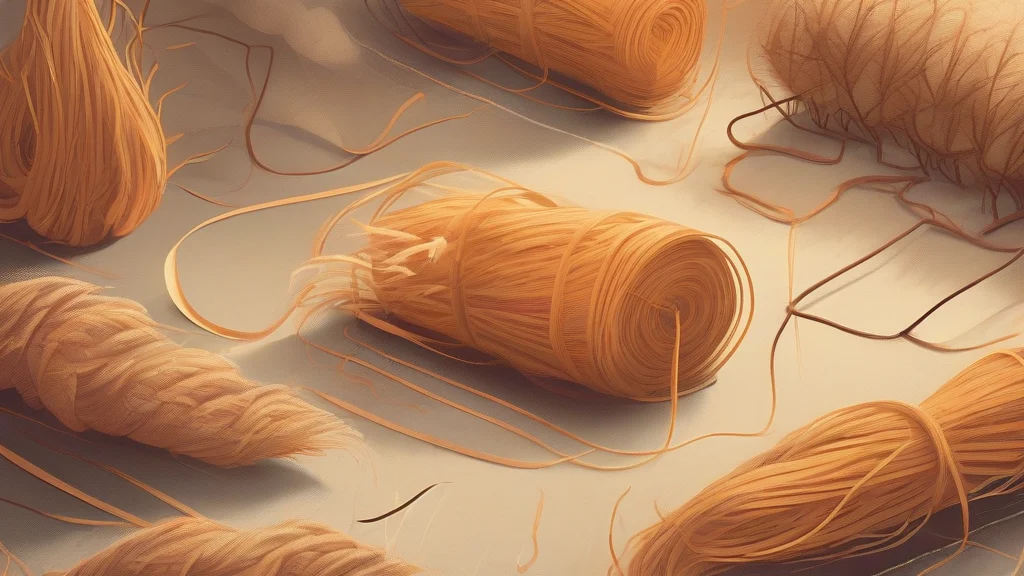
Fibre refers to a slender thread or filament — whether drawn from plants such as cotton and flax, spun from animals like wool-producing sheep, or manufactured synthetically as in nylon and polyester. Bundles of these threads form the fabrics we wear and the ropes we rely on, and in modern technology optical fibres carry data as pulses of light through hair-thin strands of glass. The word also has a vital dietary meaning: fibre is the indigestible part of plant food that keeps digestion healthy, which is why whole grains and vegetables are described as high in fibre. Figuratively, fibre extends to character itself — a person of moral fibre possesses inner strength and integrity, as though their resolve were woven from strong threads. The spelling fibre belongs to British English; American writers generally use fiber. Few words connect so neatly the physical, nutritional, and moral dimensions of life.
nounA thread or filament from which plant or animal tissue, natural or synthetic material, is made; dietary fibre is the indigestible plant material that aids digestion. Figuratively, it denotes essential character or strength, as in moral fibre.
- A slender thread or filament of natural or synthetic material (e.g. cotton, nylon, optical fibre)
- Dietary fibre: indigestible plant matter that aids digestion
- Figurative sense: strength of character (as in 'moral fibre')
- Texture or structure of a substance
"Oats are rich in soluble fibre, which helps lower cholesterol."
"The rope was woven from tough coconut fibre."
"She suspected he lacked the moral fibre for the job."
Standard plural in British English; fiber becomes fibers in American English.
"Nerve fibres carry signals throughout the body."
The word 'fibre' comes straight from Latin fibra — and when Victorians spoke of someone's 'moral fibre', they literally meant the tough threads holding a person together.
Reviewed by Deb Chak, Editor. AI-assisted content curated by RJS Tech Solutions LLP.
Etymology of fibre
Fibre derives from the Latin noun fibra, meaning a filament or thread, entering English via French in the late Middle French period around the fourteenth to fifteenth century. The Latin root also gave rise to related forms such as fibrilla, a diminutive meaning small fibre, which survives in English as fibril. Cognate forms appear across Romance languages, including French fibre, Italian fibra, and Spanish fibra, all tracing back to the same Latin source. The exact pre-Latin origin of fibra remains uncertain, though it has sometimes been linked to other Indo-European roots without firm consensus.
Related word forms
How fibre is actually used
Fibre is the standard British spelling, while fiber predominates in American English; both are acceptable within their respective varieties. The word carries a broadly positive connotation in health contexts (fibre-rich foods) and in figurative uses (moral fibre), where it implies strength or integrity.
Easily confused with fibre
Fiber is simply the American English spelling of fibre; both refer to the same thing, with fibre preferred in British and Commonwealth English.