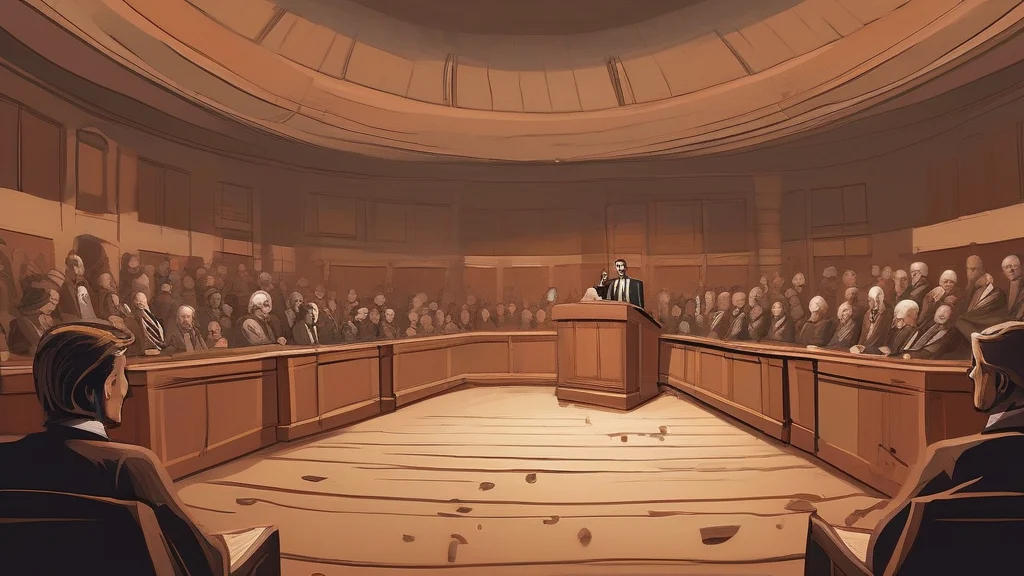
What does filibustering mean?
Filibustering is the practice of deliberately prolonging debate — most often by delivering extremely long speeches — in order to delay or block a vote in a legislature. It is closely associated with the United States Senate, where extended debate can only be cut off by a supermajority vote of cloture, but similar tactics exist in other parliamentary bodies, including the UK Parliament. By extension, the word is used more loosely to describe any strategy of stalling or obstruction designed to run out the clock on a decision. The term almost always carries a critical connotation, implying bad faith or abuse of procedure rather than legitimate deliberation. Derived from the same source as 'freebooter', the word originally referred to pirate-like adventurers before acquiring its political sense in mid-nineteenth-century America. Today, 'filibustering' remains one of the most recognizable terms in political vocabulary, invoked whenever procedural delay shapes the fate of legislation.
The action or practice of obstructing legislation by prolonged debate or procedural delay.
"After twelve hours of filibustering, the bill was quietly withdrawn."
To obstruct or delay legislative action, or figuratively any decision-making process, through prolonged speech or procedural tactics.
"The minority leader vowed to keep filibustering until amendments were allowed."
A US senator once spoke for over 24 hours straight without sitting down just to run out the clock on a bill — that's filibustering taken to its physical limit.
Reviewed by Deb Chak, Editor. AI-assisted content curated by RJS Tech Solutions LLP.
Etymology of filibustering
The word traces back to the Dutch 'vrijbuiter' ('free plunderer'), which also gave English 'freebooter'; Spanish adopted it as 'filibustero', and French as 'flibustier', referring to pirates and buccaneers of the Caribbean. English 'filibuster' appeared in the mid-nineteenth century, initially describing Americans who fomented unauthorized revolutions in Latin America. Its legislative sense emerged in the United States around the 1850s, likening obstructive lawmakers to plunderers holding proceedings hostage.
Related word forms
How filibustering is actually used
Primarily used in political and parliamentary contexts, especially regarding the US Senate, where the tactic is most famously associated. The gerund often carries a negative connotation of bad-faith obstruction. In British usage it can also appear as 'talking out' a bill, though 'filibustering' itself is well understood and increasingly common.
Easily confused with filibustering
A flibbertigibbet is a frivolous, chattering person, while filibustering refers to obstructive delaying tactics in debate; the two merely sound vaguely similar.