What does finnan mean?
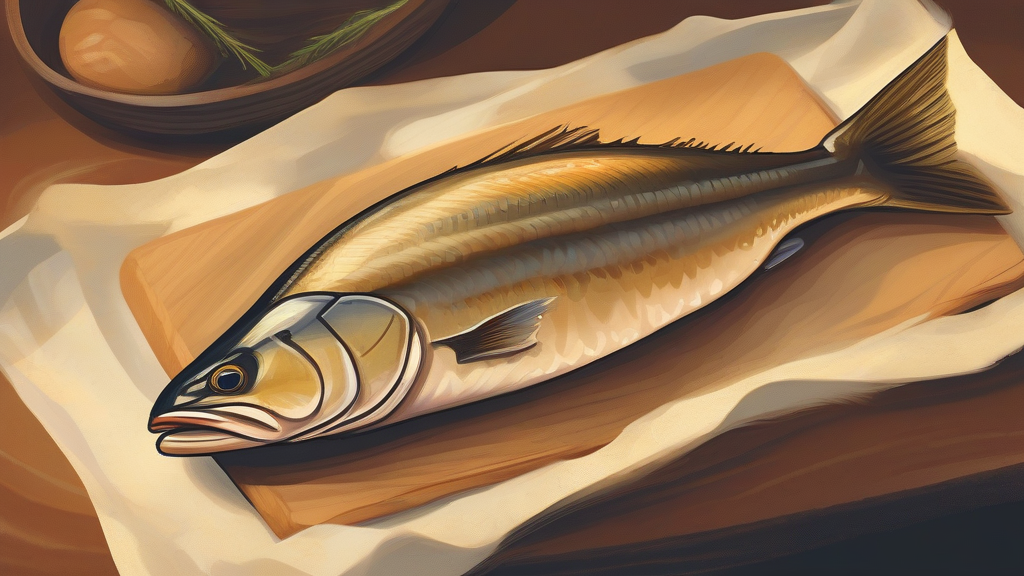
Finnan denotes smoked haddock, named for Findon, a fishing village south of Aberdeen in Scotland where the curing method originated. In the traditional process, haddock are lightly salted and cold-smoked over peat, giving the flesh its distinctive pale golden tint and delicate smoky flavour; unlike the bright yellow dyed smoked haddock common in supermarkets, genuine finnan owes its colour to the smoke itself. The word rarely travels alone: it survives almost entirely within the compounds 'finnan haddie' and 'finnan haddock', familiar from British and American cookery books alike. Classic dishes built on it include kedgeree, finnan haddie poached in milk, and Cullen skink, a hearty Scottish soup of smoked haddock, potatoes, and onions. Though regional in origin, the term remains current wherever traditional Scottish seafood cookery is discussed.
nounA haddock that has been cured by smoking, traditionally over peat and after light salting. The term usually appears in the compound 'finnan haddie' or 'finnan haddock'.
- Smoked haddock, especially cured in the traditional Findon style of light salting and cold smoking.
"For supper she served finnan huddie poached in milk with a knob of butter."
"The kipper shop's window displayed finnan haddies alongside Arbroath smokies."
"A classic Cullen skink begins with finnan simmered in milk with potatoes and onions."
The plural is uncommon because the word normally appears in the mass-noun compounds 'finnan haddie' or 'finnan haddock'; when counted individually, regular pluralisation applies.
"The smokehouse packed a dozen finnans for the morning train to London."
This word for smoked haddock is named after a single Scottish fishing village — Findon in Aberdeenshire — making it one of the few dictionary entries that doubles as a place name on the North Sea coast.
Reviewed by Deb Chak, Editor. AI-assisted content curated by RJS Tech Solutions LLP.
Etymology of finnan
The word derives from Findon (locally pronounced roughly 'finnan'), a fishing village in Aberdeenshire, Scotland, renowned from at least the eighteenth century for its method of curing haddock. The place name itself is of Gaelic origin. The anglicised form 'finnan' became attached to the smoked fish itself, spreading into English cookery vocabulary primarily through the phrase 'finnan haddie'.
Related word forms
How finnan is actually used
Almost always encountered in the fixed compounds 'finnan haddie' or 'finnan haddock'; standalone use is rare and chiefly Scottish. The spellings 'findhorn', 'findon', and 'finan haddie' appear as historical variants, but 'finnan haddie' is now standard in cookery writing.
Easily confused with finnan
Haddock is the fresh fish generally, while finnan refers specifically to haddock cured by the Findon smoking method.