What does firebombing mean?
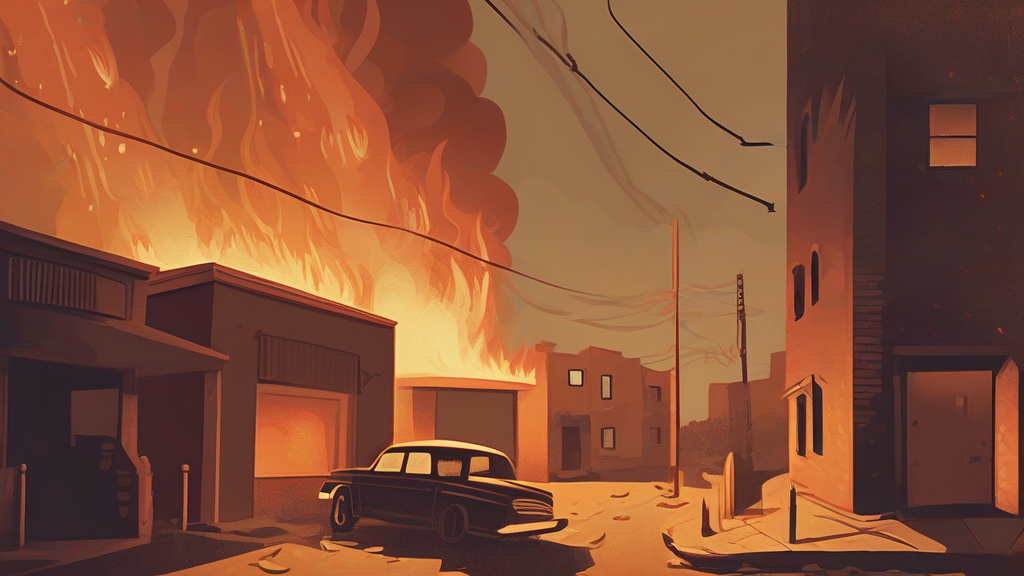
Firebombing refers to an attack carried out with firebombs — incendiary weapons designed to ignite fires rather than simply to explode. It is most closely associated with the aerial bombardment of cities during the Second World War, when Allied and Axis forces alike targeted densely built urban areas with devastating effect, as in the firebombing of Dresden and Tokyo in 1945. The term also describes smaller-scale acts, such as hurling a Molotov cocktail at a building or vehicle, which appear regularly in news reports of political violence and arson attacks. Firebombing carries uniformly grave connotations: it suggests deliberate destruction, civilian suffering, and the terror of uncontrolled fire. In modern usage the word functions almost exclusively as a noun, describing either a single incident or a sustained bombing campaign, and it remains central to discussions of wartime tactics, war crimes, and domestic terrorism alike.
nounThe act of attacking a place or target with firebombs — incendiary devices designed to start fires — especially as a military tactic or an act of terrorism.
- A military or terrorist attack using incendiary bombs, especially one directed at a city or populated area.
- An individual act of attacking a building or vehicle by throwing a firebomb (Molotov cocktail).
"The city never fully recovered from the firebombing it suffered during the war."
"The firebombing of Tokyo in March 1945 destroyed vast swaths of the city within hours."
"Police arrested two suspects in connection with the overnight firebombing of a local business."
The plural is standard when referring to multiple incidents, such as a series of attacks over time.
"The capital endured repeated firebombings throughout the conflict."
In a single night in 1945, the firebombing of Dresden destroyed over 1,600 acres of a city once called 'the Florence of the Elbe.'
Reviewed by Deb Chak, Editor. AI-assisted content curated by RJS Tech Solutions LLP.
Etymology of firebombing
Firebombing is a compound formation of the twentieth century, deriving from the combination of 'fire' (from Old English fȳr, the ancient element of combustion) and 'bomb' (from the Greek bómbos, meaning a deep booming sound, which passed into Latin as bombus and then through Romance languages before entering English around the seventeenth century). The compound emerged as aviation made large-scale incendiary attacks practical, particularly during the Spanish Civil War and the Second World War. Its constituent roots tie it to words such as bombardment and incendiary, all sharing origins in the vocabulary of explosive warfare.
Related word forms
How firebombing is actually used
The word carries strongly negative connotations, evoking wartime devastation and urban destruction; it is used in both formal historical writing and news reporting. When referring to small-scale attacks on individual buildings (e.g. with Molotov cocktails), the same term applies but often appears in crime reporting rather than military history.
Easily confused with firebombing
Bombing refers generally to attacks with explosive bombs, whereas firebombing specifically involves incendiary devices intended to set fires rather than primarily to blast.
Arson is the criminal act of deliberately setting fire to property, while firebombing typically denotes delivering incendiary bombs, often from the air, in warfare or as a violent attack.