What does fireless mean?
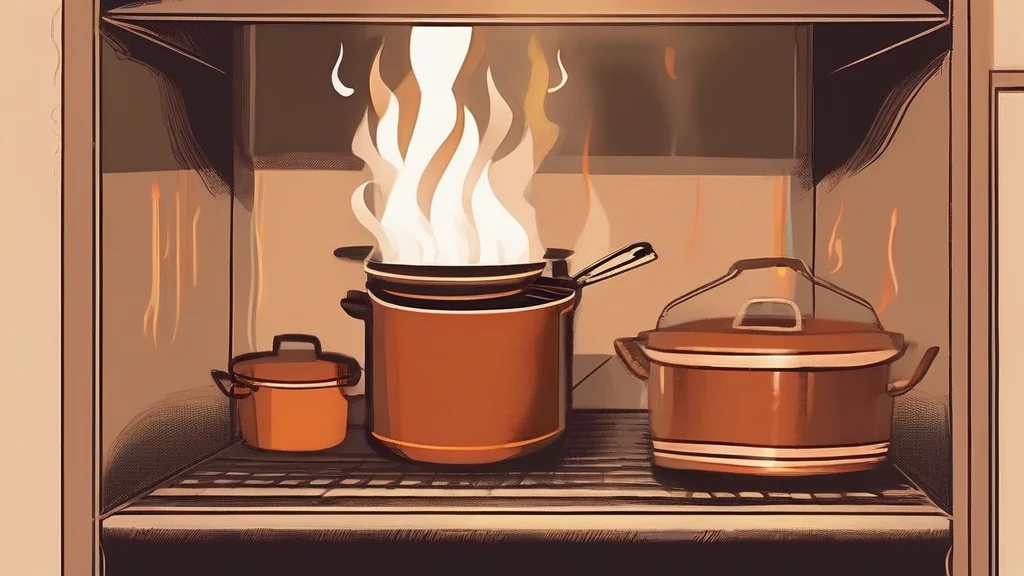
Fireless is an adjective describing something devoid of fire, flame, or burning heat — a cold hearth, an extinguished furnace, an unlit lamp. Its most durable claim on everyday language comes from the fireless cooker, an insulated box, popular from the late nineteenth century onward, in which food brought to a boil was placed to finish cooking slowly by retained heat alone, requiring no further fuel. This made the device a byword for thrift and economy, especially during wartime rationing, and it foreshadows the modern slow cooker. Outside that domestic context, fireless appears mostly in literary or descriptive writing to evoke stillness, coldness, or absence — a fireless room suggesting abandonment or poverty of means. It is formed simply by attaching the suffix '-less' to 'fire', following the standard English pattern for 'devoid of X'. Though uncommon today, it remains a compact, evocative way to signal the absence of warmth, light, or combustion.
Lacking a fire or flame; cold or unlit.
"The fireless grate stared back at them like an empty socket."
Most often encountered today in the fixed phrase 'fireless cooker'.
(Of cooking) requiring no continued application of fire after initial heating, as with an insulated fireless cooker.
"A fireless method of cooking suited households anxious about fuel costs."
Before slow cookers, there was the 'fireless cooker' — a padded box that finished your dinner using nothing but trapped heat, a staple of wartime kitchens.
Reviewed by Deb Chak, Editor. AI-assisted content curated by RJS Tech Solutions LLP.
Etymology of fireless
Fireless derives straightforwardly from the Old English noun 'fīr' (modern 'fire'), whose Germanic root gave related forms across Germanic languages. The suffix '-less', from Old English '-lēas' ('devoid of, without'), was appended in the ordinary way to form an adjective of absence, much as in 'smokeless' or 'soundless'. The word has no classical cognate lineage of note, being a native Germanic formation; its closest relatives are simply other compounds and derivatives built directly on the same word 'fire'.
How fireless is actually used
The plain sense ('without fire') is now rare and often literary or descriptive. Today the word survives chiefly in historical and domestic contexts referring to the fireless cooker, an early twentieth-century energy-saving device popular before electric slow cookers.
Easily confused with fireless
Wireless refers to radio communication or devices operating without cables, whereas fireless simply means lacking a fire or flame.