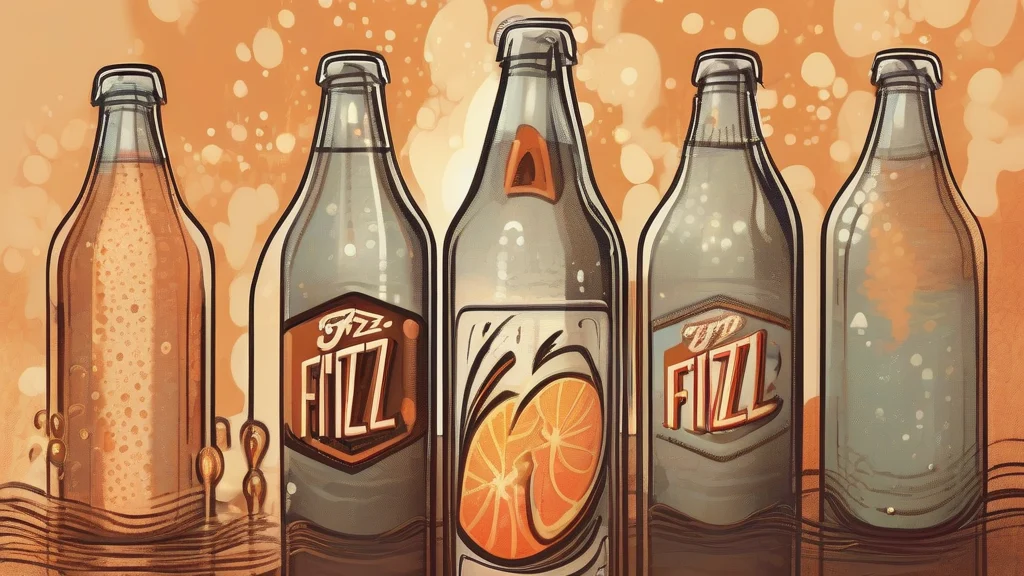
What does fizz mean?
Fizz describes the lively hissing and bubbling produced when carbon dioxide escapes from a liquid — the defining characteristic of sparkling water, soda, beer, and champagne. It functions both as a noun, naming the effervescence itself ('the glass was full of fizz'), and as a verb, describing the act of bubbling or hissing ('the tablet fizzed in the water'). The word is distinctly onomatopoeic: its sound imitates the phenomenon it names, which makes it intuitive even to young learners. Fizz carries connotations of freshness, celebration, and liveliness, and by extension it can describe energy or enthusiasm — especially in the common phrase 'fizz out,' meaning to dwindle into anticlimax after a promising start. In British informal usage, 'fizz' also serves as shorthand for champagne itself. Simple, vivid, and sensory, it is a useful word wherever bubbles are found.
The hissing or bubbling sound and effervescence produced by gas escaping from a carbonated liquid.
"She poured the lemonade and watched the fizz rise to the top."
To make a hissing or bubbling sound; to effervesce.
"The Alka-Seltzer fizzed vigorously in the glass."
Standard plural, though fizz is usually treated as uncountable when referring to effervescence generally.
"The bar served a range of fizzes, from classic gin fizzes to fruit variations."
The word fizz is onomatopoeic — it sounds exactly like what it describes, one of the rare words English got right the first time.
Reviewed by Deb Chak, Editor. AI-assisted content curated by RJS Tech Solutions LLP.
Etymology of fizz
Fizz is onomatopoeic in origin, formed in imitation of the hissing sound of escaping gas, and emerged in English in the seventeenth century. Its derivative 'fizzy' followed to describe effervescent drinks. Because it arose directly from sound imitation rather than from another root, it has no true cognates in other languages, though parallel onomatopoeic forms exist elsewhere.
Related word forms
How fizz is actually used
Fizz is casual in register and appears frequently in descriptions of drinks and in the phrasal verb 'fizz out,' meaning to end weakly after an energetic start. In British English, 'a fizz' can informally mean champagne or sparkling wine. The verb often conveys gradual loss of energy when used with 'out.'
Easily confused with fizz
A whiz is a person who is exceptionally skilled at something (or a whirring/hissing sound), whereas fizz refers specifically to the effervescence of a carbonated liquid.