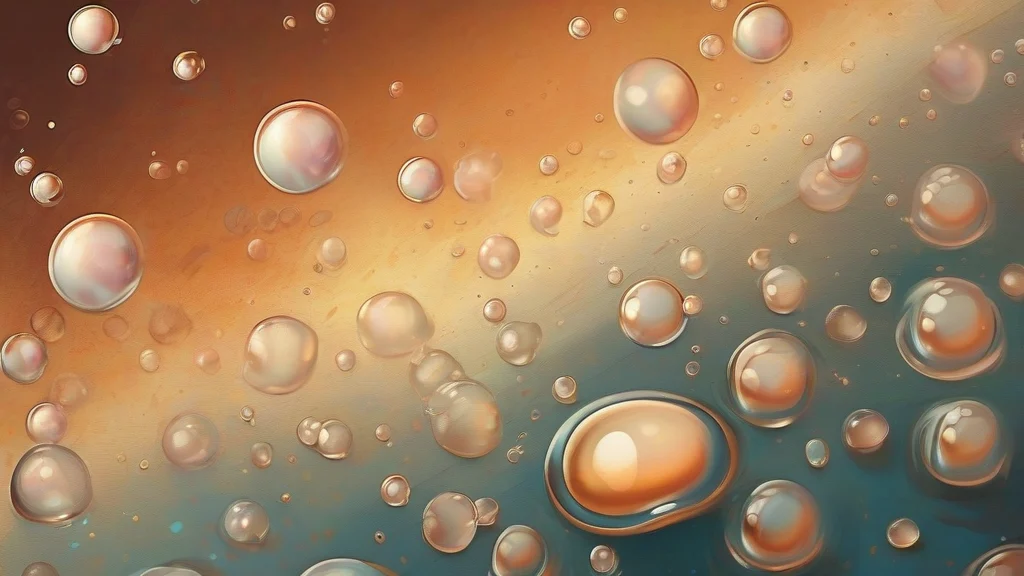
What does fizziness mean?
Fizziness is the noun form describing the quality of being fizzy — that lively, prickling sparkle produced by countless tiny bubbles of carbon dioxide rising through a liquid. It applies most directly to drinks such as soda, champagne, beer, and sparkling water, where it denotes both the visual dance of bubbles and the tingling sensation they create on the tongue. The word can also be used figuratively to describe an effervescent mood, atmosphere, or performance, lending a bright, energized tone to whatever it describes. Derived from the older word 'fizz', itself an imitative formation mimicking the hissing sound of escaping gas, fizziness sits comfortably alongside its adjective cousin 'fizzy'. Informal and friendly in register, it appears constantly in food writing, advertising, and everyday conversation, particularly in British English. Its natural opposite is flatness, whether in a stale drink or a dull occasion.
nounThe quality or state of being fizzy; the presence of many small bubbles of gas in a liquid, producing a prickling or sparkling sensation.
- The bubbling, effervescent quality of a carbonated drink.
- By extension, a lively, sparkling, or invigorating quality of something non-liquid, such as an atmosphere or experience.
"She loved the sharp fizziness of freshly poured lemonade on a hot afternoon."
"A dash of tonic water adds just the right fizziness to the cocktail."
"The film recaptured some of the fizziness of the band's early performances."
Fizziness is a mass (uncountable) noun in practice; a plural form exists grammatically but is rarely if ever used.
Fizziness is literally the sound of your drink talking back — the word 'fizz' was invented by English speakers imitating the hiss of escaping bubbles.
Reviewed by Deb Chak, Editor. AI-assisted content curated by RJS Tech Solutions LLP.
Etymology of fizziness
Fizziness derives from 'fizz', an English verb attested from at least the seventeenth century, which is onomatopoeic in origin — coined to imitate the hissing sound made by escaping gas. The adjective 'fizzy' developed as a natural derivative, and 'fizziness' arose as a straightforward noun formation from it, following the productive '-iness' pattern used to form abstract qualities from adjectives ending in '-y'. Because the root is imitative rather than borrowed from Latin or Greek, fizziness has no true classical cognates, though many languages have their own independent imitative words for effervescence.
Related word forms
How fizziness is actually used
Fizziness is an informal-to-neutral word, far more common in everyday and journalistic writing than in technical contexts, where 'effervescence' or 'carbonation' is preferred. It is especially common in British English in relation to soft drinks and wine. When applied figuratively to moods or atmospheres, it carries a positive, playful connotation.
Easily confused with fizziness
Fuzziness refers to a lack of clarity or sharpness (or a fuzzy texture), while fizziness refers to bubbly carbonation in liquids.