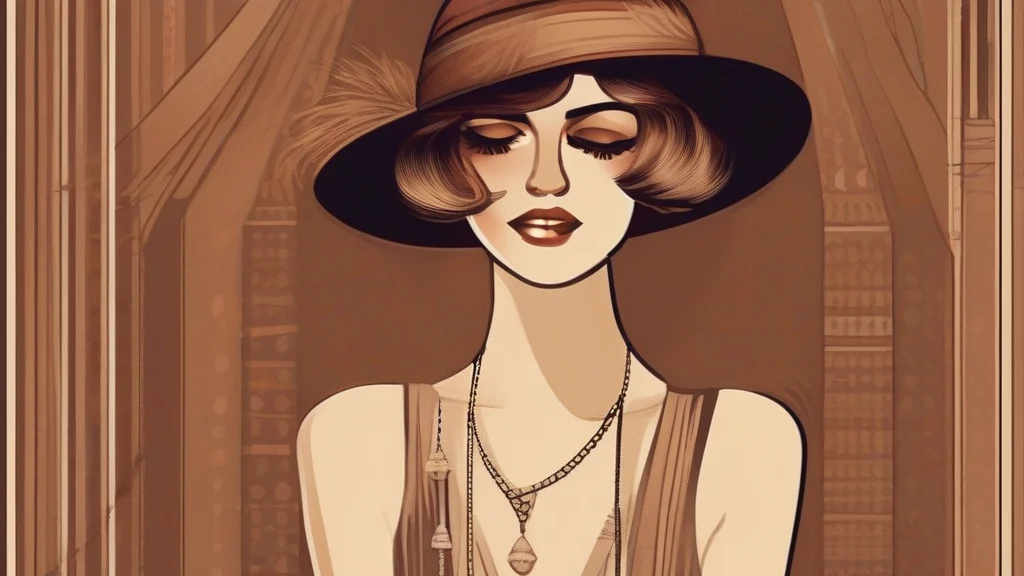
What does flapper mean?
A flapper is best known as a young woman of the 1920s who symbolized a new spirit of freedom: she wore knee-length dresses and cloche hats, cut her hair into a bob, danced the Charleston, smoked and drank openly, and challenged the social conventions expected of women before the First World War. The image combines glamour and defiance, which is why the word still evokes the Roaring Twenties whenever it appears. Less famously, flapper is also an older English word for a young bird — particularly a duck or partridge — not yet able to fly properly, its wings still flapping awkwardly; this earlier meaning is thought to have influenced the later one, since young women were seen as equally unsteady on their way to adulthood. Today the term is largely historical and nostalgic, appearing in costume descriptions, fiction set between the wars, and cultural commentary on women's changing roles. It remains a vivid shorthand for youthful rebellion dressed in fringe and beads.
A young woman of the 1920s characterized by bobbed hair, short skirts, and a boldly unconventional lifestyle.
"The photograph showed a row of flappers laughing on the boardwalk at Atlantic City."
Almost always used retrospectively or in period contexts today; it instantly signals the 1920s.
A young bird, especially a wildfowl, not yet able to fly properly; by extension, an awkward or immature young person.
"The gamekeeper shooed the partridge flappers back toward the covert."
This sense dates from the seventeenth century and survives mainly in older ornithological and sporting texts.
Standard plural; used when referring to more than one woman of the type or to the group collectively.
"Flappers crowded the dance halls of Chicago and New York throughout the decade."
Before it named the icon of the Jazz Age, 'flapper' spent two centuries describing baby ducks learning to fly.
Reviewed by Deb Chak, Editor. AI-assisted content curated by RJS Tech Solutions LLP.
Etymology of flapper
Flapper originated in seventeenth-century England, when it was used for young birds — especially wildfowl — whose wings were still too weak for proper flight, so they could only flap about. By the late eighteenth century the word had been extended figuratively to awkward, half-grown young people, sometimes called 'flappers' in jest. In the years after the First World War the term attached itself to the new generation of independent young women, popularized by the press and by figures such as F. Scott Fitzgerald's heroines, and became the defining label of the 1920s. Its closest relatives are other words built on the verb flap, itself an old English word for beating the wings.
Related word forms
How flapper is actually used
The word is strongly associated with the 1920s and is now chiefly historical or evocative rather than current slang; it carries connotations of glamour, rebellion, and modernity, though contemporary writers sometimes use it critically to caricature frivolity. When used today outside historical contexts, it almost always deliberately invokes that era.
Easily confused with flapper
A flipper is a flat limb used for swimming, such as a seal's fin or a diver's rubber paddle, whereas a flapper is either a 1920s young woman or, historically, a young bird learning to fly.
Flippant describes a casually disrespectful attitude, while a flapper is a person — specifically a fashionable, rebellious young woman of the 1920s.