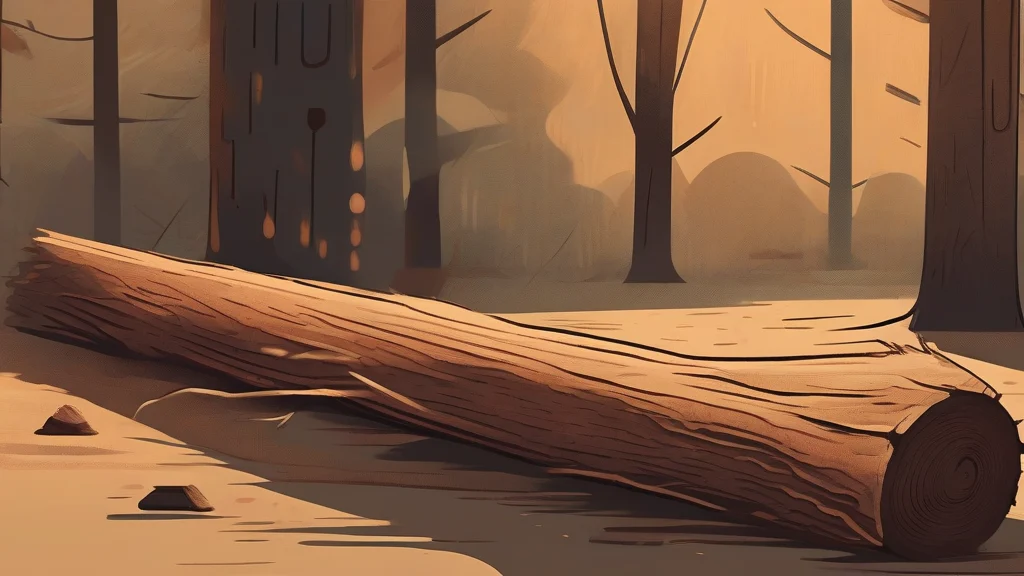
What does flitched mean?
Flitched is the past tense and past participle of flitch, a largely trade-level term meaning to cut something — most often a log — lengthwise into thick, squared boards called flitches. A sawyer who has flitched an oak trunk has produced substantial slabs that will later be resawn into planks; a butcher who has flitched a side of pork has sliced it into curing pieces. In structural engineering, the related phrase "flitched beam" denotes a timber beam stiffened by bolting metal plates to its sides, a composite design popular from the eighteenth century onward. The underlying noun, flitch, descends from Old English flicce, meaning a side of bacon, giving the word a curious double life spanning both the sawmill and the smokehouse. Today flitched appears almost exclusively in specialist contexts — carpentry, timber milling, heritage building restoration — rather than in ordinary speech.
verb (past participle); also used adjectivallyFlitched is the past tense and past participle of the verb flitch, meaning to cut a log lengthwise into thick boards (flitches), or to slice a side of pork into strips. As an attributive use, a "flitched beam" is one strengthened by a bolt-on metal plate.
- Cut (a log) into flitches — thick longitudinal boards with squared edges.
- Having been strengthened as a composite member, as in a flitched beam of timber reinforced with metal plates.
"The sawmill had flitched the oak log into heavy planks ready for drying."
"By evening the cedar had been flitched into rough boards stacked to season."
"The restoration relied on flitched beams, their original timber quietly reinforced with steel."
The word behind your bacon rasher and your steel-strengthened wooden beams is the same ancient word — flitched.
Reviewed by Deb Chak, Editor. AI-assisted content curated by RJS Tech Solutions LLP.
Etymology of flitched
Flitched derives from flitch, which comes from Old English flicce, meaning a flank or side of a slaughtered pig, a word with cognates in other Germanic languages such as Old Norse. From the butchery sense the term was extended to timber, where a flitch came to mean a thick board sawn lengthwise from a log. The composite engineering notion of a flitched beam arose in the Georgian era, when iron plates were married to timber for added strength.
Related word forms
How flitched is actually used
Chiefly a trade term among sawyers, carpenters, and butchers; rare in everyday conversation. The past-tense form is uncommon in speech, appearing mostly in technical writing about timber processing or structural engineering.
Easily confused with flitched
"Flicked" describes a light, quick striking motion with a finger, whereas "flitched" refers to having been cut into thick slabs of timber or bacon.