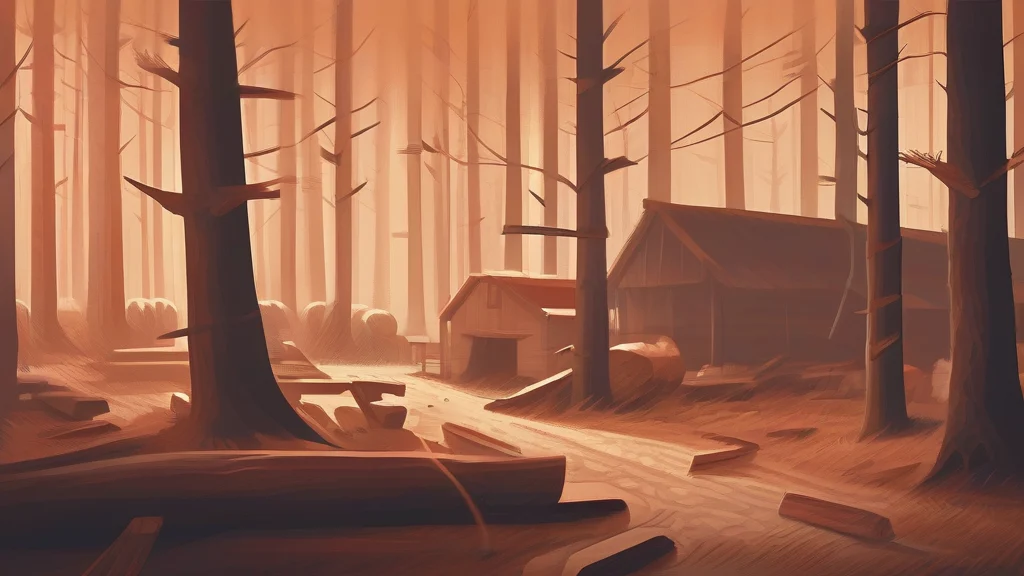
What does flitching mean?
Flitching is the act of cutting material — most commonly timber or cured pork — into flitches, which are thick, flat longitudinal sections. In woodworking, flitching is the first major step in breaking down a large log: the sawyer slices it lengthwise into broad slabs, which may then be resawn into boards or sliced into veneer, prized because flitch-cut material preserves a continuous grain pattern across consecutive sheets. In traditional butchery, flitching refers to dividing a cured pig into its two sides, each called a flitch of bacon — a term familiar from the historic Dunmow Flitch custom, in which couples who could swear a year of marital harmony were awarded one. The word belongs to specialist registers rather than everyday speech, but it survives robustly in timber trade vocabulary and heritage food writing.
verbThe present participle and gerund of the verb "flitch": to cut timber into flitches (thick longitudinal slabs) or to slice meat, especially bacon, into flitches. It can also describe the act of removing such strips or sides.
- To cut a log of timber into flitches — thick, flat longitudinal slabs — before further sawing.
- To cure and slice pork into flitches (sides of bacon).
"The sawyer spent the morning flitching the oak log into broad, even slabs."
"The mill was busy flitching hardwood all week to keep up with orders for veneer stock."
"In the old farmyard tradition, December meant flitching the pig and hanging the sides of bacon to cure."
Reviewed by Deb Chak, Editor. AI-assisted content curated by RJS Tech Solutions LLP.
Etymology of flitching
"Flitching" is formed from the verb "flitch", which derives from the Old English noun "flicce", meaning a flank or side of bacon. The Old English word has cognates in other Germanic languages, reflecting a shared Germanic root concerned with the sides of an animal. Over time the term was extended in the timber trade to denote comparable longitudinal slabs of wood, and the -ing form simply follows standard English verb inflection.
How flitching is actually used
This is a rare, technical word today, found mainly in woodworking and traditional butchery contexts. It appears almost exclusively in its -ing form or alongside the base verb "flitch"; the noun "flitch" itself is far more common than the verb it derives from.
Easily confused with flitching
Filching means stealing something petty, while flitching refers to cutting wood or meat into flitches; despite their similar spelling, the two words are unrelated.