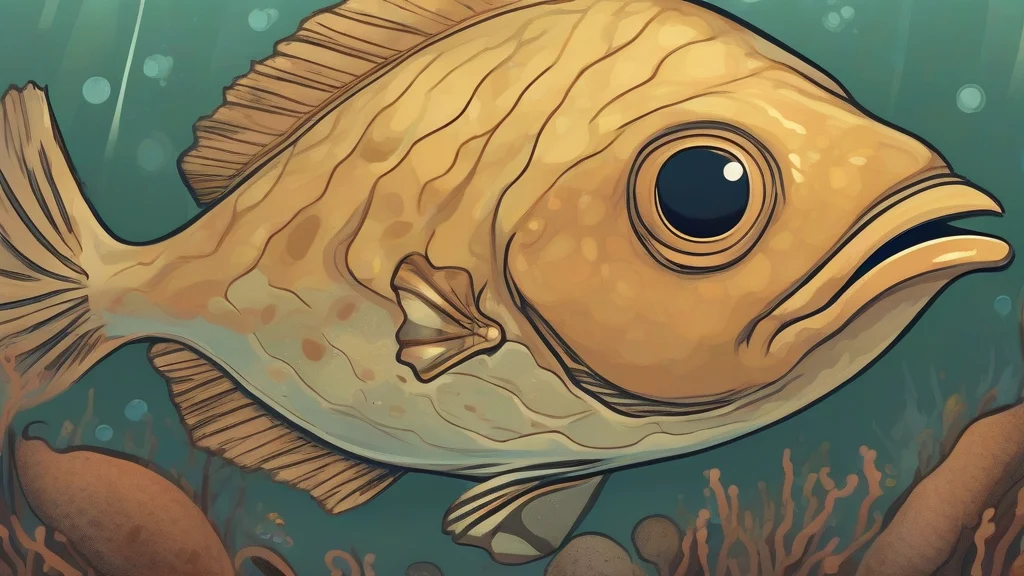
What does flounder mean?
Flounder is unusual in serving as both a noun and a verb, with each sense reinforcing the other's vividness. As a noun, it denotes a flatfish — a bottom-dwelling marine fish whose flattened, asymmetrical body carries both eyes on one side of its head, an adaptation for lying camouflaged on the seabed. Several related species are marketed as flounder and valued as mild-flavored food fish. As a verb, to flounder means to struggle clumsily or helplessly, whether literally — a horse floundering in deep mud, a swimmer floundering in rough surf — or figuratively, as when a student flounders through an unfamiliar subject or a business flounders without leadership. The figurative use dominates modern usage and evokes sympathy rather than contempt, suggesting someone out of their depth rather than simply inept. The word should not be confused with founder, which implies outright collapse or failure. Its dual identity makes it a memorable addition to any vocabulary.
Any of various flatfishes with a flattened body and both eyes on one side of the head, living on the seabed and valued as food.
"The restaurant's special was pan-fried flounder with lemon butter."
In American markets, the term covers several species beyond the European flounder.
To struggle clumsily or helplessly, either physically (in water, mud, or snow) or figuratively (when confused or out of one's depth).
"Without a clear plan, the negotiations floundered for weeks."
Usually intransitive; figurative use now predominates over literal use.
When referring to the fish as food, flounder is typically used as a mass noun ('fresh flounder'). When counting individual fish, 'flounders' is standard.
"The tide pools were scattered with small flounders."
The fish and the struggle share a name for a reason: watch a flatfish flop on deck, and you'll never forget what it means to flounder.
Reviewed by Deb Chak, Editor. AI-assisted content curated by RJS Tech Solutions LLP.
Etymology of flounder
The verb 'flounder' appeared in English around the late 16th century and is generally thought to be a modification of 'founder' (to collapse or sink), perhaps blended with 'flounce' or influenced by the fish's thrashing movements. The noun referring to the flatfish is somewhat older and of obscure origin, possibly borrowed from a French source such as Old Northern French 'flondre'. Because the two words arose independently and their histories are entangled, even etymologists treat some details as uncertain.
Related word forms
How flounder is actually used
Both noun and verb senses are standard and common in British and American English. The verb often carries a sympathetic connotation of being overwhelmed rather than merely incompetent, and it frequently appears in figurative contexts involving businesses, careers, or arguments losing direction. In American cuisine, 'flounder' commonly refers to several similar flatfish sold interchangeably.
Easily confused with flounder
To founder is to collapse or fail utterly (as a ship filling with water or a venture going under), while to flounder is to struggle clumsily without necessarily failing.