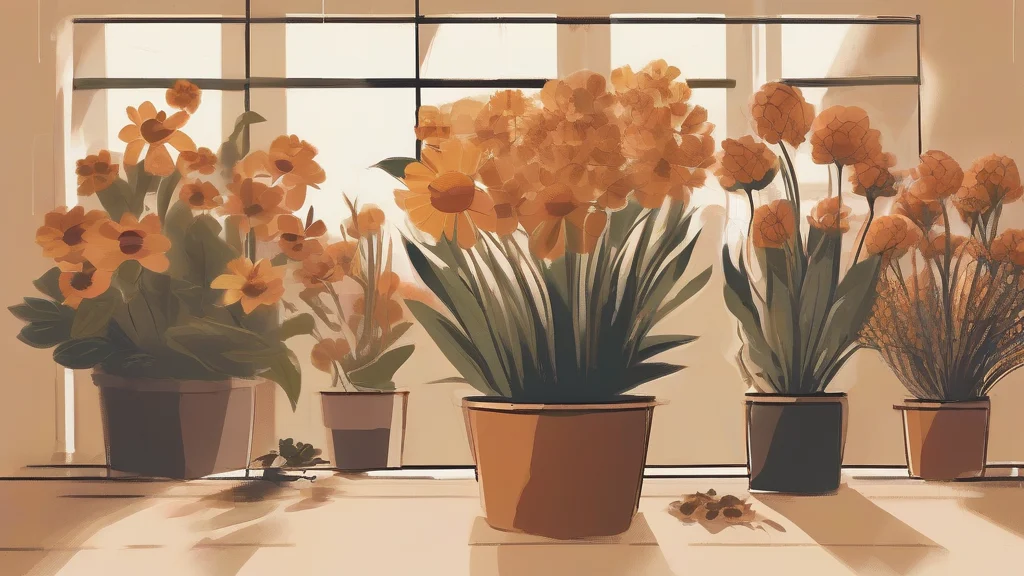
What does flowerer mean?
In modern usage, 'flowerer' is a noun drawn almost entirely from horticulture: it denotes a plant that produces flowers, most often appearing in the evaluative language of gardeners and plant catalogues. Rather than merely stating that a plant can bloom, describing something as a 'good flowerer', 'prolific flowerer', or 'repeat flowerer' characterizes how abundantly, reliably, or continuously it blossoms — making the term a shorthand for flowering performance. Garden writers use it when comparing varieties, recommending roses, clematis, or perennials that will deliver color across a long season. Outside of gardening circles the word is rare, and most speakers instead say a plant 'blooms' or 'flowers'. Derived simply from the verb 'flower' plus the agentive suffix '-er', it follows the same pattern as words like 'grower' or 'bloomer', translating a botanical activity into a nameable trait. For anyone reading planting guides or nursery descriptions, understanding 'flowerer' helps decode what is essentially a promise about a plant's future display.
nounA plant that produces flowers, especially one noted for flowering freely, repeatedly, or over a long season; in horticulture it often serves as a descriptive label for a plant's blooming performance.
- A plant that produces flowers, particularly one characterized by its flowering habit (e.g., a prolific, repeat, or early flowerer).
"Rosa 'Iceberg' is famously a repeat flowerer, blooming from early summer until the first frost."
"Clematis 'The President' is a reliable repeat flowerer, giving two flushes of blooms each year."
"Of all the salvias in the border, this variety proved the most generous flowerer."
Standard plural; used when comparing multiple plants by their flowering habit.
"Among the dahlias, several proved to be outstanding repeat flowerers."
In gardening catalogues, 'flowerer' isn't just a word — it's a verdict: plants are rated as 'good', 'poor', 'repeat', or 'prolific' flowerers before you ever see them bloom.
Reviewed by Deb Chak, Editor. AI-assisted content curated by RJS Tech Solutions LLP.
Etymology of flowerer
'Flowerer' is formed by adding the Germanic agentive suffix '-er' to the verb 'flower', meaning to blossom or come into flower. The verb 'flower' itself descends through Old French 'flur', 'flor' from Latin 'flōs', flōris ('flower'), the same root that gives English 'floral', 'flora', and 'florist'. The word emerged in English alongside the growth of cultivated gardening language, where agent nouns ending in '-er' were routinely coined to name things that perform an action.
How flowerer is actually used
The term belongs chiefly to horticultural and gardening vocabulary rather than everyday conversation, where people usually say a plant 'blooms' or 'flowers'. It functions almost as an evaluative label: garden writers speak of plants being 'good', 'free', 'repeat', or 'poor' flowerers. A rarer, largely historical sense treats 'flowerer' as a person who cultivates or sells flowers, but this usage is now uncommon.
Easily confused with flowerer
'Flowering' is an adjective describing the act or state of producing flowers, while 'flowerer' is a noun naming the plant (or grower) itself.