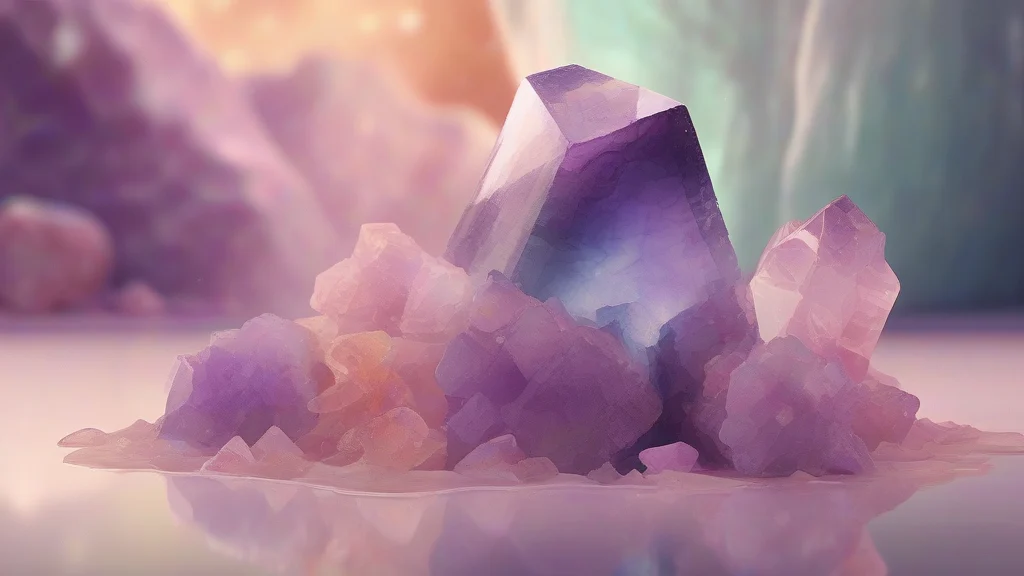
What does fluorite mean?
Fluorite is a naturally occurring mineral composed of calcium fluoride, notable for the extraordinary range of colours it displays — purple, green, blue, yellow, and even colourless — sometimes within a single crystal. It is comparatively soft and can be scratched by a knife, and it typically forms cubic or octahedral crystals that are treasured by collectors and museums alike. A defining property of many specimens is fluorescence: under ultraviolet light they emit a striking glow, a phenomenon named after this very mineral. Industrially, fluorite matters enormously, serving as a flux in steelmaking and as the principal commercial source of fluorine, from which products such as toothpaste additives are ultimately derived. In Britain, the banded blue-and-purple variety known as Blue John has been mined in Derbyshire for centuries and turned into ornamental vessels. The name derives from the Latin fluere, 'to flow', reflecting its long-standing role in helping metals melt and fuse.
nounA soft, colourful crystalline mineral consisting of calcium fluoride (CaF₂), widely used as a source of fluorine and in industry as a flux, and prized by collectors for its vividly coloured, often fluorescent crystals.
- The mineral calcium fluoride (CaF₂), occurring in cubic or octahedral crystals of many colours and used industrially as a flux and source of fluorine.
"The museum's new display cases glittered with amethyst-purple fluorite from the Derbyshire mines."
"Veins of green and purple fluorite run through the limestone beneath the old lead mine."
"Because it cleaves easily and is relatively soft, fluorite is cut mainly for collectors rather than for everyday jewellery."
The plural is rare and appears mainly when discussing multiple specimens or occurrences, as in mineral collections or geological surveys.
"The drawer held fluorites of every hue, from deep violet to sea-green."
Fluorite gave us the very word 'fluorescence' — scientists studied its eerie glow before they understood why so many other minerals shine the same way.
Reviewed by Deb Chak, Editor. AI-assisted content curated by RJS Tech Solutions LLP.
Etymology of fluorite
The word fluorite comes from the Latin fluere, meaning 'to flow', because the mineral was long used as a flux that lowers the melting point of ores and helps them flow during smelting. Its earlier common name, fluorspar, preserves this same origin, and the related element name fluorine was likewise drawn from the Latin root. The mineral's fluorescent behaviour later inspired the term 'fluorescence', coined in the nineteenth century after studies of its glowing properties.
How fluorite is actually used
Fluorite is primarily a scientific and technical term, appearing most often in geology, mineral collecting, and industrial chemistry contexts. In older and trade literature the same mineral is frequently called 'fluorspar', which remains common in industry. The term carries no emotional connotation; it is descriptive rather than evaluative.
Easily confused with fluorite
Fluorine is the chemical element itself, while fluorite is the natural mineral compound (calcium fluoride) that contains it.
Fluoride is the negatively charged ion or its compounds (as in toothpaste additives), whereas fluorite is a specific crystalline mineral.
Fluorescent describes the glow some minerals emit under ultraviolet light; fluorite is famous for this effect but is not itself the adjective.