What does fob mean?
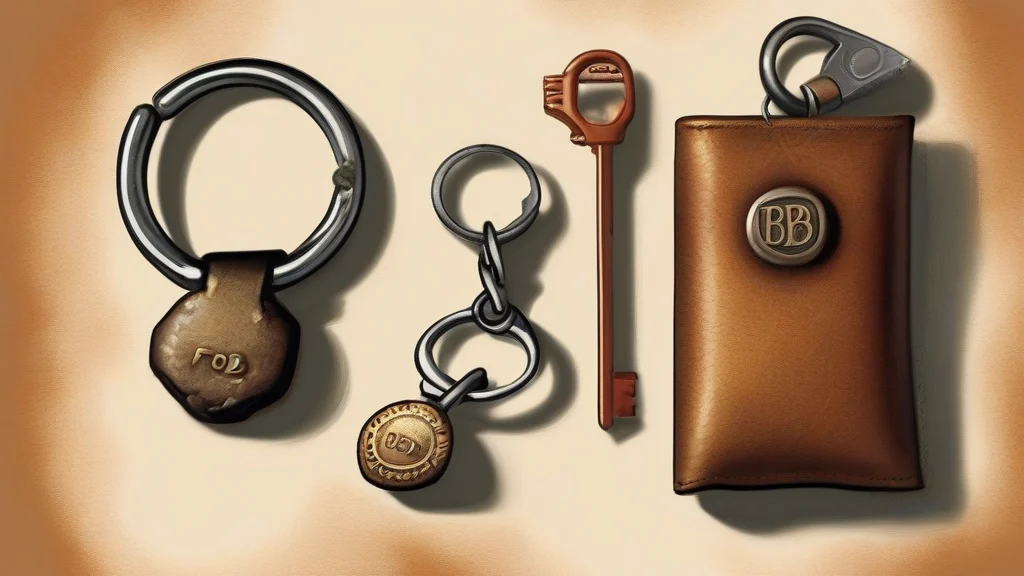
A fob is a small object designed to hang from or decorate a pocket, watch chain, or set of keys. Historically, a fob was an ornamental seal or charm attached to the ribbon or chain of a pocket watch, often tucked into a small dedicated waistcoat pocket known as the fob pocket — a detail still preserved in tailoring terminology today. In contemporary life the word most commonly refers to the compact plastic remote used to lock and unlock cars or grant access to buildings, the familiar 'key fob'. The word also survives as a verb: to fob someone off means to dismiss their concerns with flimsy excuses or to palm them off with something inferior, a usage tinged with mild disapproval. Spanning three centuries of everyday carry, from pocket watches to proximity sensors, 'fob' is a small but remarkably durable piece of vocabulary.
A small ornament, charm, or seal attached to a watch chain or worn at a pocket; a short strap or tab for holding keys; or a compact remote-control device for locking vehicles or granting access.
"She kept her office pass on a bright red fob so she could find it easily."
'Key fob' is now the dominant modern collocation.
To fob someone off is to dismiss them with an inadequate excuse, or to deceive them by passing off something inferior as satisfactory.
"Customer service tried to fob me off with a voucher instead of a refund."
Almost always used in the phrasal form 'fob off', typically with 'off' following or preceding the object.
Regular plural; commonly used of collections of key fobs or antique watch fobs.
"He collected antique watch fobs from Victorian-era auction houses."
The word 'fob' has survived from the age of pocket watches into the age of keyless cars — the same little word now unlocks your front door by radio signal.
Reviewed by Deb Chak, Editor. AI-assisted content curated by RJS Tech Solutions LLP.
Etymology of fob
The noun 'fob' first appears in English in the late seventeenth century, when it denoted a small pocket for a watch or its attached ornament. Its ultimate origin is uncertain; it may derive from a Germanic source, though lexicographers have not settled on a definitive root. The verb 'to fob off' developed around the same period, possibly influenced by or connected with 'fop' or similar terms implying trickery or pretence, and came to mean deceiving or dismissing someone with excuses.
Related word forms
How fob is actually used
In modern usage 'key fob' is by far the most common form, especially in reference to cars and building entry systems; the older sense of an ornamental watch-chain attachment survives mainly in antique and historical contexts. As a verb, 'to fob off' is informal to neutral in register and carries a mildly negative connotation of being brushed aside or palmed off with something inferior.
Easily confused with fob
A 'fop' is a man excessively concerned with his clothes and appearance, whereas a 'fob' is an object such as a pocket ornament or key tag.