What does foddered mean?
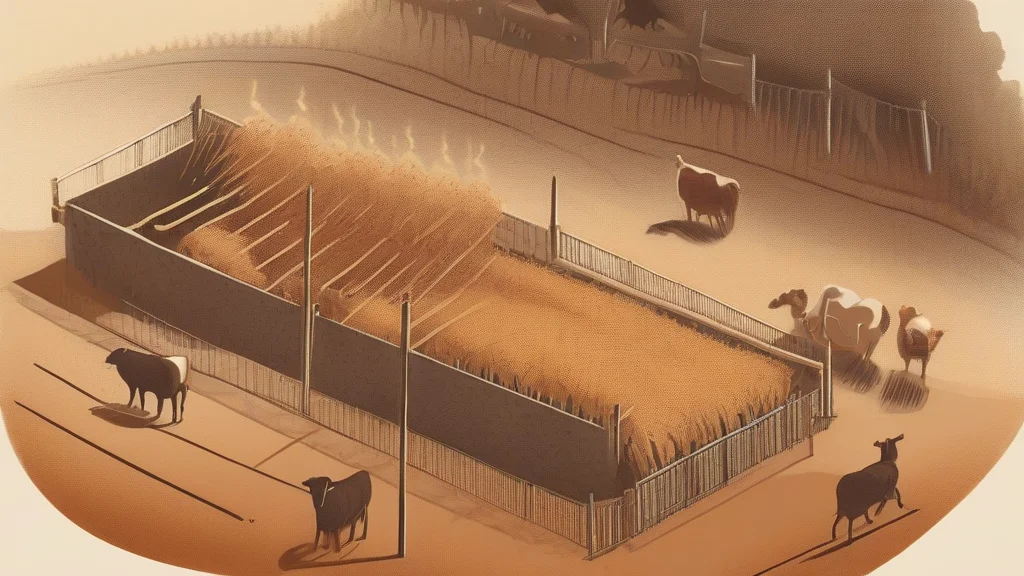
Foddered describes animals—typically cattle, horses, sheep, or other livestock—that have been given fodder, meaning hay, straw, grain, or other coarse feed. It functions as the past participle of the verb 'fodder', so saying the herd was well foddered simply means it had been properly fed, usually in preparation for winter or a period when grazing was impossible. The word carries rustic, agricultural connotations and belongs firmly to the language of farming and rural life; in modern usage it sounds distinctly old-fashioned, appearing more often in historical accounts and country dialects than in everyday conversation. Its parent noun, 'fodder', remains very much alive, particularly in the phrase 'cannon fodder'. Foddered derives from the Old English fōdor, sharing an ancient Germanic root with 'food' and 'feed', which makes this humble farming word part of one of the oldest word families in English.
Supplied or provided with fodder; having been fed.
"The foddered oxen rested contentedly in their stalls."
Almost always encountered in rural or historical contexts.
Past tense and past participle of the verb 'fodder': to give fodder to (livestock).
"They foddered the sheep before dawn."
The verb itself is now uncommon; 'feed' is the normal modern choice.
Every 'foddered' ox on an English farm carries a linguistic fossil: the word traces back to Old English fōdor, the same ancient root that gave us both 'food' and 'foster'.
Reviewed by Deb Chak, Editor. AI-assisted content curated by RJS Tech Solutions LLP.
Etymology of foddered
Foddered descends from the verb formed on 'fodder', which comes from the Old English fōdor, meaning food for animals. This derives ultimately from the Proto-Germanic root underlying both 'food' and 'feed', making 'fodder' a sibling of those common words rather than a borrowing from Latin or French. The Germanic lineage is shared with cognates such as German Futter and Dutch voer. As an adjective, 'foddered' arose simply from the participle use of the verb in livestock husbandry.
Related word forms
How foddered is actually used
A somewhat old-fashioned and largely rural term, now mostly found in agricultural writing, historical fiction, and regional speech. It appears almost exclusively as the past participle of the verb 'fodder'; the base noun 'fodder' is far more common today, especially in its figurative sense ('cannon fodder').
Easily confused with foddered
'Foddered' means supplied with animal feed, while 'fathered' means sired children or founded/authored something.