
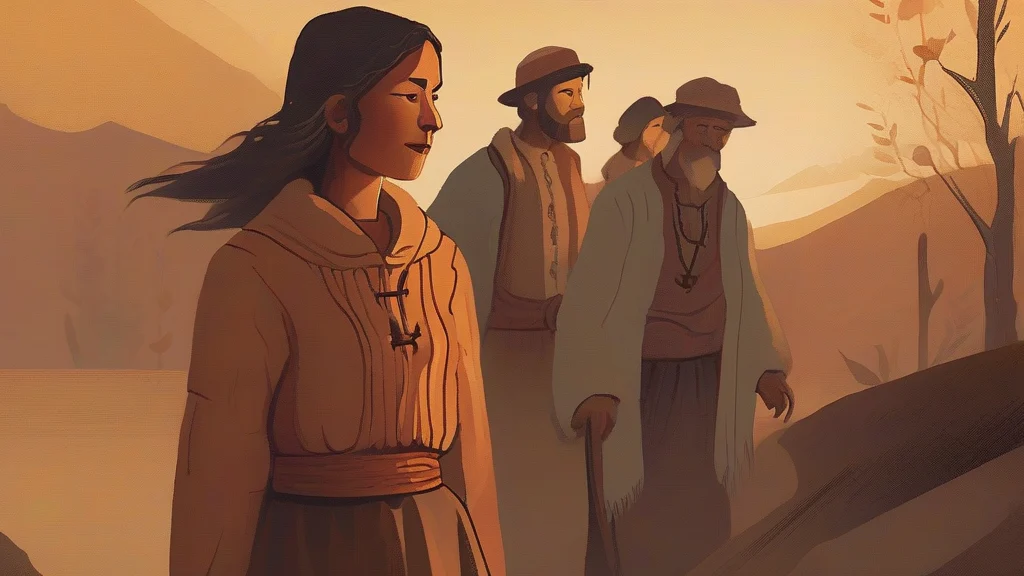
What does folklore mean?
Folklore is the body of traditional stories, beliefs, songs, customs, and practices that a community passes down informally from generation to generation, typically by word of mouth rather than through written records. It encompasses fairy tales, legends, proverbs, riddles, rituals, festivals, and crafts — everything a group of people collectively creates and preserves about how the world works and who they are. Unlike official history or literature, folklore has no single author; each teller reshapes it, so versions vary by region and era. The term also names the academic discipline that studies these traditions. Though sometimes dismissed as quaint or unverified, folklore offers scholars and general readers alike a rich record of shared values, fears, and hopes. From Irish banshees to American tall tales, it remains a living, evolving expression of cultural identity.
nounThe traditional beliefs, customs, stories, songs, and practices of a people, transmitted orally or by custom from generation to generation rather than through formal writing or institutions.
- The traditional tales, beliefs, customs, songs, and practices passed down orally within a community or culture.
- The academic study of such traditions (folklore as a scholarly discipline).
"The village's folklore held that a spirit guarded the old bridge at midnight."
"In Irish folklore, the banshee's wail is said to foretell a death in the family."
"She studied Appalachian folklore for her doctorate in cultural anthropology."
Rarely used; 'folklore' is almost always treated as a mass noun referring to the traditions of one community. A plural appears mainly when comparing multiple distinct regional traditions side by side.
"The conference compared the folklores of coastal fishing villages across Europe."
The word 'folklore' was coined in 1846 by an English antiquarian writing under the pen name Ambrose Merton — a brand-new term for humanity's oldest stories.
Reviewed by Deb Chak, Editor. AI-assisted content curated by RJS Tech Solutions LLP.
Etymology of folklore
The English word 'folklore' is a deliberate modern coinage: in 1846 the antiquarian William John Thoms, writing under the pseudonym Ambrose Merton in the magazine The Athenaeum, proposed it as a replacement for the then-current term 'popular antiquities.' It combines 'folk,' meaning the common people (a word of ancient Germanic origin), with 'lore,' meaning learning or teaching (from Old English 'lār'). Germanic roots give it cognates across languages such as German 'Volk.'
Related word forms
How folklore is actually used
'Folklore' is neutral in register but can carry a slightly dismissive connotation when applied to personal or unverified beliefs, as in 'that's just folklore.' It refers both to the traditions themselves and, in academic contexts, to their formal study.