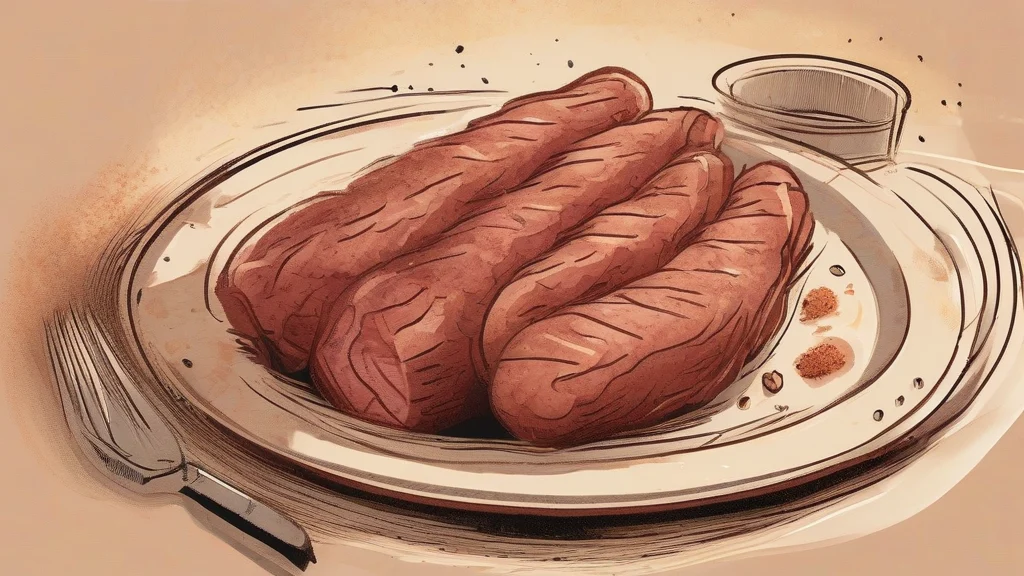
What does forcemeat mean?
Forcemeat is a finely chopped or ground mixture of meat and fat, heavily seasoned and often bound with breadcrumbs, eggs, or cream. It is a foundational element of classical European cookery: stuffed into poultry and game, formed into quenelles or forcemeat balls, and used as the base for pâtés, terrines, galantines, and sausages. The name reflects its method of production — the meat is literally 'forced' through a grinder or pounded to a fine paste. Though once central to elaborate haute cuisine, the term now sounds somewhat old-fashioned, appearing mainly in recipe books and professional kitchens, where home cooks would simply say 'stuffing' or 'sausage meat'. Forcemeat derives from the French farce, itself rooted in the Latin farcire, meaning 'to stuff' — a linguistic cousin of theatrical farce. Knowing the word offers a window into both culinary technique and the surprisingly intertwined histories of cooking and language.
nounA finely chopped or ground mixture of meat, fat, and seasonings, often with breadcrumbs or other binders, used as a stuffing or as the base for dishes such as pâtés, galantines, and sausages.
- A finely ground, highly seasoned mixture of meat (often with fat, breadcrumbs, and seasonings) used especially as a stuffing for poultry or game, or shaped into balls.
- A similar ground-meat paste used as the basis of charcuterie items such as pâtés, terrines, galantines, and sausages.
"The chef seasoned the forcemeat with brandy, thyme, and a hint of nutmeg before stuffing it into the quail."
"She rolled the leftover forcemeat into small balls and poached them in broth."
"A classic galantine begins with a smooth, well-chilled forcemeat spread over the flattened skin."
Rarely used; 'forcemeat' is normally an uncountable mass noun. The plural appears mainly in older cookery texts referring to multiple different forcemeat preparations.
"The Victorian cookbook offered recipes for several forcemeats, each suited to a different bird."
The word on your holiday menu is secretly theatrical: 'forcemeat' comes from the same root as 'farce', the word for slapstick comedy — because both trace back to French farcir, 'to stuff'.
Reviewed by Deb Chak, Editor. AI-assisted content curated by RJS Tech Solutions LLP.
Etymology of forcemeat
Forcemeat entered English in the late seventeenth century, borrowed from French cuisine. The 'force' element derives from the French farce, meaning a stuffing, which in turn comes from the Latin farcire, 'to stuff or cram'. This same Latin root gave rise to the English word 'farce' in its theatrical sense, so the culinary and comedic uses of 'farce' share a common ancestor. Related terms such as 'stuffing' describe similar preparations but lack the specific implication of finely forced, uniform texture that defines true forcemeat.
How forcemeat is actually used
The term belongs chiefly to classical and professional cookery; everyday home cooks are more likely to say 'stuffing' or 'sausage meat'. It carries a somewhat old-fashioned, formal connotation today and appears most often in recipe books, food writing, and discussions of traditional European cuisine. The plural is rare, as the word usually denotes an uncountable mass.
Easily confused with forcemeat
'Farce' as a culinary term refers to a similar seasoned meat paste (and 'forcemeat' derives from it), but in modern English 'farce' usually means a broad comedy, so context determines which sense applies.
'Stuffing' is any mixture used to fill a cavity before cooking, whereas 'forcemeat' is specifically a finely ground, highly seasoned meat-based mixture.
'Mincemeat' traditionally refers to a sweet mixture of dried fruit, suet, and spices used in pies, while 'forcemeat' is a savoury ground-meat preparation.