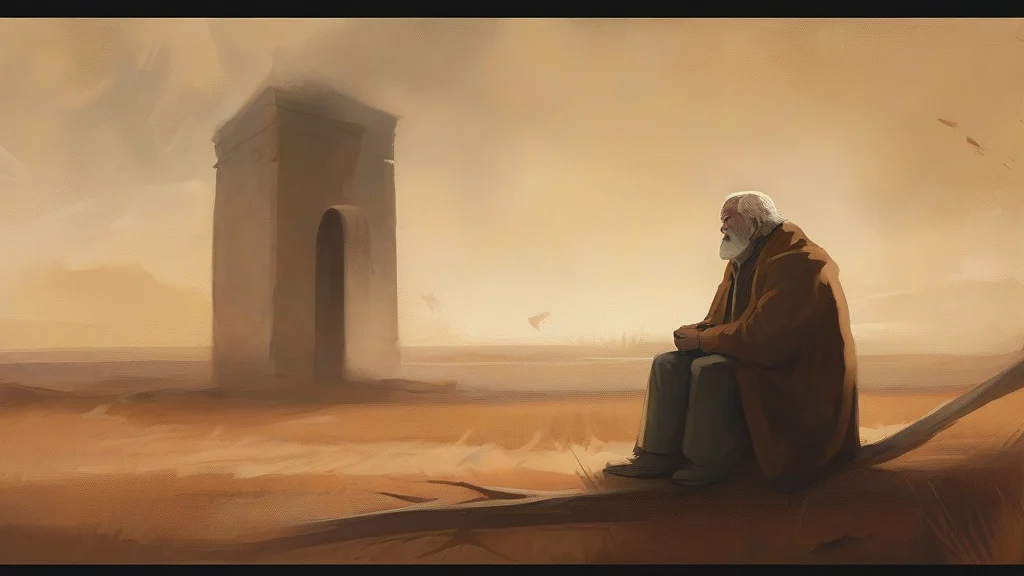
What does forefatherly mean?
'Forefatherly' is a rare English adjective used to describe someone or something that embodies the qualities befitting an ancestor — gravity, dignity, traditionalism, and inherited wisdom. It combines 'forefather', meaning an ancestor, with the adjectival suffix '-ly', much as 'fatherly' derives from 'father'. The word typically appears in literary or descriptive contexts, characterising a person whose manner, speech, or values evoke earlier generations: a clan elder delivering counsel, or a custodian preserving ancestral customs. Its connotations are warmly reverent rather than critical; it implies respect for heritage rather than stagnation. Because it is uncommon, readers may encounter it infrequently outside historical writing, yet it remains useful when an author wants to signal ancestral authority more precisely than generic terms like 'old-fashioned' allow. Related, far more common terms include 'fatherly', which conveys parental warmth, and 'ancestral' or 'patriarchal', which describe lineage and family leadership respectively.
adjectiveHaving the character, manner, or authority befitting a forefather; resembling or expressive of one's ancestors, especially in gravity or traditionalism.
- Befitting or characteristic of one's forefathers; carrying an air of ancestral gravity or tradition.
"His forefatherly bearing and old-fashioned counsel made him the natural patriarch of the family."
"The village elder spoke in a forefatherly tone, as though reciting wisdom handed down for generations."
"There was something forefatherly about his insistence on observing the old ceremonies exactly as his great-grandparents had."
'Forefatherly' is so rare that many dictionaries skip it entirely — a word that literally channels the voice of your ancestors.
Reviewed by Deb Chak, Editor. AI-assisted content curated by RJS Tech Solutions LLP.
Etymology of forefatherly
'Forefatherly' derives from 'forefather', itself formed within English from the prefix 'fore-' (before, earlier) combined with 'father', which descends from Old English 'fæder'. The suffix '-ly' converts the noun into an adjective describing its characteristic quality, paralleling the formation of 'fatherly' from 'father'. The word thus has an entirely Germanic, English-language pedigree rather than a Latin or Greek root. Its close relatives include 'fatherly', 'fatherhood', and the broader term 'forebears' used for ancestors generally.
How forefatherly is actually used
'Forefatherly' is an uncommon, somewhat literary adjective; it appears far more often in older texts and descriptive prose than in everyday conversation. It carries a positive, dignified connotation, suggesting reverence for tradition rather than mere old age.
Easily confused with forefatherly
Fatherly describes the warm, protective manner of a father toward children, whereas forefatherly evokes the gravitas and traditions of distant ancestors.