What does foremanship mean?
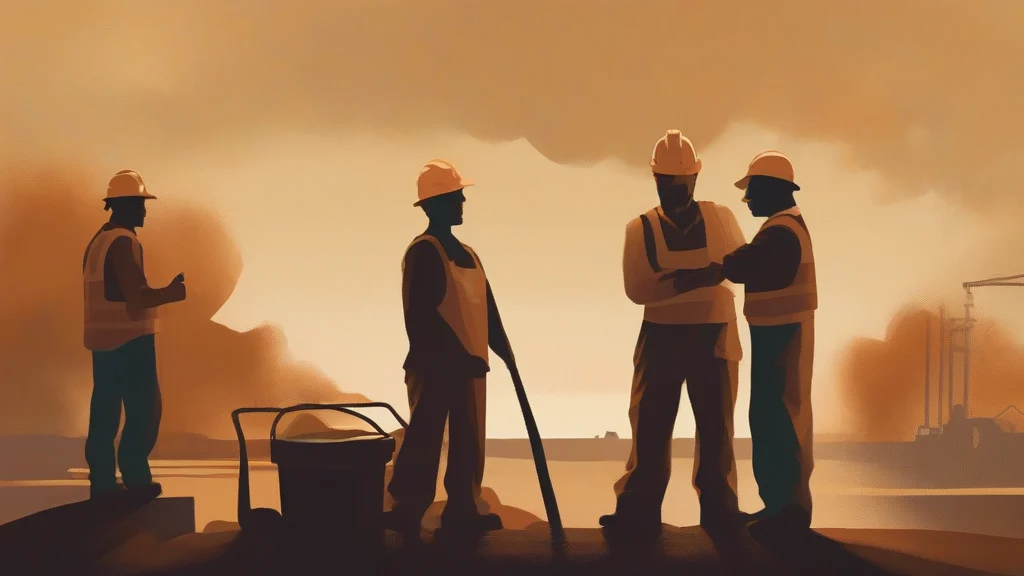
Foremanship is the state or position of being a foreman — the worker entrusted with supervising and directing a crew of colleagues, whether on a factory floor, a building site, a dock, or a farm. The word carries two main senses: the formal rank itself, and, by extension, the practical skill of leading and coordinating manual workers. A closely related use appears in courtrooms, where the foremanship of a jury denotes the office of its presiding member, who speaks on the panel's behalf. Historically central to industries organised around gangs and shifts, foremanship connotes reliability, practical expertise, and earned authority — typically promoted from within the ranks rather than appointed from above. Though modern workplaces increasingly speak of supervisors and team leaders instead, the term endures in trade unions, collective bargaining agreements, and legal settings, where it preserves a distinctive vocabulary of rank and responsibility among working people.
The position, rank, or office of a foreman; a worker's status as the supervisor of a crew, gang, or shift.
"With his promotion to foremanship came both higher wages and the weight of responsibility for every man on the line."
The skill or quality of competent supervision and direction of workers.
"Good foremanship requires knowing the work as well as knowing the people who do it."
Rarely pluralised; used only when comparing or counting multiple instances of the role, e.g. across different sites or eras.
"He held foremanships at two different shipyards during his career."
In a jury room, 'foremanship' isn't just a job title — it's the centuries-old duty of standing up and speaking for twelve.
Reviewed by Deb Chak, Editor. AI-assisted content curated by RJS Tech Solutions LLP.
Etymology of foremanship
Foremanship is formed from 'foreman', an English compound of the prefix 'fore-' (meaning 'before' or 'in front') with 'man'. The element 'fore-' derives from Old English 'fore', related to 'before' and to the root behind 'foremost'. Since a foreman literally stands 'in front of' his crew — first in place and first in authority — the suffix '-ship', denoting a state or office, was added to create the abstract noun. The same 'fore-' root gives English many familiar words such as 'forecast', 'foresight', and 'foreword'.
How foremanship is actually used
Foremanship is a formal-to-neutral register noun, most at home in industrial, trade-union, and legal contexts. In modern workplace language it often overlaps with 'supervisory role' or 'team lead', but it retains a traditional, blue-collar flavour tied to skilled trades rather than office management.
Easily confused with foremanship
A foreman is the person who supervises others, while foremanship is the abstract noun referring to that role, rank, or quality itself.