What does foremast mean?
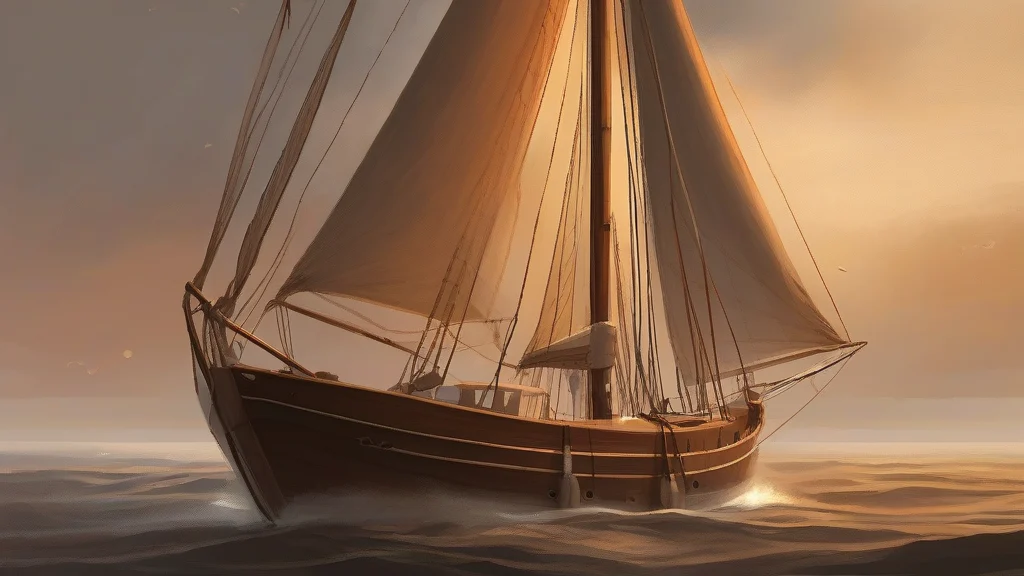
The foremast is the mast of a sailing vessel that stands nearest the bow, making it the forward counterpart to the taller mainmast amidships and, on larger ships, the mizzenmast aft. Carrying its own sails — typically foresails such as the fore course, fore topsail, and fore topgallant — it was essential to a square-rigger's propulsion and balance. The term belongs firmly to nautical vocabulary: sailors stationed at the forward part of the ship were known as 'foremast hands', and the phrase 'before the mast' came to describe ordinary seamen generally. Today the word appears chiefly in maritime history, tall-ship terminology, and classic sea fiction, where rig descriptions rely on it. Though specialized, it remains a precise and evocative term for anyone reading about the great age of sail.
nounThe mast situated nearest the bow (front) of a sailing vessel, typically the second tallest after the mainmast.
- The vertical spar (mast) on a sailing ship closest to the bow.
"The lookout climbed the foremast to scan the horizon for land."
"The lookout climbed the foremast to scan the horizon for land."
"The storm snapped the foremast cleanly at its base, leaving the crew to improvise a jury rig."
Sailors assigned to work the foremast were called 'foremast hands' — and in the age of sail, 'before the mast' became shorthand for ordinary seamen themselves.
Reviewed by Deb Chak, Editor. AI-assisted content curated by RJS Tech Solutions LLP.
Etymology of foremast
Foremast combines 'fore', from Old English 'foran' meaning front or forward position, with 'mast', whose nautical form derives via Old English 'mæst' from Proto-Germanic origins. It emerged as a distinct term as European ships evolved from single-masted vessels into multi-masted rigs during the late medieval period, when the forward mast came to be named for its position. Its sibling terms — mainmast and mizzenmast — share this positional naming logic, and the wider 'fore-' family includes nautical compounds such as forecastle and fore-and-aft rigging.
How foremast is actually used
A technical nautical term used mainly in maritime contexts, sailing literature, and historical accounts of the age of sail; rarely encountered outside these settings.
Easily confused with foremast
"Foremost" means first or most prominent in rank or importance, while "foremast" is specifically the forward-most mast of a ship.
The mainmast is the tallest central mast of a ship, whereas the foremast is the shorter mast positioned nearer the bow.