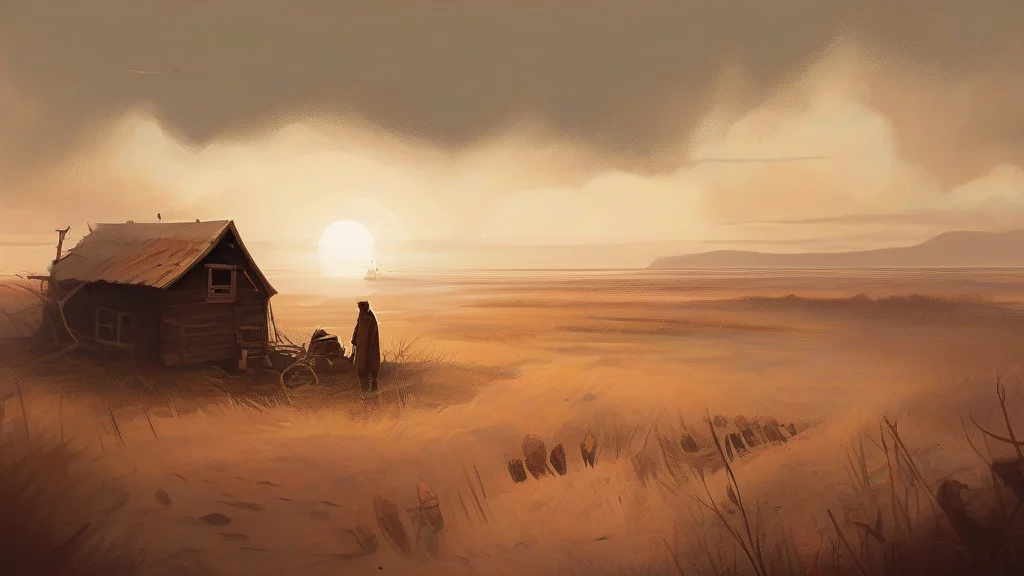
What does foretime mean?
Foretime is a noun denoting the time before the present — former times considered as a whole rather than as a specific date or event. It belongs to a family of English words built on the prefix 'fore-', which signals priority in time or position, and it functions much like the phrases 'former times' or 'days gone by' compressed into a single term. The word is now rare and distinctly literary: it survives chiefly in older writing, historical fiction, and deliberately archaic styles, where it lends an air of antiquity. A sentence such as 'In foretime, news travelled only as fast as a horse could gallop' uses it naturally. For everyday purposes modern writers reach for 'the past' instead, but foretime remains useful whenever an author wants a word that sounds as though it stepped out of a chronicle. Its obscurity is part of its charm — encountering it signals that the text is reaching back into older traditions of English expression.
nounThe time before the present; former times or days gone by. It is a largely literary or archaic term used to refer collectively to the past.
- Former times; the time preceding the present, regarded collectively.
"In foretime, travellers relied on the stars to find their way across open sea."
"In foretime, letters took weeks to cross the ocean."
"The village chronicler recorded how harvests had been gathered in foretime."
A plural form exists but is exceedingly rare; the singular is standard even when referring to extended periods of the past.
"The manuscript preserved customs of far foretimes."
Foretime lets you talk about 'the olden days' in a single elegant word — a relic of English's love affair with 'fore-' prefixed terms.
Reviewed by Deb Chak, Editor. AI-assisted content curated by RJS Tech Solutions LLP.
Etymology of foretime
Foretime is formed from the Germanic prefix 'fore-', meaning 'before' in time or place, attached to the noun 'time'. The 'fore-' element derives from Old English and Old Norse roots and gave rise to numerous cognate formations such as foresee, foretell, forerunner, and foremost. The compound arose in English to name the past as an undifferentiated span, though its exact date of first attestation is not something that can be stated with certainty; it is best described simply as an early formation in English vernacular usage.
How foretime is actually used
Foretime is rare and carries an antique or literary flavour; it appears mainly in older texts or deliberately archaising writing. In ordinary modern prose, speakers overwhelmingly prefer expressions such as 'in the past' or 'in former times'.
Easily confused with foretime
Beforetime is a closely related adverbial term meaning 'formerly', while foretime is a noun naming the past as a period.