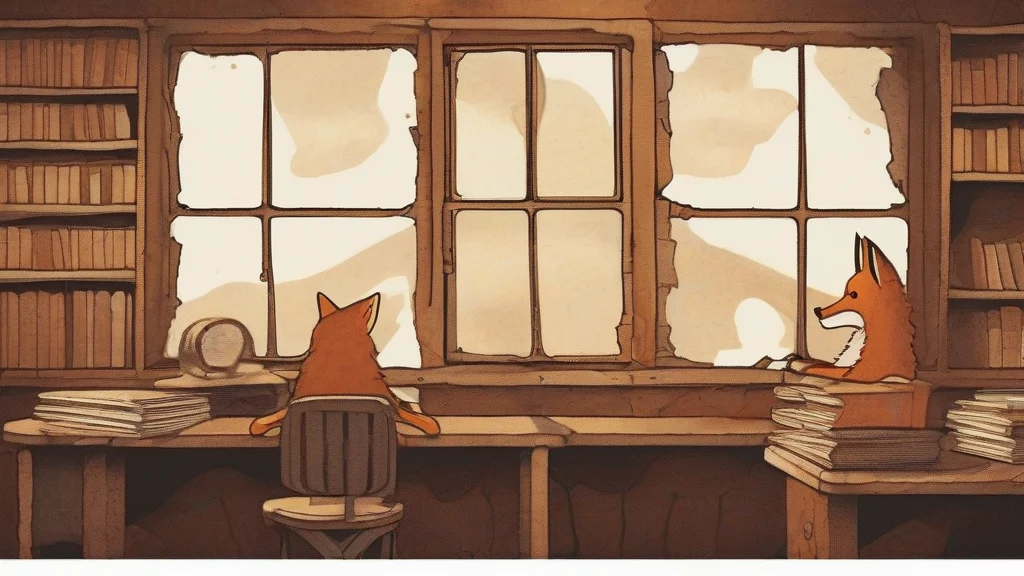
What does foxed mean?
'Foxed' is an adjective used chiefly to describe old paper that has developed rusty-brown spots or blotches — a deterioration known as foxing. The name is misleading: no fox is involved. The stains arise over time from damp, mould, or metallic impurities within the paper itself, and they are among the most common flaws cited in descriptions of antiquarian books. Booksellers habitually grade condition using phrases such as 'lightly foxed', 'foxed throughout', or 'a clean copy with some foxing to the endpapers', so familiarity with the term is genuinely useful for collectors and browsers of secondhand shops. Connotations are neutral and descriptive rather than judgemental — foxing signals age and wear, but many readers find it charming evidence of a book's history. A secondary sense, now largely historical, treats 'foxed' as the past participle of the verb 'fox', meaning deceived or outwitted, echoing the folkloric cunning of the fox itself.
(Of paper) discoloured with the rust-brown spots caused by foxing.
"The title page was foxed at the edges, though the text block was clean."
Almost exclusively found in bibliographic description and bookseller catalogues.
Deceived, outwitted, or thoroughly puzzled.
"The detective was foxed by the locked-room mystery."
Now chiefly literary or informal British usage; less common than the paper-related sense.
Despite the name, no fox ever touched your old book — 'foxing' stains come from damp, mould, and iron impurities in the paper, and collectors will pay a premium for a copy without them.
Reviewed by Deb Chak, Editor. AI-assisted content curated by RJS Tech Solutions LLP.
Etymology of foxed
The word derives from 'fox', the Old English noun for the animal (recorded since early medieval times as a common Germanic name, cognate with words like German 'Fuchs'). The adjective 'foxed' arose in the book trade, apparently by analogy: the reddish-brown stains on old paper were likened to a fox's russet colouring, giving English both the noun 'foxing' for the phenomenon and 'foxed' for the affected paper. The related term 'vixen', originally meaning the female fox, descends from the same Old English root. The separate deceptive sense of the verb 'fox' draws on the animal's traditional reputation for cunning.
Related word forms
How foxed is actually used
In modern usage 'foxed' appears overwhelmingly in the book-trade and collecting world, where it is a neutral, technical descriptor rather than a criticism. The deceptive sense survives mainly in older literature and informal British speech.
Easily confused with foxed
'Fixed' means fastened securely or repaired, while 'foxed' refers either to brown spotting on old paper or to having been deceived.