
What does foxfire mean?
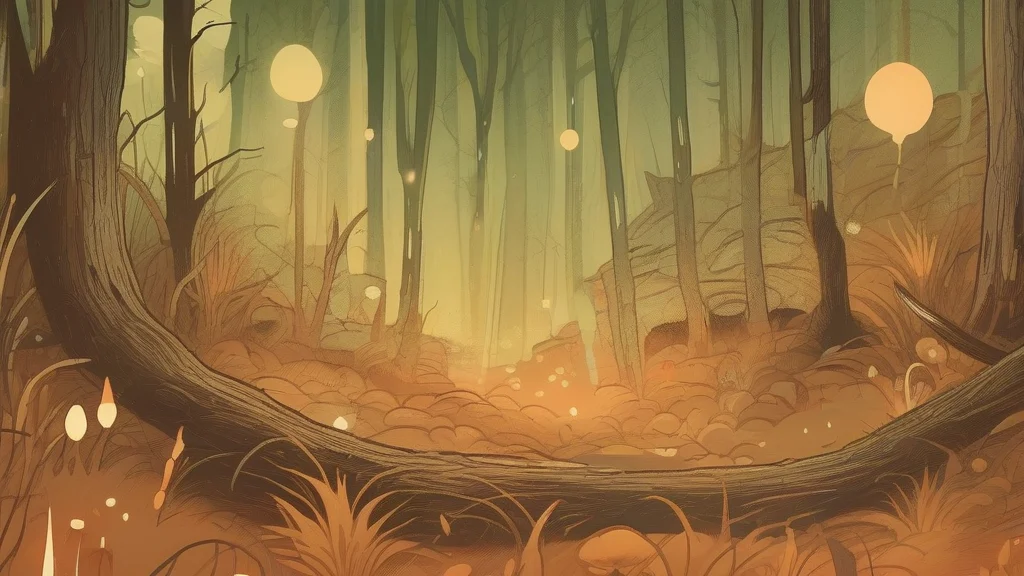
Foxfire is the name given to the faint, often greenish-blue glow produced by certain bioluminescent fungi as they grow on decaying wood. The luminescence results from a natural chemical reaction involving the enzyme luciferase acting on a compound called luciferin, the same basic mechanism that lets fireflies shine. Because the glow appears most readily in damp forests at night, early observers frequently explained it supernaturally, and the term itself reflects a folk belief that the light came from foxes. In modern usage, foxfire appears mainly in nature writing, mycology, and accounts of Appalachian folklore, where the phenomenon has become emblematic of rural oral tradition. It functions as an evocative, atmospheric word, conjuring images of moonless woods lit by an otherworldly shimmer. For readers interested in biology, folklore, or simply the quiet wonders of the forest floor, foxfire offers a memorable example of how science and legend can illuminate the same patch of ground.
nounA soft, greenish glow produced by certain fungi that colonize decaying wood, caused by a natural bioluminescent chemical reaction.
- The bioluminescent light emitted by certain fungi growing on decaying wood, typically pale green or blue-green.
- (Historical/folk usage) Any mysterious, unexplained glow seen at night in the wilderness, sometimes attributed to spirits or foxes.
"Hiking the Appalachian trail after dark, they followed the eerie foxfire glowing on the rotten logs beside the path."
"The rotting stumps along the creek were streaked with pale green foxfire."
"Old mountain guides warned travelers not to mistake foxfire for will-o'-the-wisps."
Rarely used; foxfire is normally treated as an uncountable mass noun referring to the glow itself. A plural form may appear when referring to multiple distinct occurrences or patches of the glow.
"On humid summer nights, scattered foxfires glowed along the forest path."
Long before flashlights, American folk tales claimed foxfire was the glow of foxes' eyes — but it's actually fungus quietly digesting dead wood.
Reviewed by Deb Chak, Editor. AI-assisted content curated by RJS Tech Solutions LLP.
Where does foxfire come from?
Foxfire derives simply from the English words 'fox' and 'fire,' combining an animal name with the word for combustion. The compound arose in American folk speech, particularly in Appalachia, where settlers observing the mysterious woodland glow attributed it to foxes; the same reasoning produced the older British terms 'foxy fire' and, more broadly, 'fairy fire.' The underlying phenomenon had been noted much earlier in Europe, with writers such as Pliny the Elder describing luminous wood, but the specific word 'foxfire' is attested from around the late 17th century onward. Its cognates are therefore chiefly other English compounds built on 'fox' and 'fire' rather than borrowings from another language.
How foxfire is actually used
Foxfire is an uncountable noun used almost exclusively in descriptive and nature-writing contexts. The name carries strong associations with Appalachian folklore, where it was long attributed to supernatural causes. It should not be confused with the Foxfire cultural project or magazine series of the same name founded in Georgia in 1966.
Easily confused with foxfire
Phosphorescence refers to light emitted by materials that absorb and re-emit energy, whereas foxfire specifically describes bioluminescent light from fungi growing on decaying wood.