
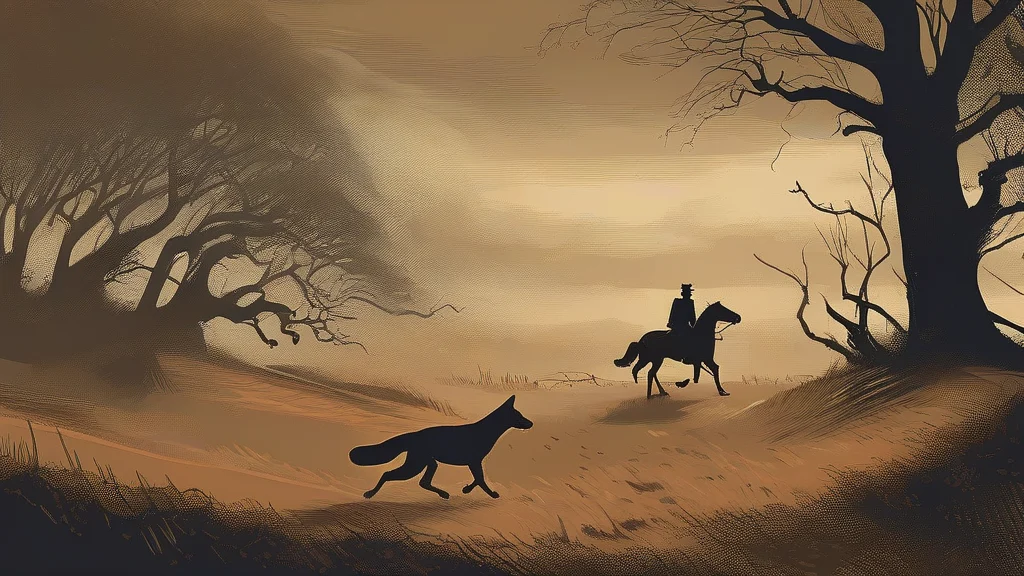
What does foxhunting mean?
Foxhunting is the practice of pursuing a fox, traditionally on horseback and with a pack of trained hounds, as an organised field sport. It developed in Britain several centuries ago into a highly ritualised country pursuit complete with scarlet-coated huntsmen, formal seasons, and its own vocabulary, and it spread from there to other parts of the world, including North America. Today the word is as much a political label as a sporting one: hunting wild mammals with dogs was outlawed in Scotland in 2002 and in England and Wales under the Hunting Act 2004, making foxhunting a persistent subject of rural protest, parliamentary debate, and campaign activism. Where the sport survives legally, many practitioners emphasise the chase rather than the kill, sometimes calling their activity 'fox chasing'. Whether viewed as heritage or cruelty, foxhunting remains one of the most culturally loaded words in the language of the countryside.
A traditional field sport in which riders on horseback follow a pack of hounds pursuing a fox; more generally, the organised hunting of foxes.
"Foxhunting was central to rural social life in the English shires for over two hundred years."
In modern British usage the noun frequently appears in discussions of the 2004 Hunting Act and related legislation rather than as a description of current legal activity.
To take part in the hunting of foxes with hounds.
"They foxhunted every Saturday through the winter months."
As a mass-noun denoting an activity, foxhunting is rarely pluralised; the singular form is used even when describing multiple occasions.
"Rarely needed; references to repeated occasions are normally expressed as 'occasions of foxhunting' or simply left unpluralised."
Foxhunting with hounds remains legal in much of North America — but in Britain, where it was born, it has been against the law since 2005.
Reviewed by Deb Chak, Editor. AI-assisted content curated by RJS Tech Solutions LLP.
Etymology of foxhunting
The compound 'foxhunting' combines 'fox', a native Germanic Old English word (from 'fox', attested in early English texts), with 'hunting', from Old French 'hunter' of Germanic origin. Organised hunting of the fox with hounds emerged in England in the 16th and 17th centuries and became firmly established as a gentleman's field sport during the 18th century. Related words sharing the same elements include 'foxhound', the specialised breed bred for the chase, and the adjective 'foxy'.
How foxhunting is actually used
The word carries strong cultural connotations: in Britain it is closely tied to class imagery of red coats, horses, and countryside tradition, and since the Hunting Act 2004 banned hunting wild mammals with dogs in England and Wales (with similar bans in Scotland), the term often appears in politically charged debate. Many former hunts now practise trail hunting instead. In North America, where 'fox hunting' continues legally, participants often prefer terms like 'fox chasing' when the fox is not killed.
Easily confused with foxhunting
Foxhounds are the breed of dogs used in the hunt, whereas foxhunting is the activity itself.