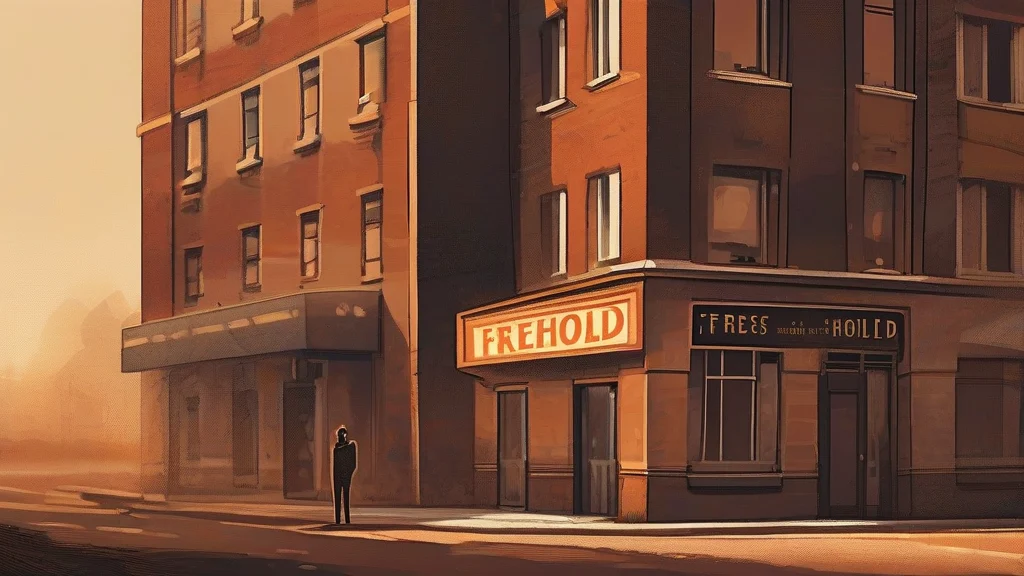
What does freehold mean?
A freehold is an estate in land that grants its owner permanent, inheritable title to both the property and the ground it occupies — the fullest form of real-property ownership recognized in common-law systems. Unlike a leasehold, which conveys only the right to occupy a property for a fixed term before it reverts to the owner, a freehold endures indefinitely and can be sold, mortgaged, or passed to heirs at will. The concept is especially prominent in Britain, where flats are commonly sold on long leases while the underlying freehold belongs to another party, making the purchase or acquisition of a share of the freehold a significant milestone for leaseholders. In the United States, the closest equivalent is typically described as fee simple ownership. Because it signifies complete control and permanence, freehold ownership carries connotations of security, independence, and full economic stake in a property.
nounA freehold is a form of property ownership in which a person holds permanent and absolute title to land or buildings, as opposed to leasehold, where the property is held for a fixed term.
- An estate in land held in perpetuity with absolute ownership rights (legal sense).
- The legal deed or title conferring such perpetual ownership of a specific property.
"They purchased the freehold of the cottage, giving them outright ownership of both the house and the land beneath it."
"The developer sold the freehold of the entire block to the residents' association."
"Under English law, a freehold is the most complete form of ownership of land that one can hold."
In England you can own your flat but not the ground it stands on — buying the freehold is how you finally own every brick and blade of grass beneath it.
Reviewed by Deb Chak, Editor. AI-assisted content curated by RJS Tech Solutions LLP.
Etymology of freehold
The word derives from Old English, combining 'free' with 'hold', reflecting the medieval distinction between land held freely by hereditary right and land held conditionally from a lord. In feudal England, a freehold estate was one held by a free tenant in perpetuity rather than at a lord's pleasure, and this legal meaning has carried through into modern English property law essentially intact. Related terms such as 'freeholder' preserve the same root, and the broader notion of 'holding' land runs through many Old English-derived legal words.
How freehold is actually used
The term carries strong legal connotations and is used primarily in property law and real-estate contexts. It is far more salient in British usage, where freehold versus leasehold is a central distinction in home ownership; in the US, 'fee simple' is the more common term for equivalent ownership. Register is formal to professional.
Easily confused with freehold
Freehold grants permanent ownership of the property and its land, whereas leasehold grants only the right to occupy it for a fixed number of years.