What does freezer mean?
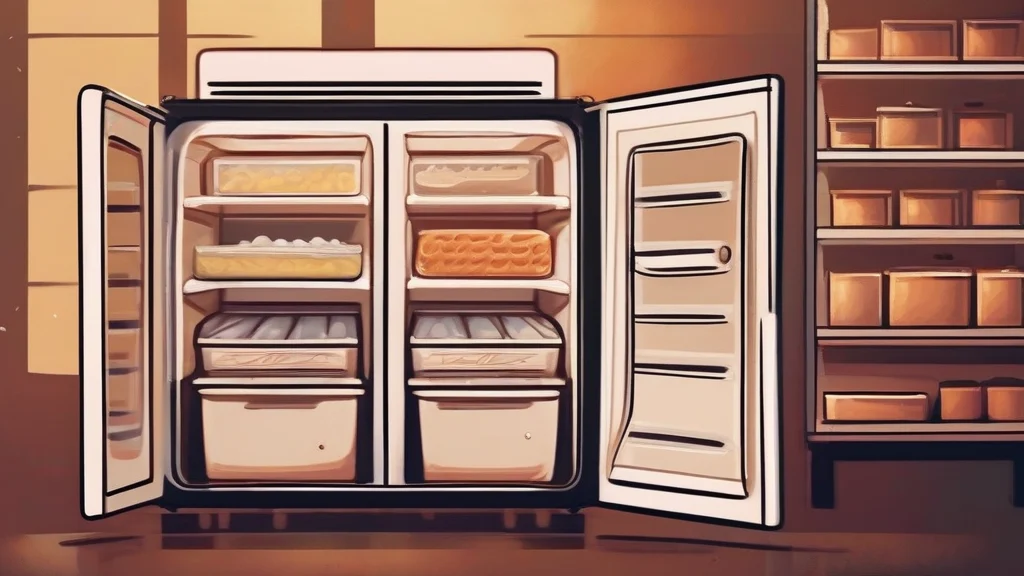
A freezer is an insulated appliance or storage space designed to keep food and other perishables at temperatures below the freezing point of water, typically around −18°C (0°F). At this temperature, microbial growth and spoilage slow dramatically, allowing food to be preserved for months. Freezers exist as standalone units — commonly chest-style, which open from the top, or upright models with doors and shelves — as well as compartments built into refrigerators. Larger walk-in freezers serve restaurants, grocery stores, and industrial cold chains. The word entered common household vocabulary only after mechanical home freezing became widespread in the mid-twentieth century, replacing older preservation methods such as salting, smoking, and the icebox. Today 'freezer' is firmly part of daily language, appearing in phrases like 'freezer burn' (damage to frozen food caused by air exposure) and 'defrost the freezer'. It carries no strong connotations beyond practicality and domestic routine, though a well-stocked freezer is often associated with thrift and preparedness.
An insulated appliance or compartment that freezes and stores food at temperatures below 0°C (32°F), either as a standalone chest or upright unit or as part of a refrigerator.
"We keep a spare loaf of bread in the freezer so it lasts longer."
Commonly used of both standalone units and refrigerator freezer compartments; commercial contexts extend the term to walk-in cold rooms.
A commercial or industrial cold-storage room or facility used to keep goods frozen.
"Workers moved pallets of vegetables into the walk-in freezer before dawn."
Regular plural; used when referring to multiple appliances or storage facilities.
"Both freezers were full after the holiday baking."
The word 'freezer' only became commonplace in everyday speech after household freezers went mainstream in the mid-20th century — before that, people relied on iceboxes and communal 'cold stores'.
Reviewed by Deb Chak, Editor. AI-assisted content curated by RJS Tech Solutions LLP.
Etymology of freezer
'Freezer' is formed from the verb 'freeze', an ancient English word traceable through Old English 'frēosan' to the Proto-Germanic root *freusan-, which also gave rise to German 'frieren' and related Germanic terms for frost and cold. The agent suffix '-er' simply denotes the thing that freezes. While the verb itself dates back to the earliest English records, the noun 'freezer' in its modern appliance sense is a product of the late nineteenth and twentieth centuries, when mechanical refrigeration made domestic food freezing possible; earlier uses referred more generally to anything that freezes.
How freezer is actually used
The word is informal-to-neutral and universal in everyday English. In British usage, 'freezer' often refers to any domestic unit, while 'deep freeze' is an older trade term; in American usage, distinctions like 'chest freezer' versus 'upright freezer' are common. 'Icebox', once the standard term, now survives mostly as a historical or colloquial reference.
Easily confused with freezer
A refrigerator keeps food cool just above freezing, while a freezer stores food below 0°C so it freezes solid.