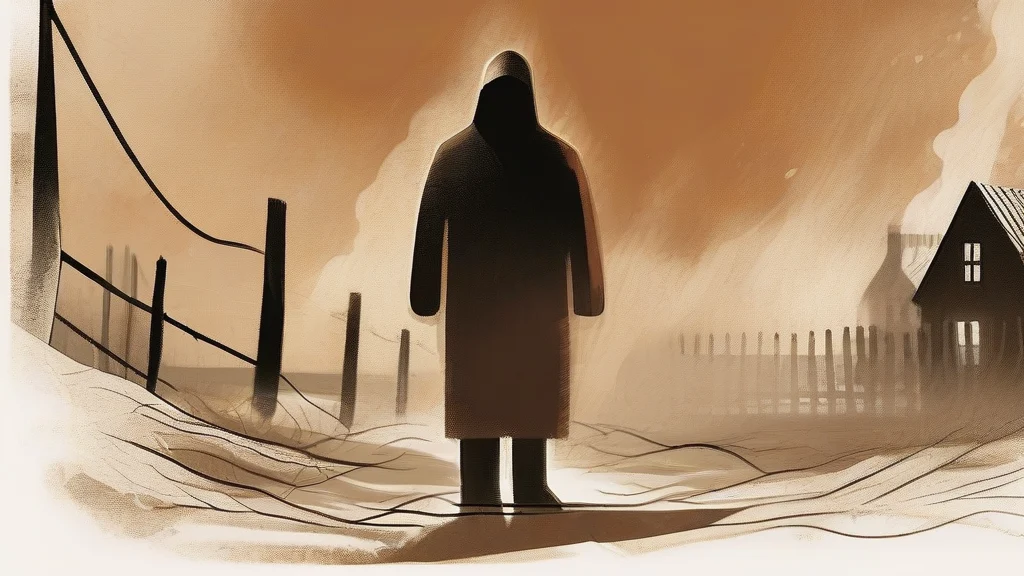
What does frighten mean?
Frighten is a transitive verb meaning to make someone afraid — to fill them with fear or alarm. Its most basic use pairs it with a person or creature as its object: 'loud noises frighten her,' 'the masked figure frightened the children.' Beyond simply inducing fear, frighten can express coercion or deterrence, as when someone is 'frightened into' silence or frightened off from pursuing a goal. English speakers often intensify it colloquially with phrases such as 'frighten the life out of someone' or 'scare someone half to death,' where the exaggeration signals alarm rather than literal harm. The word carries an inherently negative connotation, since its entire purpose is distress, though it appears freely in casual conversation, fiction, journalism, and even political rhetoric, where accusations of being 'frightened off' are common. Formed from the older word fright by appending the verb-forming suffix '-en', it belongs to a small family of English verbs built the same way, alongside weaken, sadden, and threaten. Simple, versatile, and instantly understood, frighten remains one of the standard ways English expresses the act of inspiring fear.
To cause someone to feel fear or alarm; to make afraid.
"The horror film frightened the audience badly."
Almost always used transitively, with the person or animal being frightened as the direct object; passive forms such as 'I was frightened by the noise' are equally common.
To coerce, deter, or drive someone to act (or refrain from acting) through fear.
"The thugs frightened the shopkeeper into paying protection money."
Often expressed via the constructions 'frighten someone into/out of doing something', 'frighten off', or 'frighten away'.
An old British proverb urges reformers to move gently: 'You cannot make an omelette without breaking eggs — but you must not frighten the horses.'
Reviewed by Deb Chak, Editor. AI-assisted content curated by RJS Tech Solutions LLP.
Etymology of frighten
Frighten derives from 'fright', an Old English word for sudden terror, by the addition of the verb-forming suffix '-en'. This pattern of turning qualities or emotions into verbs — weaken, sadden, harden, threaten — flourished in early modern English, and frighten emerged during this period, becoming well established by the seventeenth century. Its root, fright, belongs firmly to the native Germanic stock of English vocabulary rather than to Latin or French borrowing, making frighten part of a distinctly Anglo-Saxon lineage of words for fear.
Related word forms
How frighten is actually used
Frighten is an everyday, neutral-to-negative word used across registers; it typically takes a direct object (the person made afraid) and can be intensified with phrases like 'frighten someone half to death.' It is common in both spoken and written English with no notable regional variation.
Easily confused with frighten
Terrify implies intense, overwhelming fear, while frighten suggests a milder or more general degree of alarm.
Fright is the noun naming the feeling of sudden fear itself, whereas frighten is the verb describing the act of causing that fear.