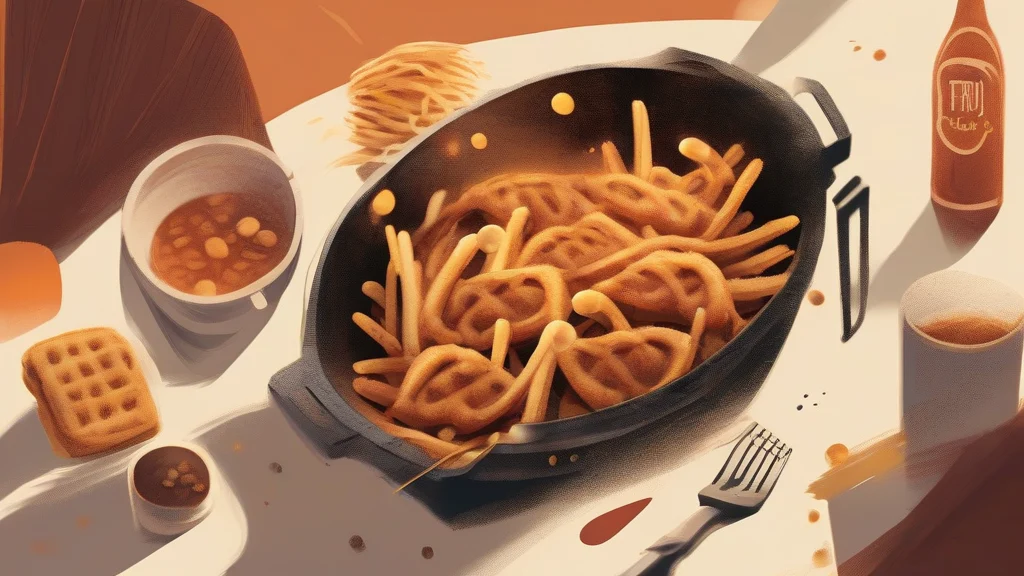
What does friture mean?
Friture is a noun borrowed from French that names both the act of frying food and the fried results themselves. In practice, English speakers encounter it far more often on menus and in culinary prose than in conversation, typically in the French-derived phrases 'en friture' or 'à la friture', which signal that a dish — often small fish, potatoes, or parsley — has been plunged into hot oil until crisp. A 'grande friture' can denote a mixed platter of fried delicacies. The word descends from the French verb frire, 'to fry', ultimately rooted in the Latin frigere, making it a direct cousin of the everyday English word fry. Because of its continental pedigree, friture lends a menu an air of classic European cookery, evoking sizzling pans, street-side friteries, and the simple pleasure of food fried golden. It is best treated as a specialist gastronomic term: elegant on a printed menu, out of place in casual chat, but useful precisely when precision about frying technique matters.
nounFriture is a term borrowed from French denoting fried food or the action and process of deep-frying, most often encountered in culinary writing and on menus in phrases such as 'à la friture'. In English it functions chiefly as a technical or gastronomic term rather than an everyday word.
- The action or process of frying food, especially deep-frying.
- Fried food collectively; a dish or assortment of fried items.
"The chef served the whitebait en friture, golden and crisp from the pan."
"The kitchen hummed with the sound of the friture as the potatoes hit the oil."
"A generous friture of smelt and onions arrived at the table heaped in paper."
Rarely used; the plural occasionally appears when referring to multiple dishes or servings of fried food.
"The bistro's menu featured several fritures, from calamari to salt cod."
Order fish 'en friture' and you're speaking Latin — the word traces straight back to 'frigere', the same root behind the word fry.
Reviewed by Deb Chak, Editor. AI-assisted content curated by RJS Tech Solutions LLP.
Etymology of friture
Friture comes from the French verb frire ('to fry'), formed with the suffix -ure, which turns verbs into nouns describing their action or result. Frire itself derives from the Latin frigere, meaning to fry or roast, the same root that gave English the verb fry via Old French. This lineage also connects friture to related French culinary terms such as frite and fritter.
How friture is actually used
Friture remains rare in ordinary English speech and survives almost entirely in culinary contexts, especially translations of French cuisine or menus using French service terms. It carries a refined, somewhat old-world gastronomic connotation.
Easily confused with friture
A fritter is an individual item of food coated in batter and fried, whereas friture refers to fried food generally or to the process of frying itself.