What does frowzier mean?
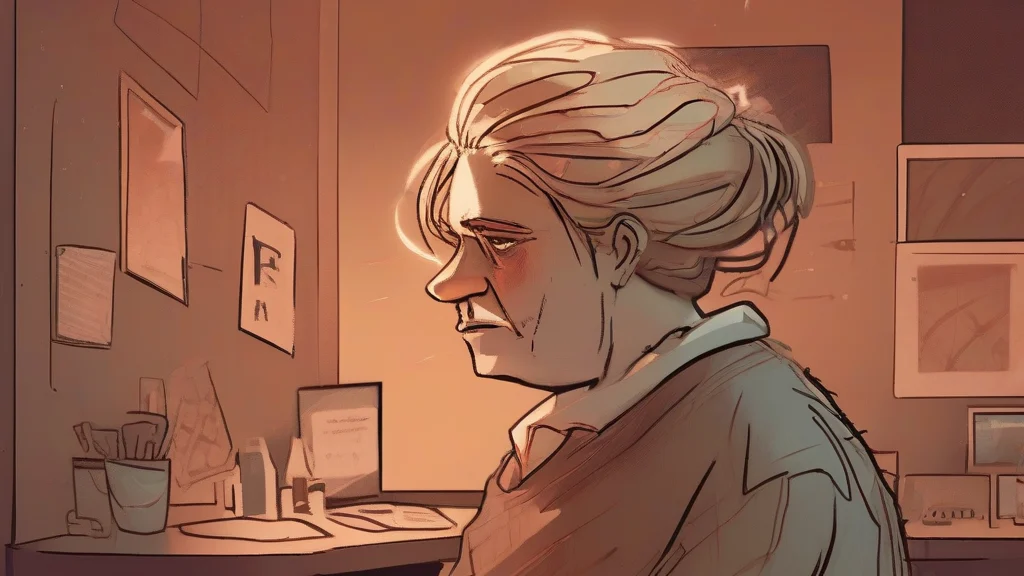
Frowzier is the comparative form of frowzy, an adjective describing something unkempt, grimy, or slovenly in appearance. Where 'frowzy' labels a state of dishevelment — lank hair, shabby clothes, a neglected room — 'frowzier' expresses that such a condition has increased or exceeds another's: a hotel room might be described as frowzier than its photographs suggested, or a once-smart coat as grown frowzier with each passing winter. The word belongs chiefly to informal, descriptive English, often with a faint note of disdain or comic distaste, and it applies far more readily to appearance and surroundings than to personality. Its sibling term 'blowsy', which describes a red-faced, tousled look, arose around the same period, and the two are sometimes mentioned together as period vocabulary for disarray. Though never common, 'frowzy' and its comparatives survive in literary prose precisely because they convey a vivid, textured sense of neglect that plainer words like 'messy' cannot match.
adjective (comparative form)Frowzier is the comparative form of the adjective 'frowzy', meaning more untidy, unkempt, or slovenly in appearance — especially of hair, clothing, or surroundings.
- Comparing two things in terms of being unkempt, dirty, or slovenly in appearance: 'more frowzy than...'.
"After weeks of neglect, the cottage looked even frowzier than before, its curtains faded and its garden overrun."
"The boarding house grew steadily frowzier under its absentee landlord, with peeling paint and dusty windows."
"She compared her reflection in the station mirror and decided she had never looked quite so frowzier after the overnight train."
'Frowzy' and 'blowsy' are twin dishevelment terms from the same era — one for messy hair and grime, the other for flushed, tousled rosiness.
Reviewed by Deb Chak, Editor. AI-assisted content curated by RJS Tech Solutions LLP.
Etymology of frowzier
Frowzy first appears in English in the late seventeenth century, and its comparative 'frowzier' developed naturally alongside it. The word's deeper origin is obscure; lexicographers have generally marked it as of uncertain derivation, though some have speculated loosely about connections to other old English words beginning with 'frow'. It emerged in the same literary climate as 'blowsy', another term for dishevelment, and the pair have often been associated since.
Related word forms
How frowzier is actually used
As a comparative adjective, 'frowzier' appears mainly when contrasting states or places, often in informal or descriptive prose. The base word 'frowzy' carries mildly disparaging connotations and is used chiefly of appearances — hair, clothing, rooms — rather than character.
Easily confused with frowzier
'Froward' means stubbornly contrary or disobedient, whereas 'frowzy' describes an unkempt, dirty appearance — similar-sounding but entirely unrelated meanings.