
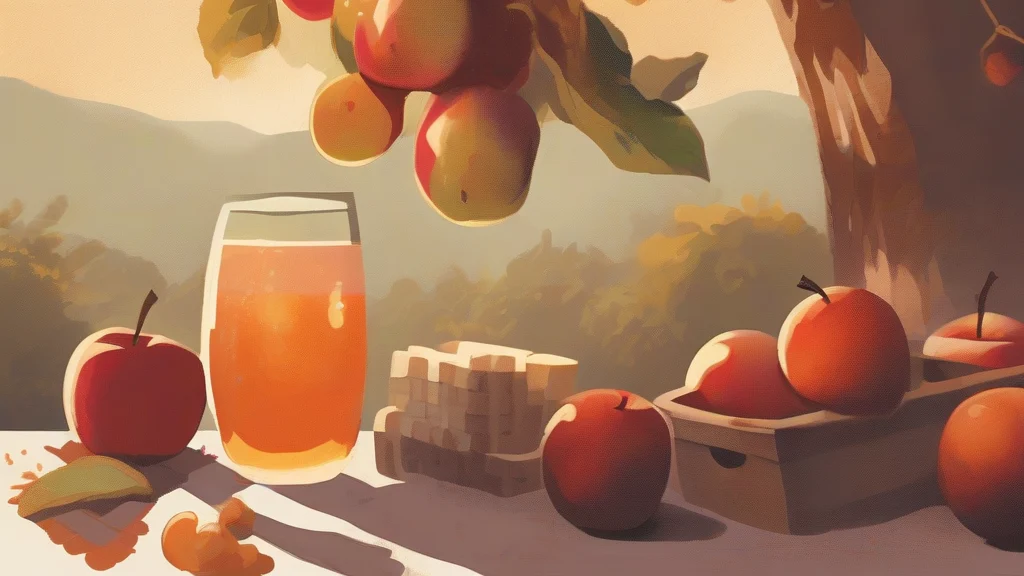
What does fruited mean?
'Fruited' is an adjective describing something that bears or is laden with fruit, whether literally — as in the fruited boughs of an apple tree — or figuratively in the language of tasting, where a wine or beer may be called richly fruited for its pronounced fruit character. It also serves as the past tense and past participle of the verb 'to fruit', meaning to produce fruit. The word derives from 'fruit', which entered English via Old French from the Latin 'fructus', meaning enjoyment or produce, itself from 'frui', to enjoy. This lineage connects it to words such as 'fruition' and 'fructify'. Connotations are overwhelmingly positive: ripeness, generosity, and the reward of patient growth. Though less common than neighbours like 'fruitful' — which extends beyond literal fruit to productive results generally — 'fruited' offers a vivid, concrete image of abundance, prized by poets and wine writers alike.
Bearing or producing fruit; laden with fruit.
"The fruited vines stretched in neat rows across the hillside."
Often used attributively before nouns such as 'branches', 'boughs', or 'vines'.
(Of a wine, beer, or other drink) having pronounced fruit flavours or aromas.
"This grenache is intensely fruited, bursting with raspberry and blackberry."
Common in wine and beer criticism, often intensified as 'richly fruited' or 'heavily fruited'.
Past tense and past participle of 'fruit': bore or produced fruit.
"The young fig tree fruited for the first time last autumn."
When poets wanted an image of abundance, they reached for 'fruited' — as in the hymn line 'amber waves of grain' era America's 'fruited plain', a phrase so iconic most people quote it without ever noticing the word.
Reviewed by Deb Chak, Editor. AI-assisted content curated by RJS Tech Solutions LLP.
Etymology of fruited
'Fruited' derives from 'fruit', which came into Middle English around the late twelfth to thirteenth century from Old French 'fruit', itself from the Latin 'fructus', meaning enjoyment, produce, or yield, formed from the verb 'frui', 'to enjoy'. The Latin root also gives English 'fruition' and 'fructify', making them true cousins of 'fruited'. The adjective form arose in later English to describe plants heavy with their yield.
How fruited is actually used
'Fruited' carries warm, positive connotations of abundance, ripeness, and natural productivity. It is somewhat literary in register when applied to trees and branches, appearing often in descriptive prose and poetry, while its use in wine criticism is technical and everyday within that field. It is far less common than related words like 'fruitful'.
Easily confused with fruited
'Fruited' simply means bearing or producing fruit, while 'fruitful' more broadly means producing abundant good results, whether literal fruit or beneficial outcomes.
'Fruity' describes something that smells or tastes of fruit (or, informally, something slightly eccentric), whereas 'fruited' describes something that actually bears or contains fruit.