What does furlong mean?
A furlong is a traditional unit of distance equal to one-eighth of a mile, or 220 yards, approximately 201 metres. Its name comes from the Old English 'furlang', meaning literally the length of a furrow — the strip of land a team of oxen could plough in one go without resting. Although it long ago fell out of general use for measuring roads and land, the furlong remains very much alive in the world of horse racing, particularly in Britain and Ireland, where race distances are routinely described as five, six, or eight furlongs, eight making exactly one mile. Outside that context the word carries a distinctly old-fashioned, rustic charm and appears mostly in historical writing or descriptions of countryside distances. For anyone reading racing form guides or older English literature, knowing that a furlong is simply an eighth of a mile is all it takes to keep the term firmly in hand.
nounA furlong is a unit of distance equal to one-eighth of a mile, or 220 yards (about 201 metres). It survives chiefly in horse racing and in historical or agricultural references.
- A unit of distance equal to one-eighth of a mile (220 yards, about 201 metres), used especially in horse racing.
- Historically, the length of a furrow in a ploughed field that a team of oxen could draw without resting.
"The favourite took the lead in the final furlong and won comfortably."
"The colt swept past the field in the final furlong to win by two lengths."
"The cottage stood barely a furlong from the village church."
Regular plural form; used when stating race distances or multiple units of measurement.
"The sprint was decided over five furlongs."
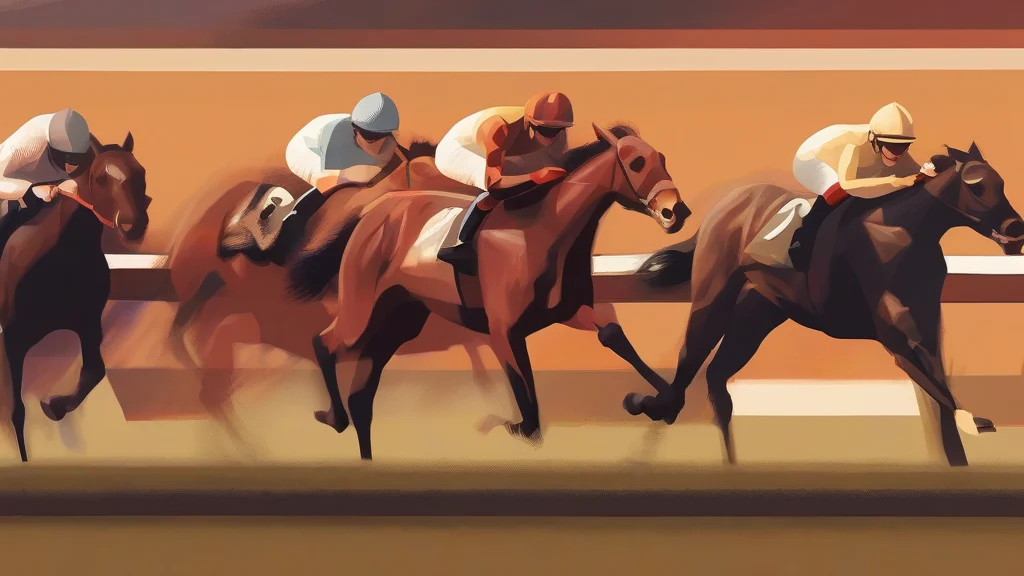
The furlong is roughly how far a team of oxen could plough before needing a rest — and it's still how horse races are measured today.
Reviewed by Deb Chak, Editor. AI-assisted content curated by RJS Tech Solutions LLP.
Etymology of furlong
The word furlong derives from the Old English 'furlang', a compound of 'furh' (furrow) and 'lang' (long), referring to the length of a furrow in a ploughed open field — traditionally the stretch an ox team could pull a plough without resting. This made the furlong a natural measure of agricultural land in Anglo-Saxon England, where fields were ploughed into long strips. The measure was later standardised as one-eighth of a mile (220 yards), and its companion unit, the acre, was originally defined as the area one furlong long by one chain wide. The word 'furrow' shares the same Germanic root 'furh'.
How furlong is actually used
The furlong is now rare outside British and Irish horse racing, where race distances are conventionally given in furlongs, and occasional historical or literary usage. In everyday measurement it has been entirely replaced by miles and kilometres, so using it outside these contexts sounds quaint or archaic.
Easily confused with furlong
A furrow is the trench cut by a plough in soil, whereas a furlong is a unit of linear distance equal to an eighth of a mile.