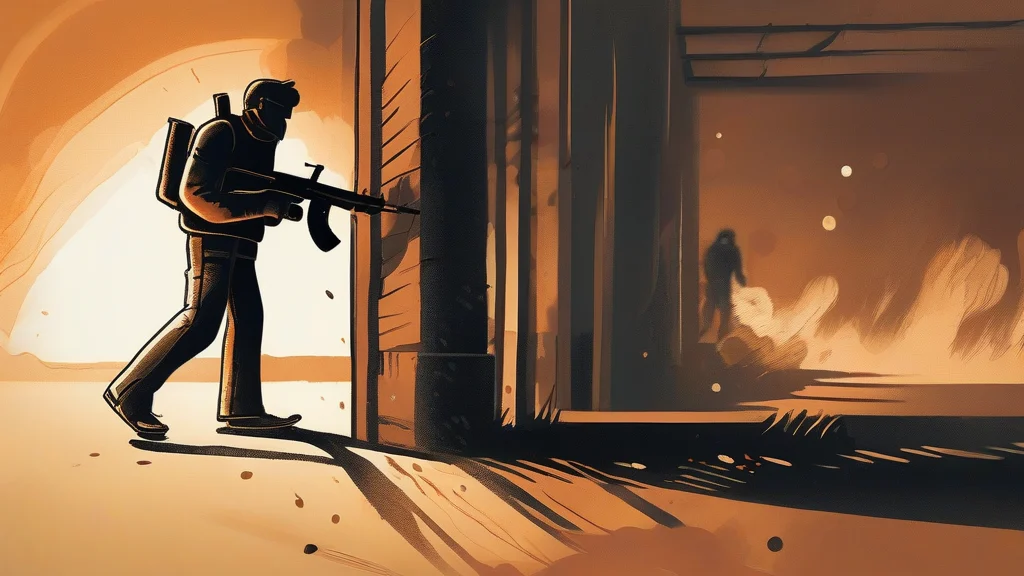
What does fusillade mean?
A fusillade is a burst of gunfire discharged simultaneously or in rapid succession by several weapons, producing a sustained volley rather than isolated shots. The word also extends figuratively to any overwhelming sequence of comparable actions — a fusillade of questions from reporters, a fusillade of criticism aimed at a public figure, or a fusillade of blows in a fight. Derived from French and ultimately rooted in the name of the fusil, the flintlock musket once carried by infantrymen known as fusiliers, the term entered English in the early nineteenth century and quickly took on both literal military and metaphorical uses. Its connotations are intense and aggressive: a fusillade suggests volume, speed, and relentlessness rather than accuracy. Writers reach for it when they want to convey a barrage too heavy to answer calmly, making it a vivid choice in war reportage, political coverage, and dramatic prose alike.
nounA fusillade is a simultaneous or continuous discharge of many firearms, or, by extension, a rapid burst of things such as questions, criticism, or blows delivered in quick succession.
- A simultaneous or rapid, continuous discharge of firearms from multiple weapons.
- Figuratively, any rapid succession of similar things — questions, blows, insults, or criticisms.
"The soldiers answered the ambush with a deafening fusillade that echoed across the valley."
"Reporters unleashed a fusillade of questions at the embattled minister."
"The fortress walls were pockmarked from the enemy's relentless fusillade."
Standard plural; both the singular and plural are common in military and journalistic writing.
"The battle opened with two separate fusillades before dawn."
Fusillade comes from the French word for 'firing' — and it literally descends from fusil, the flintlock musket that once armed entire regiments.
Reviewed by Deb Chak, Editor. AI-assisted content curated by RJS Tech Solutions LLP.
Etymology of fusillade
Fusillade comes from French, formed from fusiller, meaning to fire upon with fusils, the lightweight flintlock muskets that replaced heavier matchlocks in European armies. It entered English in the early nineteenth century during the Napoleonic era, when French military vocabulary flowed readily across the Channel. The same root produced the word fusilier, still used today for certain infantry regiments in Britain and elsewhere.
How fusillade is actually used
Fusillade carries a strongly dramatic register; it is common in journalism, military writing, and political commentary. In figurative use it almost always implies intensity and volume rather than precision, and it retains an aggressive connotation even when applied to non-violent contexts like debate or media scrutiny.
Easily confused with fusillade
A facsimile is an exact copy of a document or text, whereas a fusillade is a burst of gunfire or rapid succession of attacks — the words share only a superficial visual similarity.