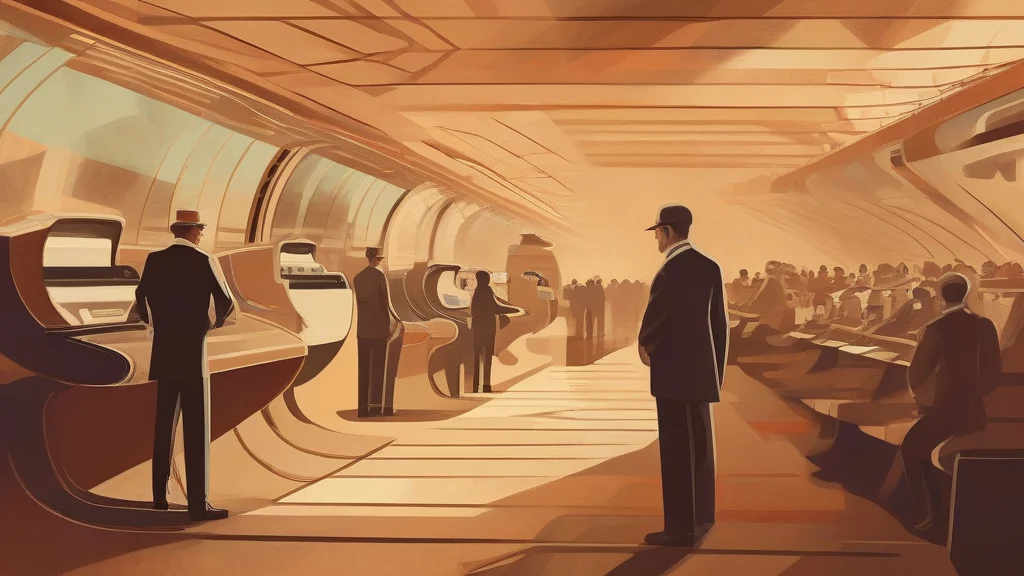
What does futurism mean?
Futurism is an early twentieth-century avant-garde movement, launched in Italy by the poet Filippo Tommaso Marinetti with his 1909 manifesto, that rejected tradition and celebrated speed, machinery, youth, violence, and industrial modernity. Its painters sought to capture motion on canvas, its sculptors rendered forms fractured by movement, and its adherents spread the style to Russia, where poets developed their own distinct strain known as Russian futurism. Beyond the arts, the word has taken on a wider meaning: futurism can describe any outlook marked by confidence in technological progress and the promise of the future, a sense common in discussions of science fiction, design, and technology culture. The term therefore carries two registers — a precise historical one tied to a radical, sometimes controversial movement whose flirtation with politics remains debated, and a looser contemporary one denoting forward-looking optimism. Understanding both senses helps readers navigate art history and modern discourse alike.
An early 20th-century Italian avant-garde movement in art, literature, and design that embraced speed, technology, youth, and modernity while rejecting traditional culture.
"Futurism transformed Italian visual art before influencing movements across Europe."
This historical sense is the dominant meaning in art history and academic writing.
A general attitude or ideology characterized by strong belief in progress, especially technological progress, and enthusiasm for what the future will bring.
"Her talk on space colonization reflected a distinctly optimistic futurism."
Common in business, technology journalism, and popular discourse about innovation.
Rarely used; occasionally appears in scholarly plural form to distinguish national variants such as Italian and Russian futurism.
"Scholars increasingly treat Italian and Russian futurisms as distinct but related movements."
Marinetti's Futurist Manifesto was published on the front page of Le Figaro in 1909 — and declared war on museums, calling them 'cemetaries of art'.
Reviewed by Deb Chak, Editor. AI-assisted content curated by RJS Tech Solutions LLP.
Etymology of futurism
The name derives from Latin 'futurus', meaning 'about to be' or 'future', via Italian 'futuro'. It was coined as the self-chosen title of the movement proclaimed in Filippo Tommaso Marinetti's Futurist Manifesto, published in Paris in 1909. Cognates sharing the same root include 'future', 'futurity', and 'futurology'. The suffix '-ism' marks it as a named doctrine or movement, following the pattern of other early twentieth-century avant-garde labels.
Related word forms
How futurism is actually used
In art-historical contexts, 'futurism' almost always refers to the movement founded by Filippo Tommaso Marinetti. In everyday and business contexts, it may simply mean forward-looking thinking or technological optimism, so context matters when using the term.
Easily confused with futurism
'Futurist' refers to an artist, thinker, or adherent of futurism (or a futurologist), whereas 'futurism' is the movement or ideology itself.
'Futurology' is the study of possible futures and forecasting, while 'futurism' names an early-20th-century art movement or a general enthusiasm for the future.