What does gaberdine mean?
A gaberdine is a long, loose cloak or outer garment that was common dress in medieval and Renaissance Europe, worn alike by pilgrims, merchants, and travelers. Its most famous literary appearance is in Shakespeare's The Merchant of Venice, where Shylock's 'Jewish gaberdine' is invoked in a scene of public humiliation, giving the word lasting resonance. Over time the word also gave its name to a material: gabardine, now the standard spelling, is a sturdy twill-woven fabric invented by Thomas Burberry in 1879 and prized for its weather resistance — it clothed polar expeditions and became the stuff of the classic trench coat. Today the word is encountered chiefly in two registers: in literature and history writing, where it evokes an archaic garment, and in fashion and textiles, where gabardine remains a respected hardwearing cloth. This double life makes it a word that bridges the wardrobe of the past and the fabric of the present.
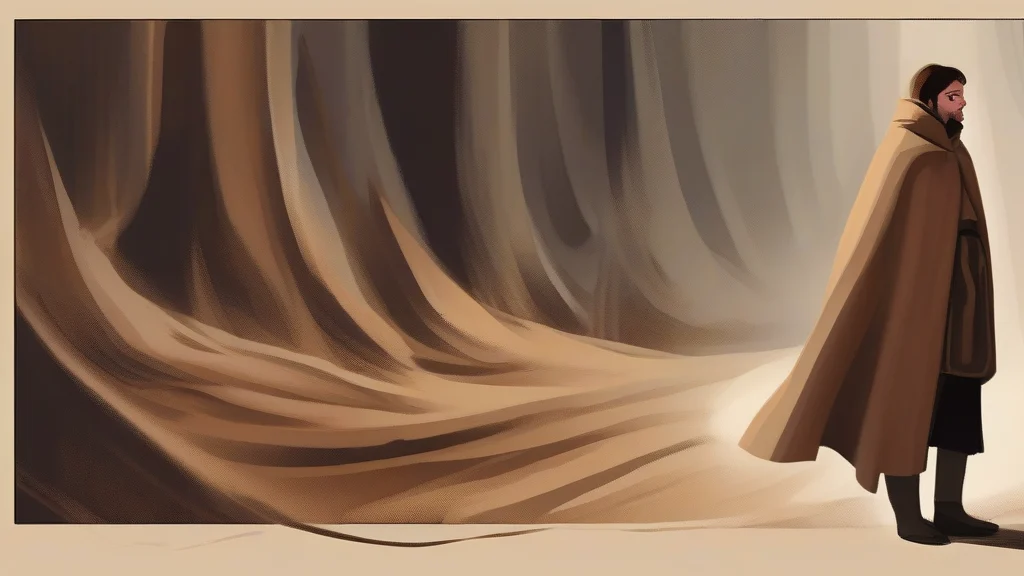
A long, loose outer garment or cloak, characteristic of medieval and Renaissance dress.
"He wrapped his tattered gaberdine tighter against the winter wind."
This garment sense is now largely historical and literary; the modern spelling 'gabardine' more often denotes the fabric.
A durable, closely woven twill fabric, usually of worsted wool or cotton, used for coats, suits, and trousers (in the spelling 'gabardine').
"The tailor recommended gabardine for the suit because it resists creasing and rain."
The plural applies straightforwardly when referring to multiple garments; plural forms are rare in practice since the word most often appears in singular or fabric contexts.
"The monks hung their gaberdines on pegs by the chapel door."
The fabric version, gabardine, was invented by Thomas Burberry in 1879 and kept polar explorers like Amundsen and Shackleton dry at the ends of the Earth.
Reviewed by Deb Chak, Editor. AI-assisted content curated by RJS Tech Solutions LLP.
Etymology of gaberdine
Gaberdine entered English from Old French in the late medieval period, appearing in Chaucer's fourteenth-century writings, and is generally traced back through Spanish 'gabardina'. The precise ultimate origin is debated among scholars, so it is best described broadly as deriving from Romance sources. In the nineteenth century, Thomas Burberry developed gabardine as a tightly woven, weatherproof twill fabric, and this fabric meaning gradually became the dominant use of the name.
How gaberdine is actually used
The word survives mainly through its fabric sense, where the spelling 'gabardine' is now far more common; the older spelling 'gaberdine' mostly appears in literary or historical contexts. In Shakespeare's Merchant of Venice, 'gaberdine' refers to Shylock's cloak, which keeps the garment sense alive in cultural memory.
Easily confused with gaberdine
Gabardine is now the more common spelling of the same word, used chiefly for the durable twill fabric, whereas gaberdine usually refers to the historical loose garment.