What does gallinaceous mean?
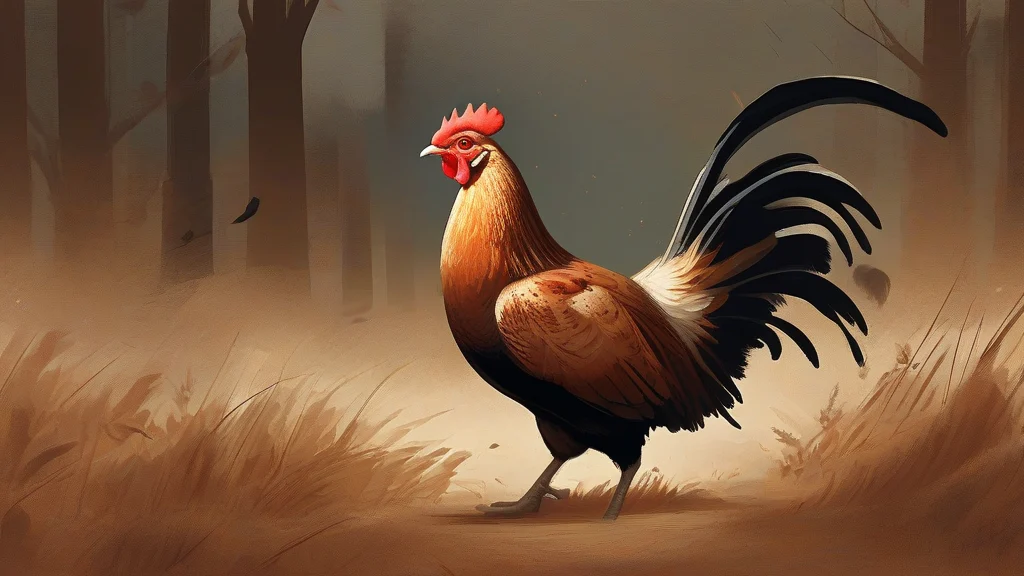
Gallinaceous is an adjective describing birds of the order Galliformes: the heavy-bodied, ground-dwelling birds that spend more time walking and scratching than flying. Chickens, turkeys, pheasants, partridges, quail, and grouse are all gallinaceous birds, united by their plump bodies, short wings, sturdy legs, and habit of feeding on seeds and insects on the ground. The word derives from the Latin gallina, meaning hen, so it is literally 'hen-like' — fitting for a group dominated by the world's most widely farmed birds. Gallinaceous appears mainly in ornithology, wildlife management, hunting writing, and culinary discussions of poultry and game, where precision matters more than everyday familiarity. Though uncommon in casual speech, it is the standard technical term for this group, and knowing it signals genuine familiarity with bird classification. For anyone reading about game birds or poultry science, gallinaceous is the word experts reach for.
adjectiveRelating to or characteristic of birds of the order Galliformes — heavy-bodied ground-feeding game birds such as chickens, pheasants, turkeys, quail, and grouse.
- Of or relating to birds of the order Galliformes (chickens, turkeys, pheasants, quail, grouse, etc.).
- Resembling or characteristic of such birds in appearance or behavior.
"The pheasant, a gallinaceous bird, scratched confidently among the fallen leaves."
"Ornithologists classify turkeys, grouse, and quail as gallinaceous birds."
"The farmyard's gallinaceous residents pecked and scratched through the morning dust."
If a bird looks like it belongs on a dinner table, there's a good scientific word for it: gallinaceous — literally 'hen-like.'
Reviewed by Deb Chak, Editor. AI-assisted content curated by RJS Tech Solutions LLP.
Etymology of gallinaceous
Gallinaceous comes from Latin gallinaceus, 'relating to hens,' itself derived from gallina, the Latin word for a hen, which traces back to gallus, 'cock' or 'rooster.' The term was adopted into English in the early modern period as naturalists sought Latinate vocabulary for classifying animals. It shares its root with gallinule, a name for certain marsh birds, reflecting the same Latin word for barnyard fowl.
How gallinaceous is actually used
A technical term used chiefly in ornithology, zoology, hunting, and gastronomic writing about poultry and game birds; rare in everyday conversation but standard in scientific literature.