
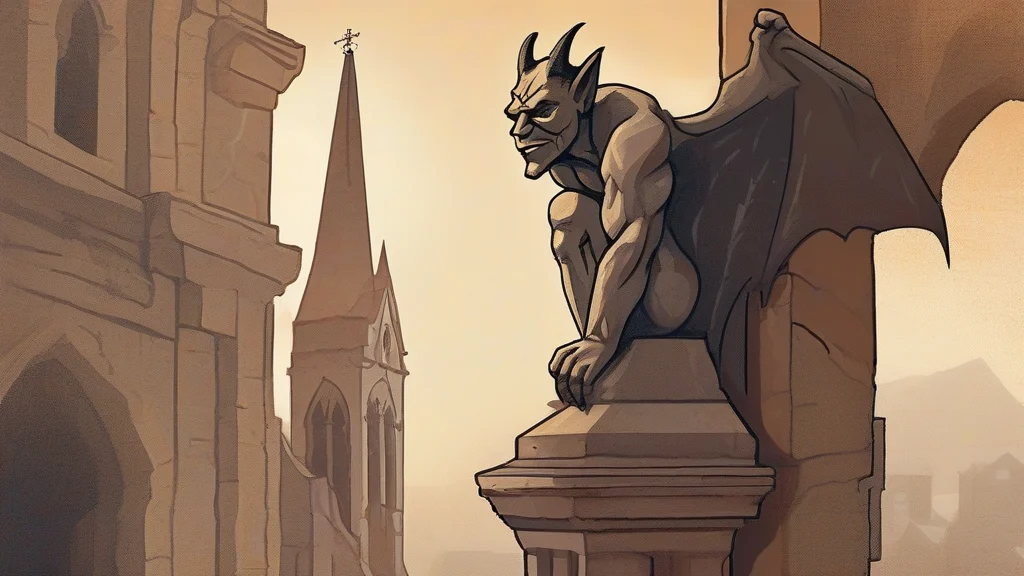
What does gargoyle mean?
A gargoyle is a carved stone or masonry figure, often deliberately grotesque, that forms part of a building and acts as a waterspout. As rainwater reaches the figure, it is directed outward through an opening in its mouth or body. Gargoyles are therefore both functional drainage devices and ornamental architectural features, especially associated with medieval European churches and secular buildings. The word can also refer more broadly to an ornamental grotesque figure resembling such a spout. Figuratively, “gargoyle” may describe a person with an unusually ugly or exaggerated appearance, though this use often sounds dated, theatrical, or insulting rather than neutral. In modern writing, gargoyle usually invokes the physical object: its weathered carving, comic or threatening expression, and role in directing rainwater away from a roof. The term is also used figuratively for a striking architectural feature that seems grimacing or menacing. The word’s unusual sound and its vivid blend of sculpture, function, and imagery make it especially effective when describing a threatening grotesque form.
nounA gargoyle is a carved, often grotesque figure forming part of a building and serving as a waterspout. Figuratively, it can describe a person with an unusually ugly or exaggerated appearance.
- A carved architectural figure, typically grotesque or threatening in appearance, that functions as a waterspout.
- Figuratively, a person described as ugly, grotesque, or wildly exaggerated in appearance.
"Rainwater streamed from the mouth of the stone gargoyle beneath the cathedral's roof."
"The masons carved a stone gargoyle to channel rainwater away from the roof."
"His frozen scowl made him look like a gargoyle."
The regular plural is used for individual architectural figures and for multiple examples collectively.
"Rows of gargoyles guarded the cathedral's rain gutters."
Gargoyles made gutters glamorous: medieval buildings turned rainwater into a spectacle by spouting it from carved monsters.
Reviewed by Deb Chak, Editor. AI-assisted content curated by RJS Tech Solutions LLP.
Where does gargoyle come from?
The word entered English from Middle French gargouille, originally a term for a projecting waterspout. In medieval architecture, such spouts were commonly modeled as grotesque human or animal figures, and the name came to denote the carved ornament itself. The French word belongs to a family associated with gurgling liquid and the throat, reflected in related forms such as gargle, gurgle, and gurgulet.
How gargoyle is actually used
As an architectural term, gargoyle is neutral and commonly used in discussion of churches, castles, and other historic buildings. Its figurative use for a person's appearance is comparatively dated and can sound theatrical or insulting.