
What does garlic mean?
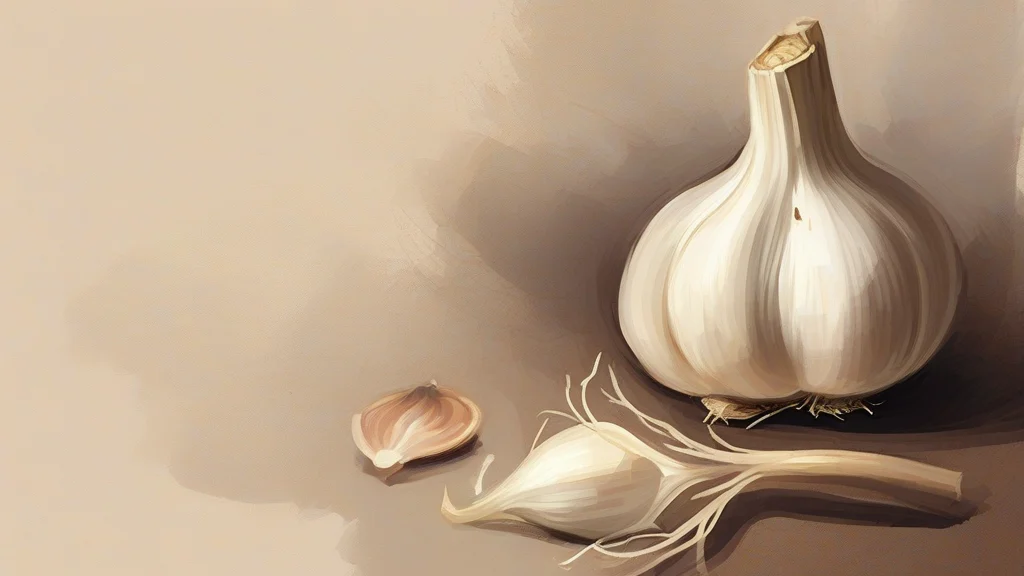
Garlic denotes both the edible bulb of Allium sativum and the flowering plant that produces it. The bulb consists of multiple cloves and is valued for its distinctive pungent flavor, which can range from sharp and raw to mellow and sweet when roasted, fried, or caramelized. It is an important seasoning in many culinary traditions and is commonly paired with foods such as bread, vegetables, meat, and pasta. Garlic also has a long history in traditional medicinal practice, although its health effects should not be confused with a substitute for medical treatment. The word can function as a mass noun when referring to the ingredient, while the individual sections of a bulb are called cloves. As a plant, garlic produces a flowering stalk above ground and a segmented underground bulb. Its familiar name preserves an Old English compound commonly interpreted as “spear leek,” a reference to the plant’s narrow, pointed leaves.
nounGarlic is the pungent, aromatic bulb of the plant Allium sativum, composed of separate cloves and widely used as a seasoning and ingredient. The word can also refer to the flowering plant itself.
- The strongly scented bulb or its individual cloves, used as a seasoning or ingredient.
- The flowering plant that produces edible bulbs with pungent, segmented cloves.
"She softened sliced garlic in olive oil before adding it to the sauce."
"Roasted garlic gave the soup a rich, mellow sweetness."
"Garlic and other flowering alliums are easy to grow in a sunny garden bed."
Garlic is usually an uncountable mass noun when referring to the seasoning or the edible cloves. The plural garlics is uncommon and ordinarily refers to separate whole bulbs.
"She bought three garlics and a bunch of fresh parsley."
Garlic’s famous bite comes from sulfur compounds that mellow into sweetness when roasted.
Reviewed by Deb Chak, Editor. AI-assisted content curated by RJS Tech Solutions LLP.
Where does garlic come from?
The English word comes from Old English gārleac, commonly interpreted as a compound of gār, “spear,” and leac, “leek,” referring to the plant’s narrow, pointed leaves. The second element is ancestral to the modern word leek, while gar or gār is an old word for a spear. Middle English forms such as garlik and garlik eventually developed into the modern spelling garlic.
Related word forms
How garlic is actually used
As an ingredient, garlic is normally treated as an uncountable mass noun. In polished English, “a clove of garlic” is generally more precise than “a garlic,” although the latter is understandable in informal or regional usage.
Easily confused with garlic
Garlic is the pungent culinary bulb, whereas gallic means relating to Gaul or France.