
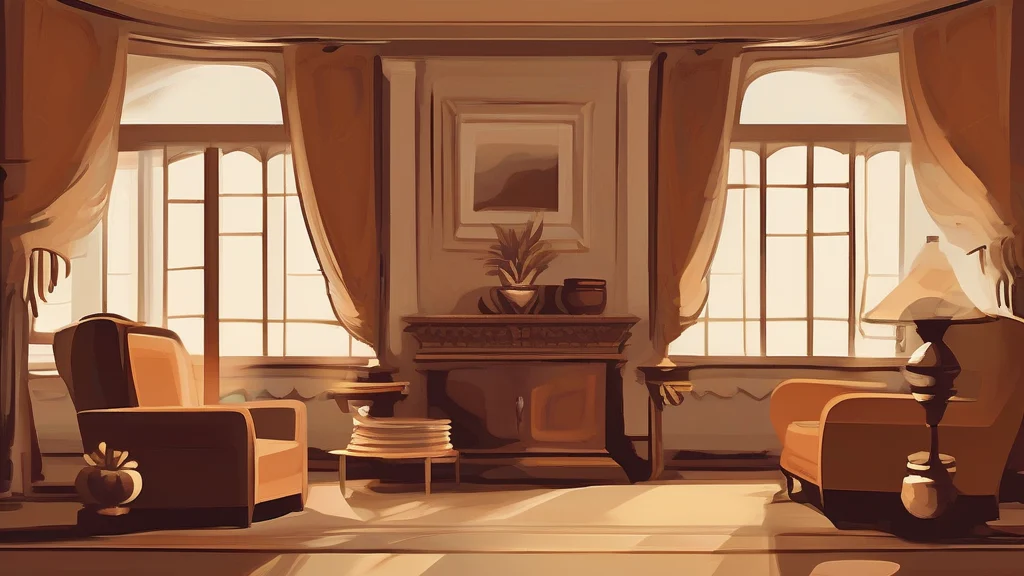
What does garniture mean?
Garniture is a formal word for decorative fittings, trim, or adornment, especially the ornamentation associated with a room or a piece of furniture. Rather than naming one ornament, it often treats a collection of coordinated details as a unit: mouldings, handles, fittings, and other features that visually complete an object. The word can also be used more broadly for ornamental equipment or accompanying elements, but it is not a general synonym for every kind of decoration. In contemporary English, garniture has a literary or decorative-arts flavor and is most likely to appear in architectural descriptions, auction catalogues, and discussions of historic interiors. It is easily confused with garnish, but garnish usually names a particular accompaniment, whereas garniture suggests a larger decorative ensemble. Learning the word adds precision to descriptions of how an object is finished and furnished, particularly when historical or elaborate design is important.
nounDecorative fittings, trim, or adornment, especially the ornamental features of a room or piece of furniture. It may also refer collectively to a set of decorative or accompanying items.
- Ornamental fittings, trim, or decoration, especially the decorative features of a room or piece of furniture.
- A set or collection of decorative or accompanying items.
"The carved mantel and decorative ironwork form an elegant garniture around the fireplace."
"A rococo mantelpiece forms part of the room's elegant garniture."
"The guide describes the carved stonework as the chapel's most elaborate garniture."
The word is commonly used as a mass noun for decorative fittings generally, but the plural is used for distinct sets or collections of ornaments.
"The auction offered several rare garnitures for historic bedroom suites."
Garniture comes through French from a word meaning “to furnish or equip,” so its name evokes the decorative extras that complete an object.
Reviewed by Deb Chak, Editor. AI-assisted content curated by RJS Tech Solutions LLP.
Where does garniture come from?
The word was borrowed from French garniture, meaning furnishings, equipment, or decorative fittings. French garniture derives from garnir, “to furnish, equip, or decorate,” which is also the source of related English words such as garnish, garrison, and garnishee.
How garniture is actually used
Formal and somewhat literary, garniture is especially associated with architecture, historic interiors, decorative arts, and auction descriptions. It is less common in everyday speech than “decoration” or “ornament.”
Easily confused with garniture
A garnish is a particular accompaniment or decoration, especially food, whereas garniture usually denotes decorative fittings or a collection of ornamental details.