
What does gendarmerie mean?
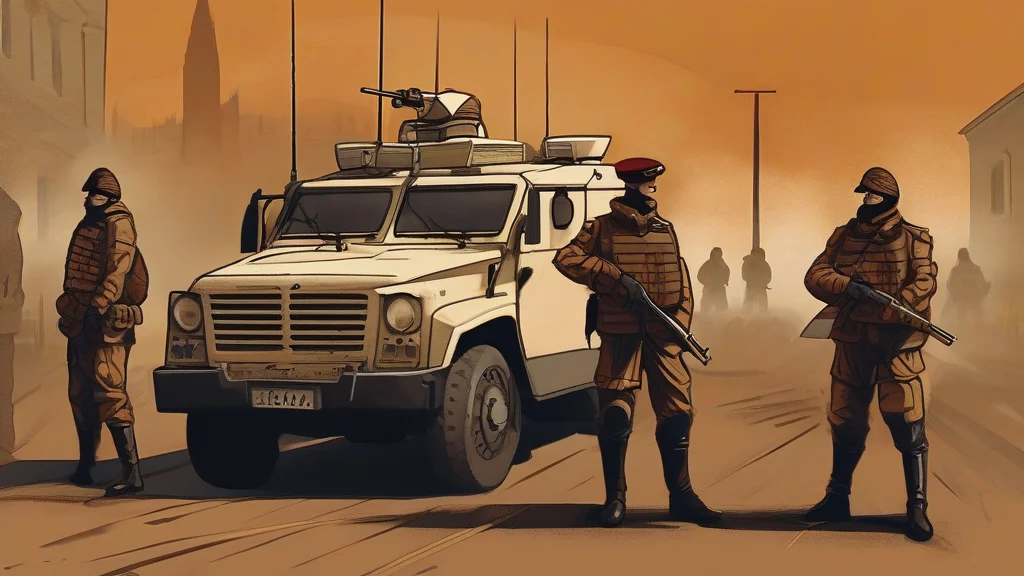
The gendarmerie is a law-enforcement force that has military status and organization, with members who perform policing, public-order, and sometimes other state-security duties. The best-known example is the French gendarmerie, a national force whose members are subject to military discipline while exercising police powers. English also uses the term for comparable institutions in countries such as Belgium and Italy. A gendarmerie may handle ordinary criminal investigations, patrol rural or remote areas, maintain public order, and provide emergency support, especially where a conventional civilian police service has a limited presence. The word normally denotes the force or institution collectively, not an individual member, who is called a gendarme. Its military character can convey discipline, uniform organization, and a strong capacity for public-order operations, although it does not necessarily imply military combat. The term is especially useful when discussing European policing systems in which police and military traditions overlap.
nounA military or armed police organization whose members perform police and public-order duties. In France, the gendarmerie is a national military force with civilian law-enforcement responsibilities.
- The collective body of gendarmes belonging to a national or regional law-enforcement organization.
"The gendarmerie sent officers to secure the area after the storm."
"The gendarmerie investigated the suspicious package and closed the surrounding streets."
"Local officials met with members of the gendarmerie to discuss security during the festival."
The plural is used for distinct gendarmerie units or organizations; the French national force is normally referred to simply as the gendarmerie.
"The report compared the policies of the gendarmeries in several departments."
Its name comes from French for “men of arms”: a police force that is still organized and disciplined like an army.
Reviewed by Deb Chak, Editor. AI-assisted content curated by RJS Tech Solutions LLP.
Where does gendarmerie come from?
The word comes from French, where it developed from the expression gens d'armes, meaning “men of arms.” That expression originally referred to armed or mounted soldiers, while the related term gendarme came to denote an armed police officer and gendarmerie the collective force. English borrowed the word in the early 19th century. The French gens ultimately comes from Latin gens, the source of words such as gentleman, genteel, and gentile.
How gendarmerie is actually used
The term is formal and institutional and is normally used collectively. It is not a general synonym for all police, and in English it most often refers specifically to the French gendarmerie or a comparable organization.
Easily confused with gendarmerie
A gendarme is an individual member of the gendarmerie, whereas the gendarmerie is the organization or force as a whole.
The gendarmerie is a specifically military or military-style law-enforcement force, while police refers more broadly to civilian law-enforcement personnel and agencies.