
What does geotropism mean?
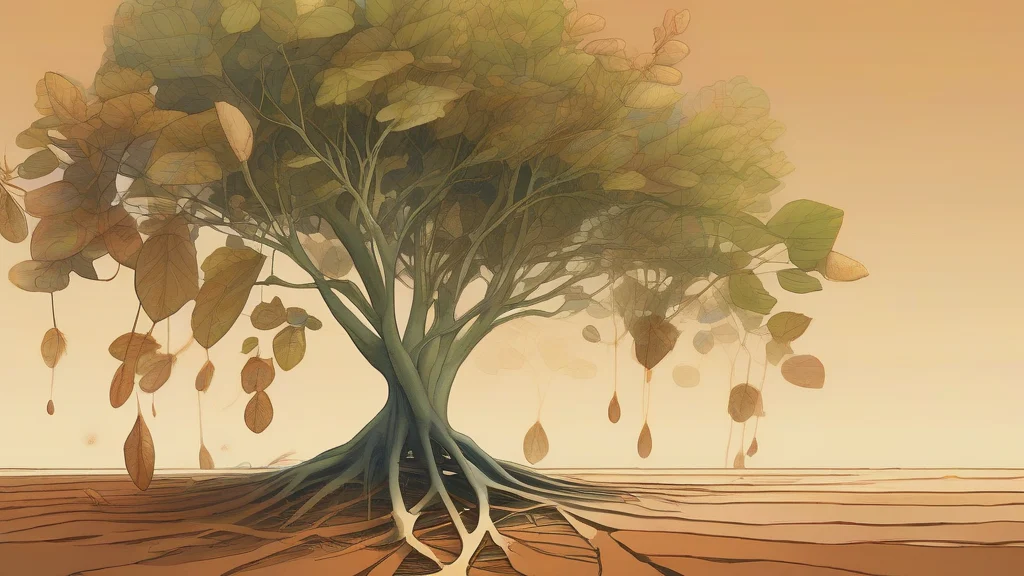
Geotropism is the growth response of a plant to gravity. It is most clearly seen when a plant is placed at an angle: roots generally curve downward, exhibiting positive geotropism, while stems and other shoots curve upward, exhibiting negative geotropism. The process helps plants anchor themselves, obtain water, and orient their growth, although light and other environmental factors also influence these movements. The word is especially common in botany, biology, horticulture, and gardening discussions. In contemporary plant science, it is often discussed alongside the more specific term gravitropism, which describes the same phenomenon using a modern descriptive name. Geotropism is related to other directional growth responses, such as phototropism, the response to light, and hydrotropism, the response to water. It is a useful term because it identifies a distinctive biological mechanism rather than merely describing the visible bending or turning of a plant.
nounThe growth or bending of a plant in response to gravity. Roots commonly show positive geotropism, growing toward gravity, while shoots commonly show negative geotropism, growing against it.
- The growth or bending of a plant in response to gravity, especially the downward growth of roots and the upward growth of shoots.
"The seedlings' upward growth demonstrates negative geotropism."
"Researchers used the plant's geotropism to study how roots respond to changes in gravity."
"The shoot's negative geotropism causes it to grow upward even when it is placed on its side."
The regular plural is rare, as the term is normally used in the singular or as a modifier.
"The study compared geotropisms in roots and shoots under different gravity conditions."
Plants have an internal sense of down: roots follow gravity toward water, while shoots push upward toward light.
Reviewed by Deb Chak, Editor. AI-assisted content curated by RJS Tech Solutions LLP.
Where does geotropism come from?
Geotropism was formed in the 19th century from the combining form geo-, meaning earth, and tropism, from Greek tropos, meaning turn or direction. The components reflect the original scientific idea of a plant turning in relation to the earth's gravity. Its related terms include geography, geology, tropism, and tropics, all of which draw on the same Greek and Latin elements for earth, turning, and direction.
Related word forms
How geotropism is actually used
This is primarily a botanical and biological term rather than ordinary vocabulary. In modern plant-science writing, gravitropism is often preferred, although geotropism remains established and readily understood.
Easily confused with geotropism
Gravitropism is the modern technical term for a plant's growth response to gravity, while geotropism is the older and still widely used term for the same process.