
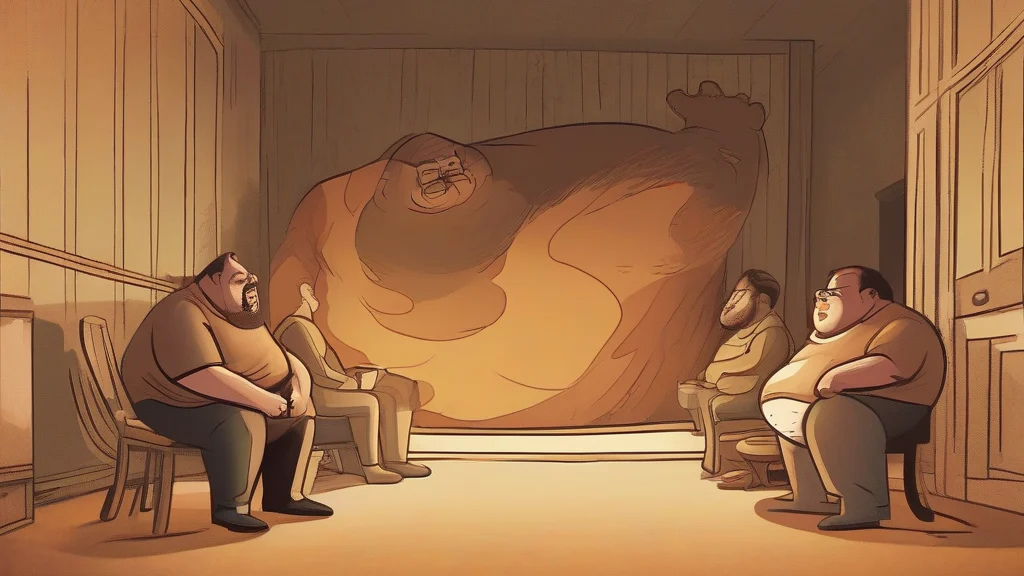
What does gibbosity mean?
Gibbosity is the state of being excessively wordy, particularly in speech or writing. It describes language that sprawls beyond what is needed to communicate an idea clearly, often because of repetition, unnecessary qualification, inflated phrasing, or an overlong structure. The term is more critical than the broadly neutral “verbosity”: verbosity can simply identify a wordy style, while gibbosity implies that this wordiness is excessive and has become a problem. A speaker or writer might be accused of gibbosity after delivering a simple point in a lengthy and elaborate fashion. Although uncommon, gibbosity also has an older and more literal sense describing the quality of being convex or bulging, relating it to the “gibbous” form of the moon when it appears larger than a semicircle. The word is useful because it names not only length but the perception that language has inflated beyond proportion.
nounExcessive wordiness or prolixity in speech or writing. More rarely, the quality of being gibbous or bulging.
- Excessive wordiness or prolixity in speech or writing.
- The quality of being gibbous or bulging; protuberance.
"The editor cut the report's gibbosity without sacrificing any of its useful detail."
"His reply was so laden with gibbosity that the simple answer was difficult to find."
"The editor praised the report for its precision and its freedom from gibbosity."
The standard plural is rarely needed because the word is usually used in the singular or with the adjective “excessive.”
"The manuscript contained several isolated gibbosities, but the overall argument remained clear."
Once a term for a swelling, gibbosity now pinpoints the swelling of language.
Reviewed by Deb Chak, Editor. AI-assisted content curated by RJS Tech Solutions LLP.
Where does gibbosity come from?
Gibbosity comes through Latin gibbositas, a noun meaning protuberance or swelling and related to Latin gibbosus, meaning bulging or hump-backed. The same root produced English cognates including gibbous, gibbose, and gibbus. English later applied the word to language that was inflated or excessively expansive while also retaining the older, literal sense of bulging.
How gibbosity is actually used
The word is formal and somewhat literary. It is generally more critical than the more neutral word “verbosity,” suggesting not merely length but an unnecessarily expansive or inflated style.
Easily confused with gibbosity
Gibbosity is language that is excessively long, whereas gibberish is language that is largely unintelligible or nonsensical.