
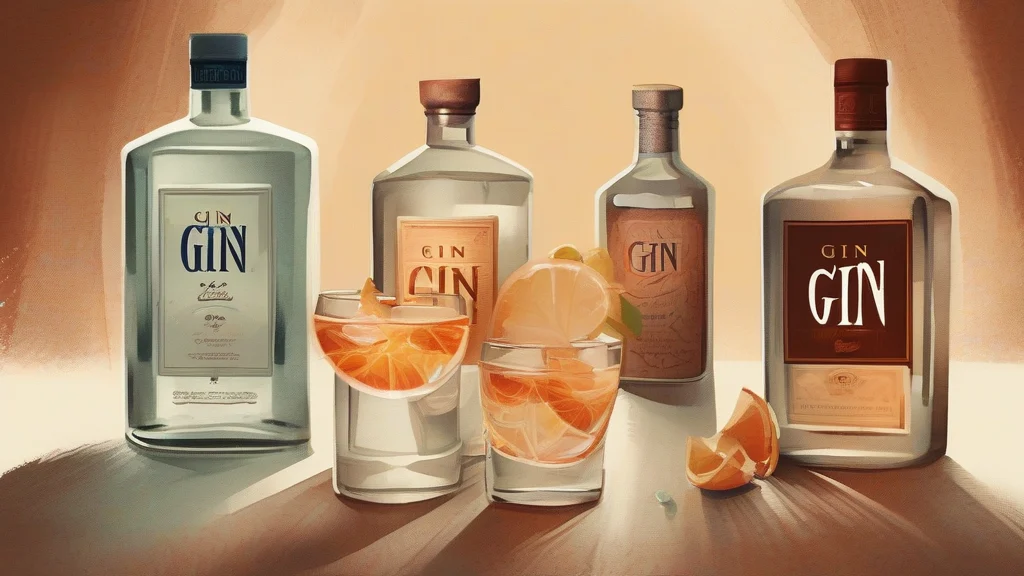
What does gin mean?
Gin most often refers to a clear, distilled alcoholic spirit whose defining flavor comes from juniper berries, although contemporary versions may also contain other botanicals, sugar, or colorings. It appears in classic mixed drinks such as gin and tonic and gin sour, and styles such as London dry, Old Tom, and strongly botanical gin can differ considerably in aroma and taste. The word can also denote a cotton gin, a machine developed for separating cotton fibers from seeds, especially in the United States. As a verb, gin means to catch or entangle, as in a net that might gin a bird, and it formerly meant to begin or start. The expression gin up means to rouse someone to energetic action. Gin reached English through Dutch and French, both drawing on the Latin word for juniper. Its history therefore reflects the traditional use of juniper as both a flavoring and a medicinal or preservative ingredient.
A distilled alcoholic spirit flavored with juniper and often other botanicals; also, chiefly in North American usage, a machine for separating cotton fibers from seeds.
"He added ice and tonic to a glass of gin."
The plural gins is mainly used when referring to different varieties or styles of the spirit.
To catch, snare, or entangle; also, archaically, to begin or start.
"The trap was designed to gin the rabbit by its leg."
The trapping sense is uncommon in modern general use. The archaic sense survives in some fixed expressions, while gin up means to rouse or energize.
The plural is used when referring to different varieties or types of gin.
"The shop stocks several distinctive gins from independent distilleries."
Gin's name is a linguistic passport: it entered English through Dutch and French words that ultimately lead back to the Latin name for juniper.
Reviewed by Deb Chak, Editor. AI-assisted content curated by RJS Tech Solutions LLP.
Where does gin come from?
The alcoholic drink entered English in the early 17th century through Dutch jenever, which came through French genièvre from Latin juniperus, meaning juniper. The separate verb descends from Old English ginnan and is related to older Germanic forms meaning to begin or strive. The drink's name thus reflects juniper, while the verb has an independent Germanic history.
Related word forms
How gin is actually used
In its dominant alcoholic-drink sense, gin is used internationally, although styles and serving traditions vary by country. The machine sense is chiefly North American. The verb is relatively uncommon in modern general use, while gin up remains familiar in informal and sporting contexts.
Easily confused with gin
Gin is an alcoholic spirit, whereas a jinn is a supernatural being in Islamic tradition.