
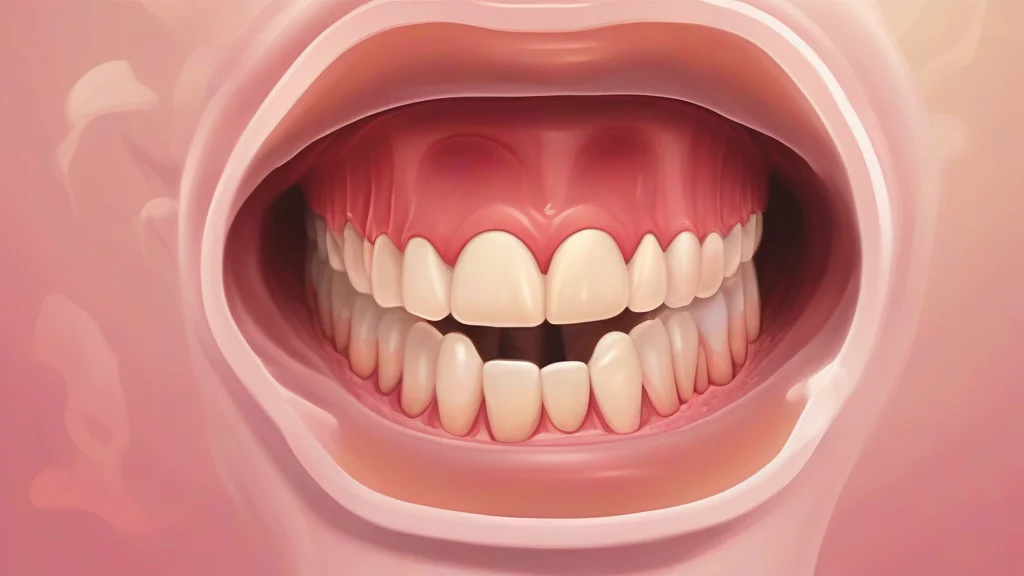
What does gingiva mean?
Gingiva is the formal anatomical term for the gum tissue immediately surrounding the teeth. It is the part of the gums that closely follows the contours of each tooth and extends slightly beneath the gumline. References to gingival health commonly concern inflammation, bleeding, swelling, recession, or infection, all of which are relevant to periodontal disease and other oral-health problems. The word belongs mainly to dentistry, medicine, and anatomical writing, while “gums” is the everyday alternative. Gingiva is also used more broadly in some contexts to refer to gum tissue around the teeth generally. Its Latin origin is reflected in the technical plural “gingivae,” which remains familiar in medical and dental usage. Together with related terms such as gingivitis, gingivectomy, and gingivoplasty, it illustrates how specialized vocabulary can give a familiar part of the body a precise clinical identity.
nounThe gingiva is the fleshy tissue that surrounds the base of the teeth and forms part of the gums. In anatomy, it usually refers to the gum tissue immediately adjacent to the teeth.
- The gum tissue immediately surrounding the teeth, especially when considered as part of the oral anatomy.
"The dentist gently examined the inflamed gingiva around the patient's lower molars."
"Good oral hygiene helps keep the gingiva healthy and reduces the risk of gum disease."
"The patient's gingiva was swollen and bled when the dentist gently touched it."
The technical plural is “gingivae”; “gingivas” is also used, but “gingivae” is standard in anatomy and dentistry.
"The oral examination revealed inflamed gingivae around several teeth."
The tissue around your teeth has a highly specialized name, and its Latin plural, gingivae, is still used in dental anatomy today.
Reviewed by Deb Chak, Editor. AI-assisted content curated by RJS Tech Solutions LLP.
Where does gingiva come from?
The word comes from Latin gingiva, meaning “gums,” and entered English through medical and anatomical usage. Latin gingivae is the form commonly used as its plural, a pattern preserved in English dental terminology. Later derivatives, including gingivitis, gingivectomy, and gingivoplasty, were formed with elements meaning inflammation, excision, and shaping or repair, respectively. The related adjective gingival and adverb gingivally remain standard in clinical writing.
Related word forms
How gingiva is actually used
This is a formal anatomical or dental term. In general conversation, people are more likely to say “gums”; “gingiva” is especially common in dentistry, periodontology, and clinical writing.