
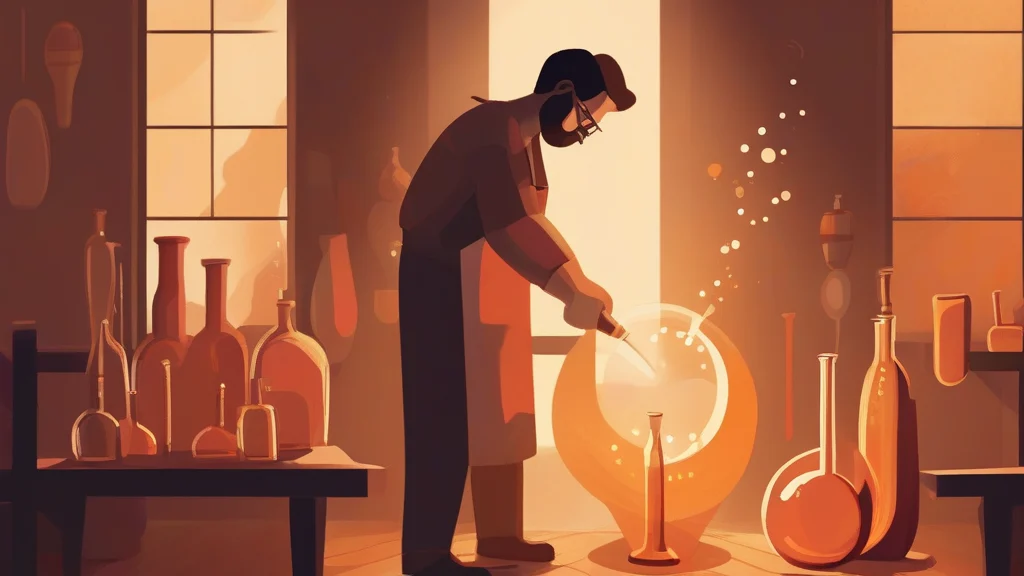
What does glassblower mean?
Glassblower is a noun for a craftsperson who creates glass objects by heating glass until it becomes pliable and shaping the softened material with controlled breath through a blowpipe. The work demands precise control of temperature, airflow, and timing, as well as skill in manipulating the pipe while the glass is hot enough to deform. Its products range from functional vessels and windows to decorative pieces and fine sculptural objects. The term is an occupational label, and it is commonly used attributively, as in glassblowing workshop or studio. Although often used loosely, a glassblower is more specifically a worker who shapes molten glass by blowing, whereas a glassmaker may be involved in the production of glass itself or in a broader manufacturing process. The word is useful because it identifies not merely someone who works with glass, but the practitioner of a distinctive craft in which breath, heat, and hand control combine to transform a simple gather of molten glass into a finished form.
nounA glassblower is a craftsperson who makes objects from glass by heating it until pliable and shaping it, typically by blowing air through a hollow blowpipe.
- A person who practices the craft of shaping molten glass, especially by blowing it through a hollow tube.
"The gifted glassblower transformed a glowing gather of molten glass into an elegant amber vase."
"At the market, visitors watched the glassblower turn molten glass into delicate ornamental figures."
"The documentary followed the work of a glassblower preserving traditional techniques in a family workshop."
The standard plural refers to two or more people who practice the craft.
"Two glassblowers demonstrated their techniques at the festival."
In a glassblower’s hands, a tube of molten glass becomes a bubble, a bowl, or a tiny work of sculpture.
Reviewed by Deb Chak, Editor. AI-assisted content curated by RJS Tech Solutions LLP.
Where does glassblower come from?
Glassblower is an English compound formed from glass and blow, with the suffix -er denoting the person who performs the action. Its history is tied to the ancient development of glassblowing in the eastern Mediterranean and Levant around the beginning of the Common Era. The compound became established as glassworking developed into a specialized craft practiced in workshops and by skilled artisans.
Related word forms
How glassblower is actually used
This is a neutral occupational noun. It is often used attributively and generally suggests someone with a specialized craft skill, though the term can be applied loosely to anyone who works in molten glass.
Easily confused with glassblower
A glassblower shapes molten glass into finished objects by blowing, whereas a glassmaker may make glass itself from raw materials or work within a broader glass-production process.