
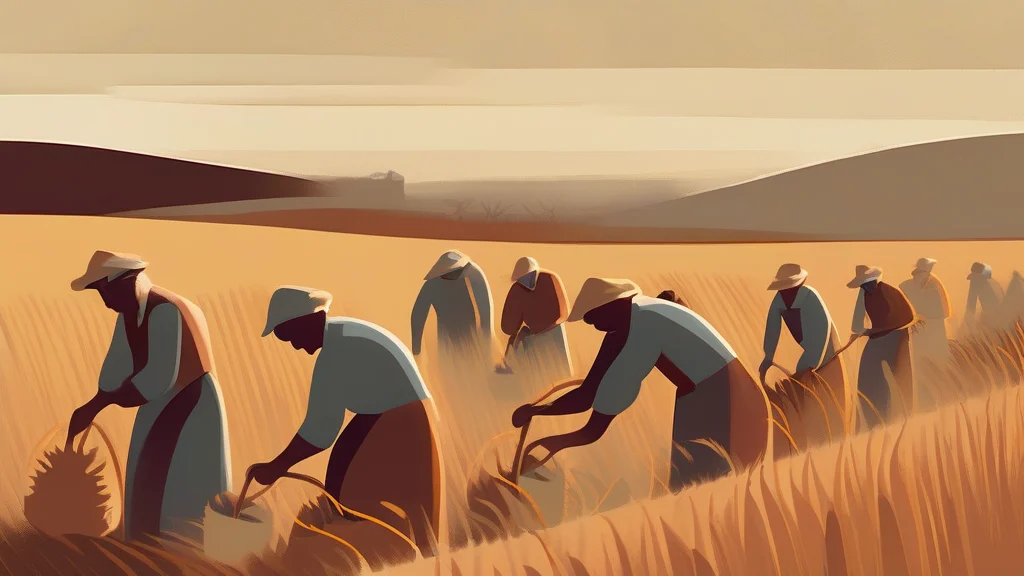
What does gleaning mean?
Gleaning is the careful collection of scattered material, especially useful information that can be recovered from sources such as records, observations, or a speaker’s remarks. In its older literal sense, to glean means to gather grain or other produce left in a field after harvesting; “gleaning” names that act. Figuratively, the verb suggests piecing together a picture or extracting a useful fact from a mass of detail, often with the implication that the task requires attention and patience. The word consequently carries a positive, discerning tone: a gleaner notices what others may pass over. Its use is especially established in formal and literary prose, journalism, and discussion of research, though the literal agricultural sense remains readily understood. A related noun, “gleanings,” can refer to a collection of facts or insights assembled from many sources. Gleaning is useful because it describes not passive reception but active interpretation: the information may be scattered, yet a careful observer can assemble it into meaningful understanding.
To collect or infer useful information from scattered facts, sources, or observations; historically, to gather grain or produce left after harvesting.
"The researchers gleaned several useful conclusions from the incomplete records."
The figurative sense often suggests careful interpretation or the piecing together of details.
The act or process of collecting what has been left or dispersed; also, facts, details, or insights obtained from various sources.
"Her gleanings from decades of interviews became the basis for the book."
The noun is less frequent than the verb and is especially used for the results of extended observation or inquiry.
The plural is usual when referring to several facts, details, or insights collected from different sources.
"The report presents her gleanings from years of archival research."
Gleaning is a picker's eye: what others overlook can become your harvest.
Reviewed by Deb Chak, Editor. AI-assisted content curated by RJS Tech Solutions LLP.
Where does gleaning come from?
The word comes from Middle English glenen, derived from Old English glīan, meaning “to pick up grain after harvesting.” Its original sense was agricultural, and the figurative sense of collecting information developed later. English glimmer, glisten, and glint are related through the same Indo-European root, although their modern meanings concern light rather than scattered grain or facts.
Related word forms
How gleaning is actually used
The verb is standard in British and American English. Its figurative use conveys careful, piecemeal interpretation, while the literal agricultural sense can sound traditional or literary.
Easily confused with gleaning
Glancing means looking only briefly, whereas gleaning means collecting or inferring information through careful attention.